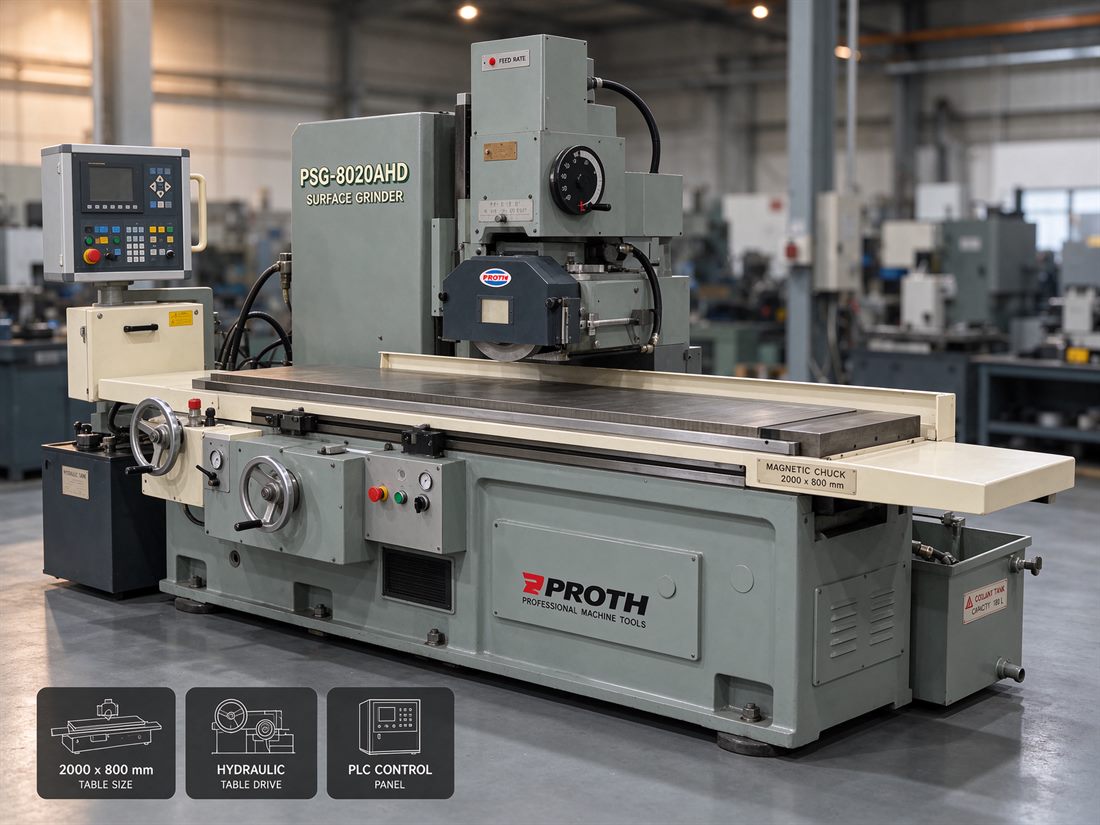
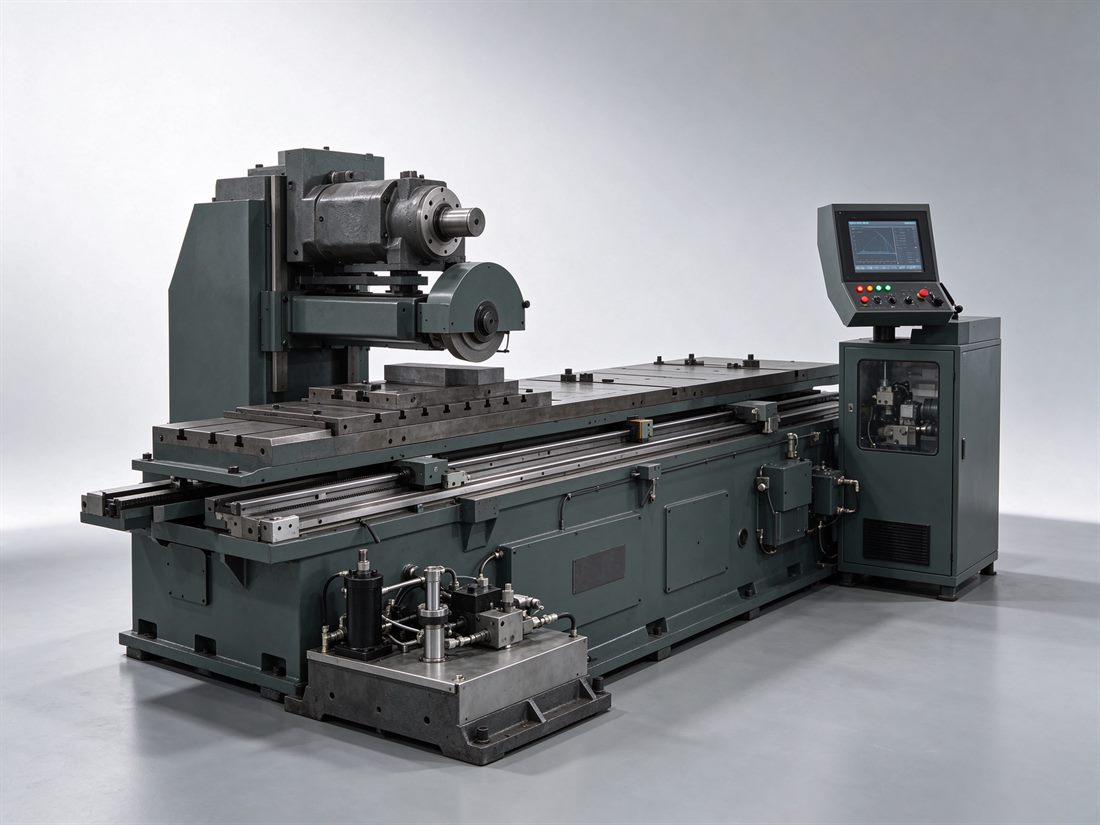
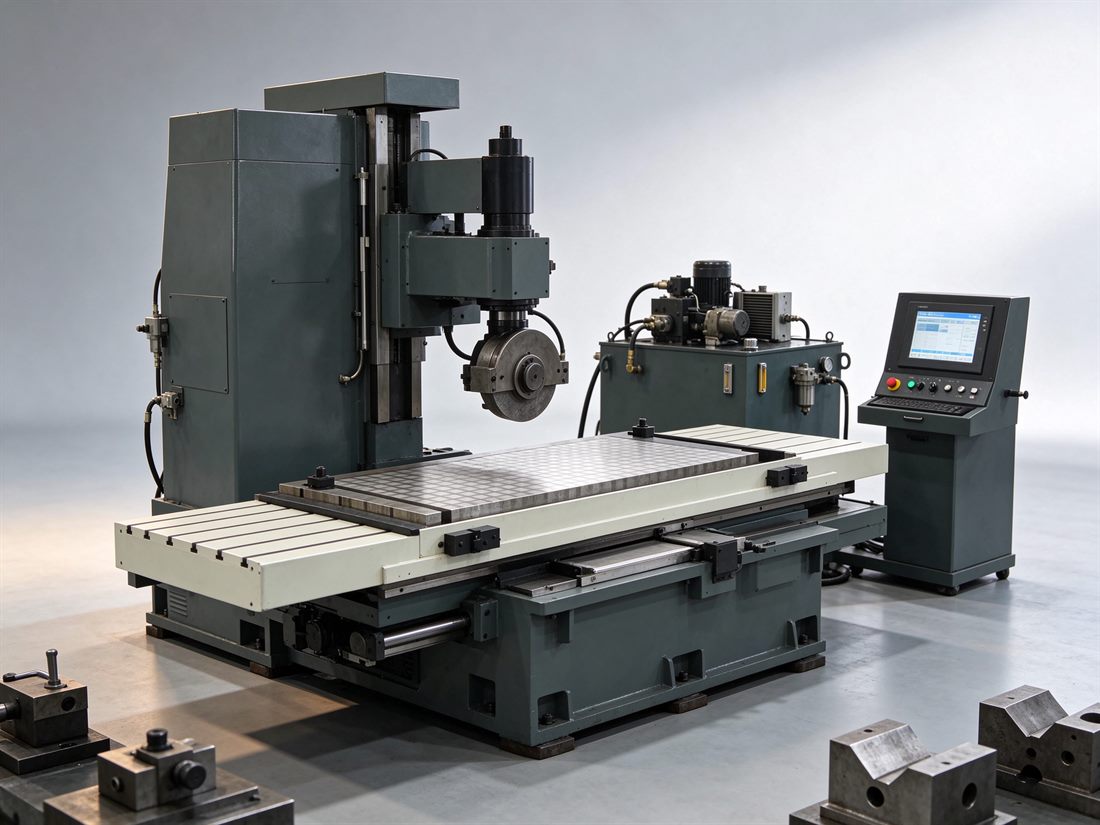
Surface Grinder Table Size: How to Match It to Your Largest Part
Why a surface grinder table must be longer than the part by at least 100 mm, how width and column clearance are decided, and the table that fits the work you actually grind.
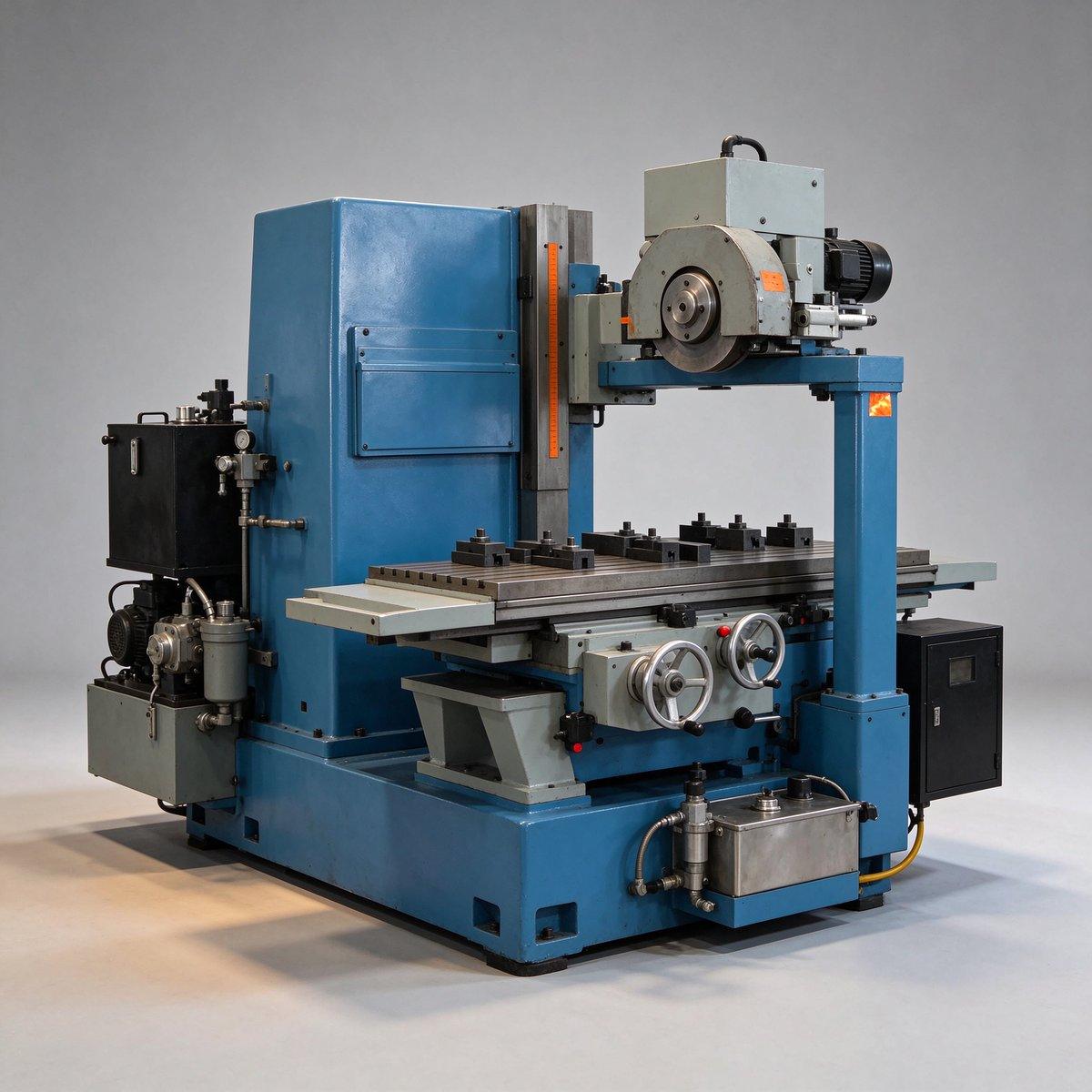
The 100 mm rule
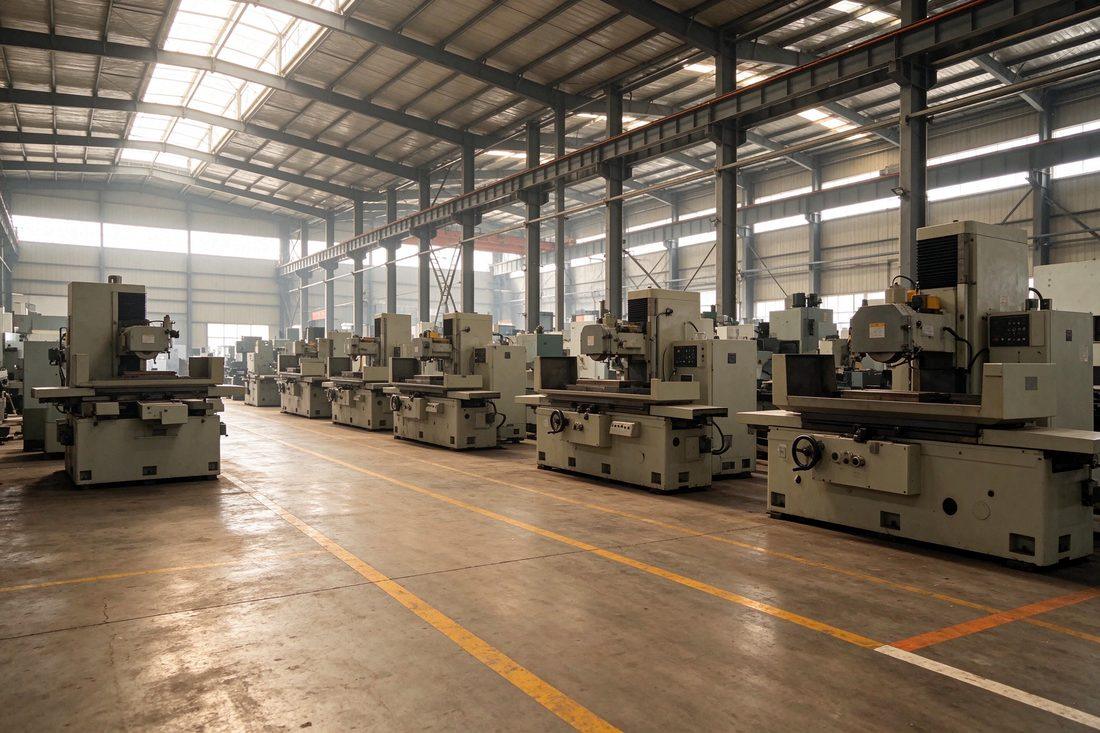
A surface grinder's table must be longer than the workpiece by at least 100 mm — 50 mm at each end. That clearance is not comfort: the wheel has to leave the work before the table reverses, otherwise the reversal point lands on the part and leaves a step or a burn mark.
The same logic applies to width: at least 50 mm wider than the part, so the wheel can clear the edge without the chuck overhanging.
Worked example
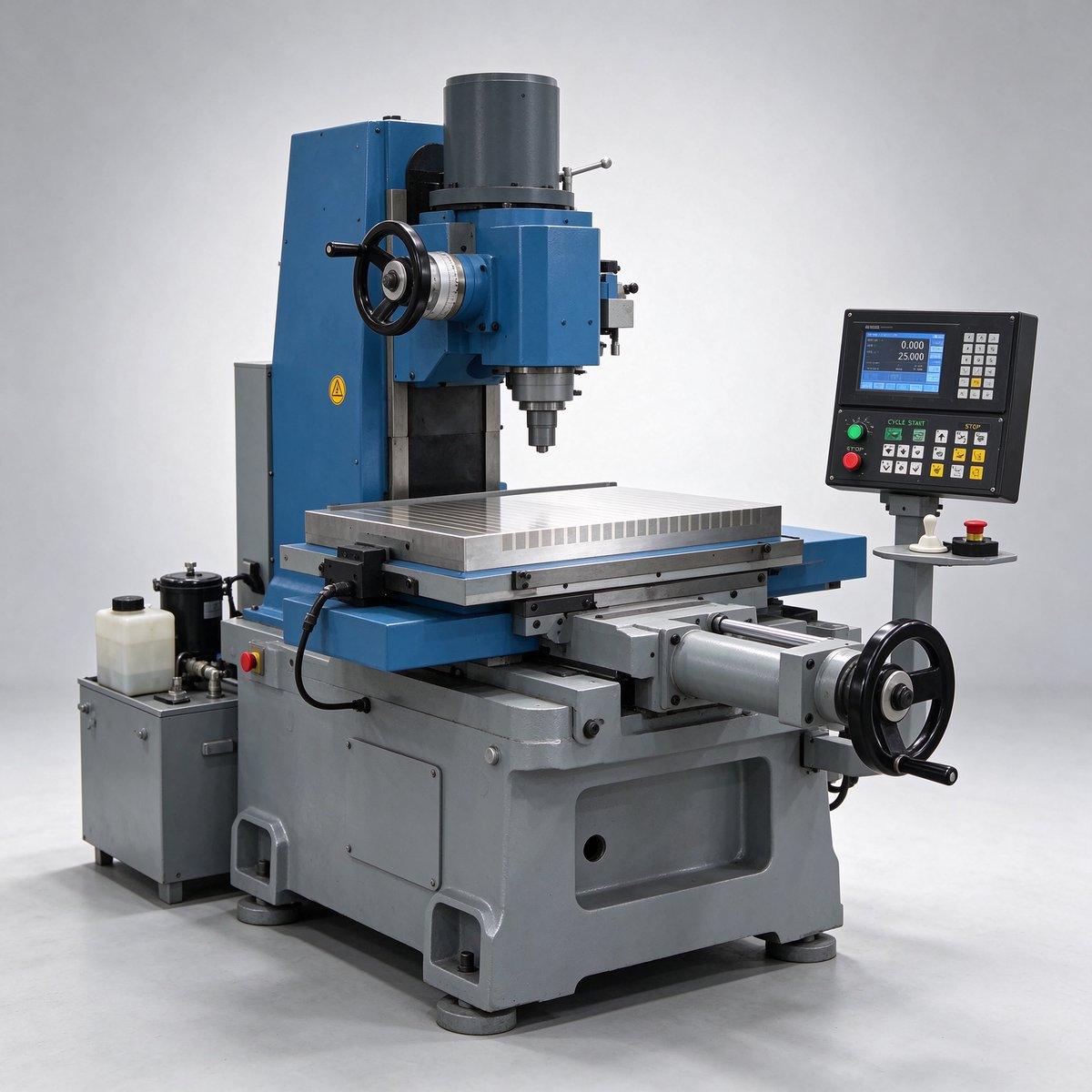
Your largest die plate is 800 × 400 mm. Required grinding envelope: 900 × 400 mm. That is a PSG-4080AH, not a 500 × 250 mm machine, even if 90% of your work is small.
| Largest part | Minimum table | Machine class |
|---|---|---|
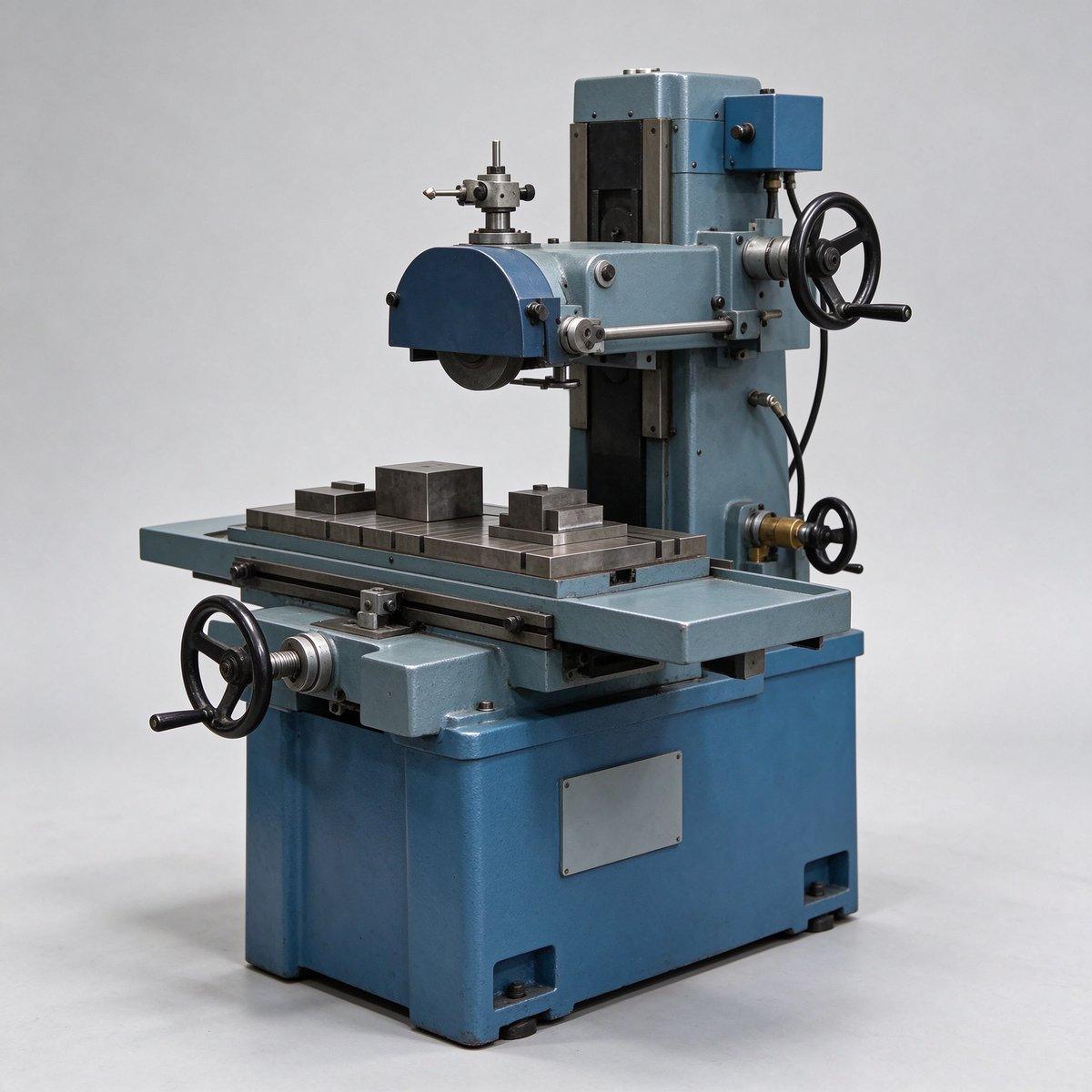
| 300 × 150 mm | 400 × 200 mm | Manual PSG-618M |
| 500 × 250 mm | 600 × 300 mm | Hydraulic PSG-250AH |
| 800 × 400 mm | 900 × 400 mm | Hydraulic PSG-4080AH |
| 1000 × 500 mm | 1100 × 500 mm | Hydraulic PSG-5010AH |
| 1500 × 600 mm | 1600 × 600 mm | Hydraulic PSG-6015AHD |
| 3200 × 1300 mm | 3300 × 1300 mm | Gantry PSG-32130GM |
What about column clearance?
The distance from the spindle centre to the table limits how tall a workpiece can be. A standard horizontal grinder clears 350–650 mm; a gantry clears 900 mm and more. If you grind tall blocks — a mould core in its pocket, for example — check this figure before anything else.
The trap: buying for today's part only
A machine that exactly fits this year's largest part will fit nothing else next year. Buy one size up on length, not on width: length costs relatively little and is what most new jobs need, while extra width adds mass and price without being used.
Need a machine recommendation for this job? Send the drawing and tolerance to our application engineers — reply within 24 hours.