Vertical spindle surface grinders with cup wheels for full-face grinding, high stock removal…
A vertical spindle machine stands the wheel up and grinds with the face of a cup or segment wheel, covering the full width of the part in one pass. Where a horizontal machine works across a face a strip at a time, a vertical machine removes the whole surface in a single bridge pass — several times the metal removal rate for the same spindle power, at the cost of a slightly coarser finish.
Three models cover Ø500, Ø700 and Ø900 mm at US$ 14,500–27,500: the PSG-V500, the PSG-V700 and the PSG-V900.
Cup-wheel vertical spindle grinders that cover a full face in one pass — the fastest way to flat large, thin or segment-type parts without warp.
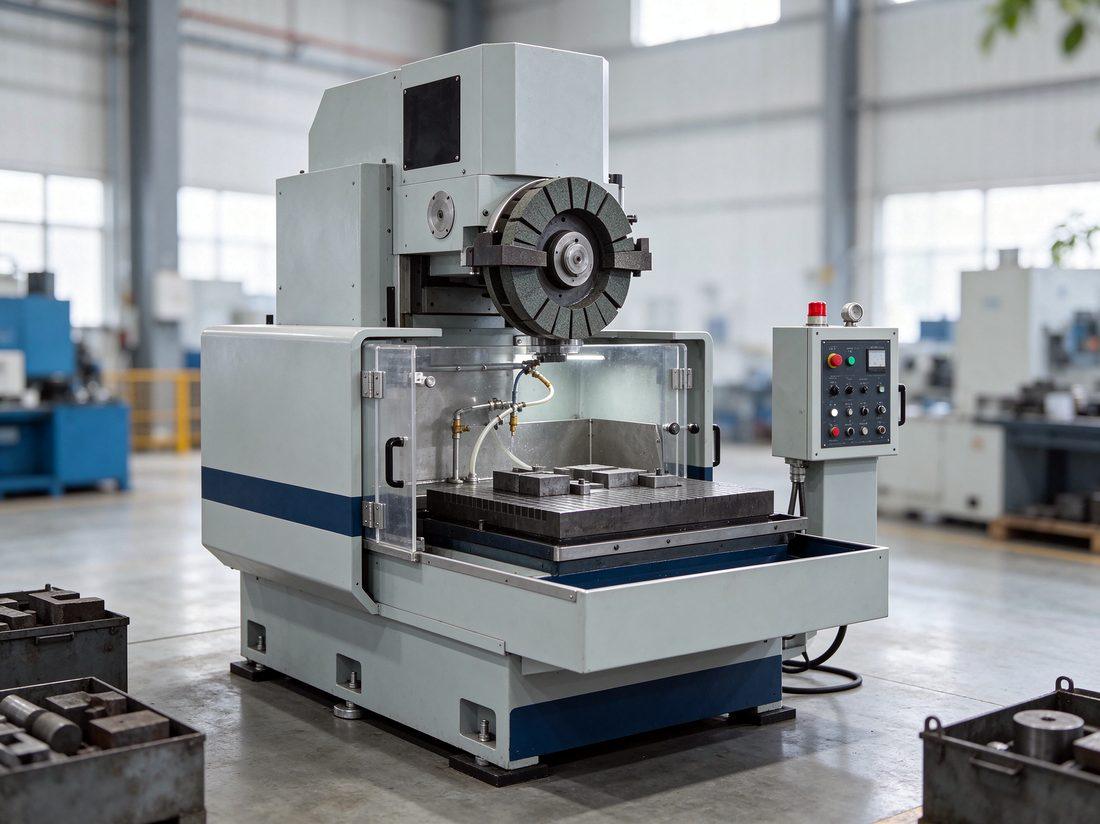
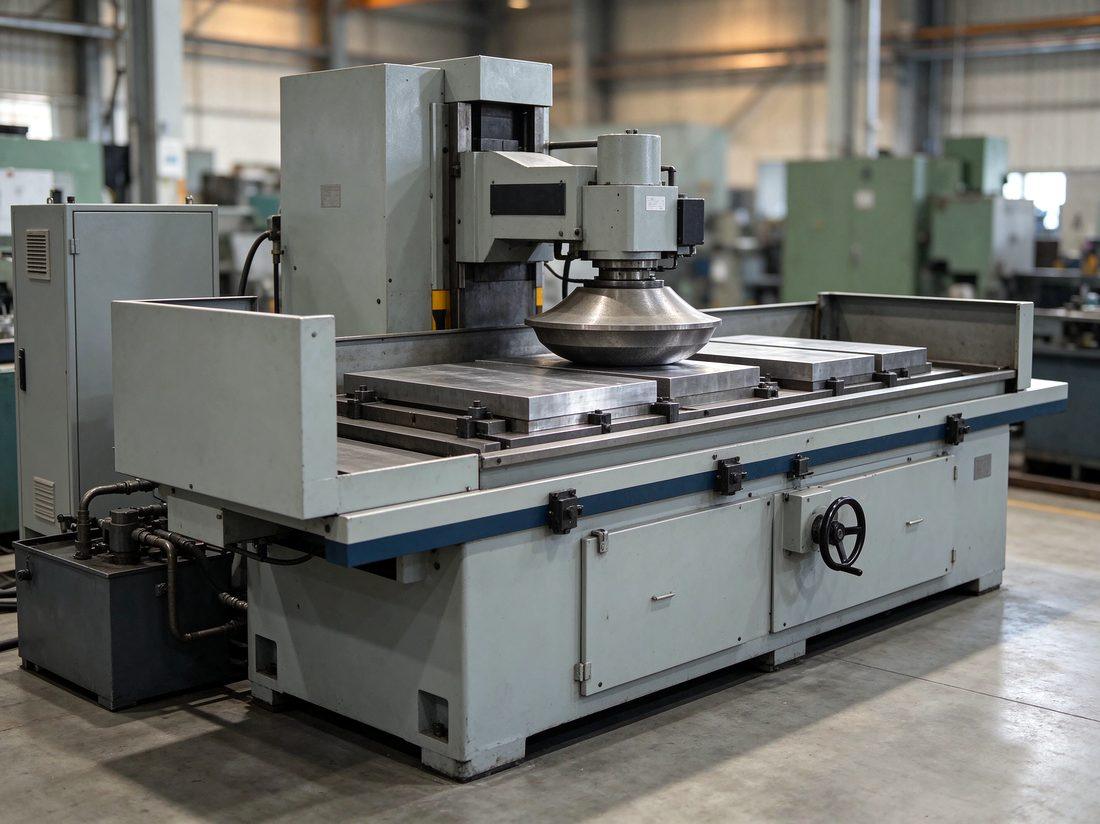
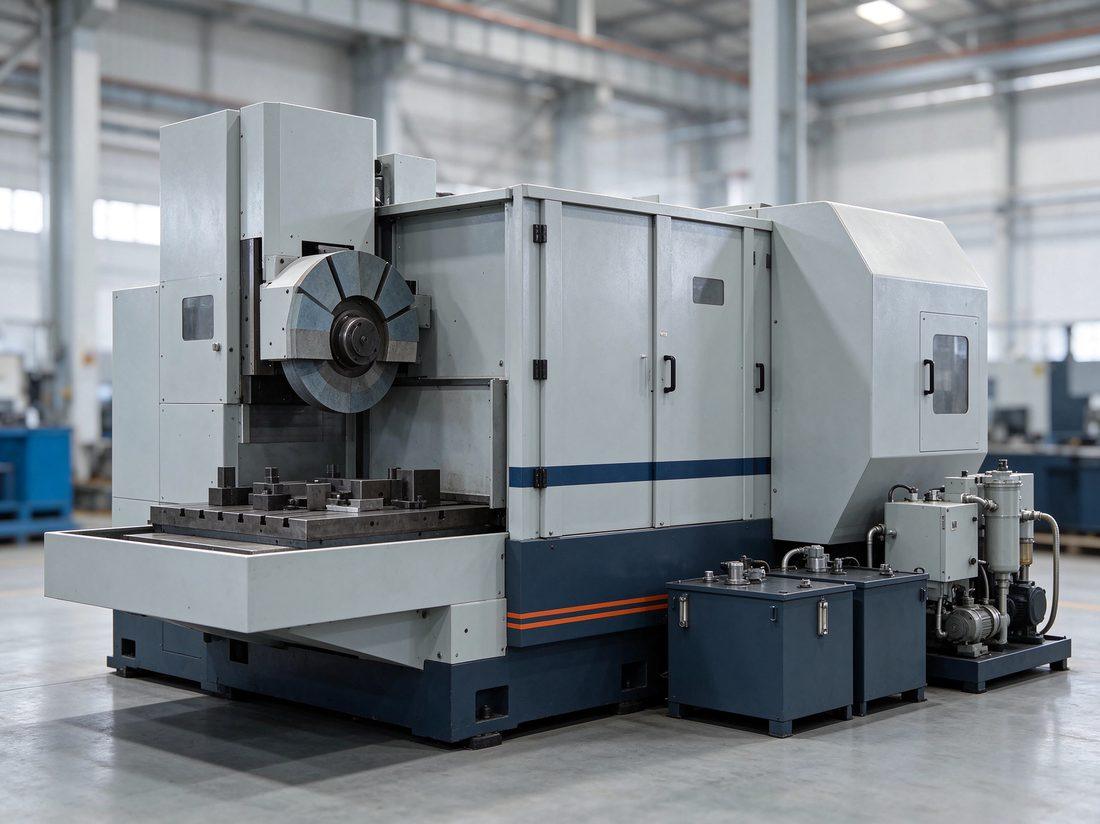
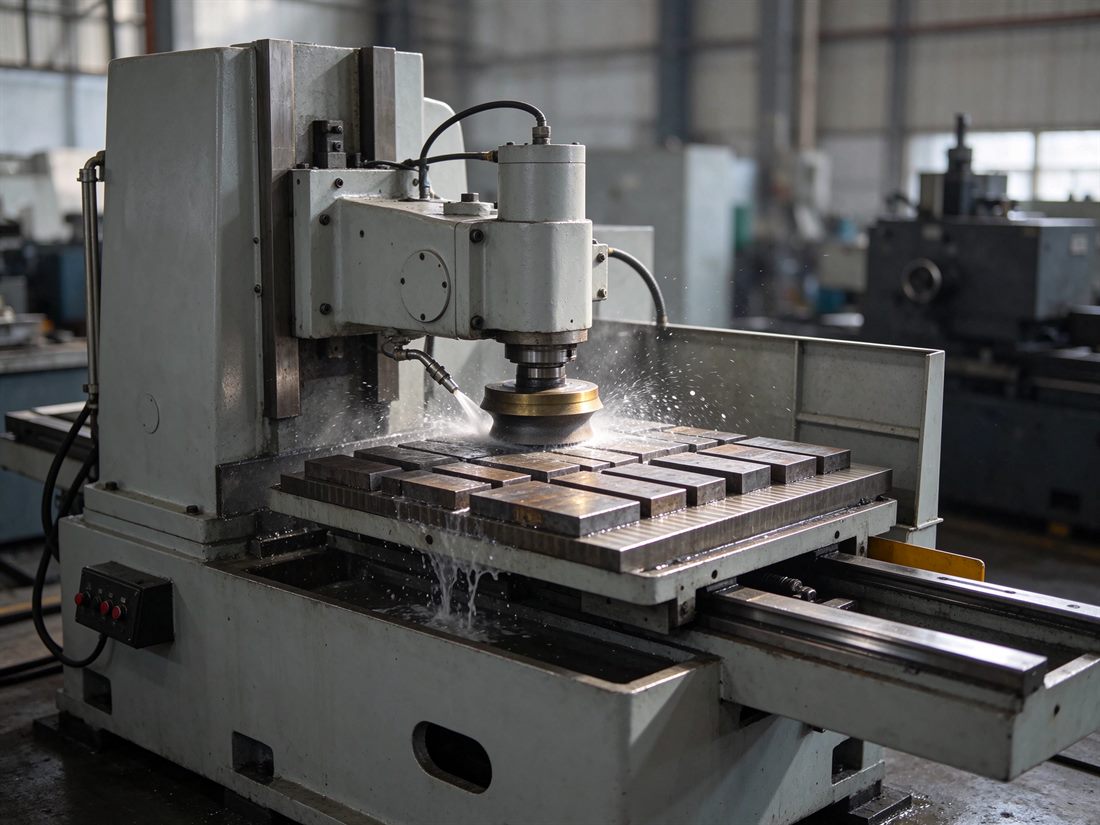
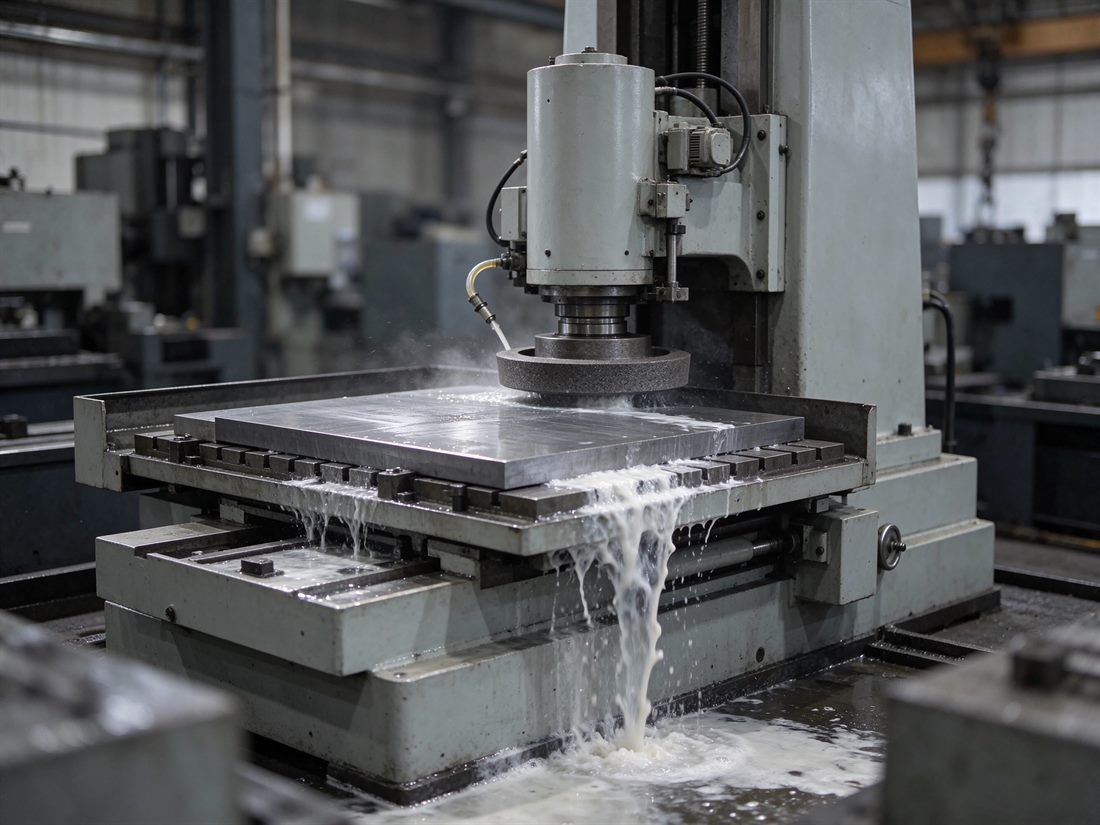
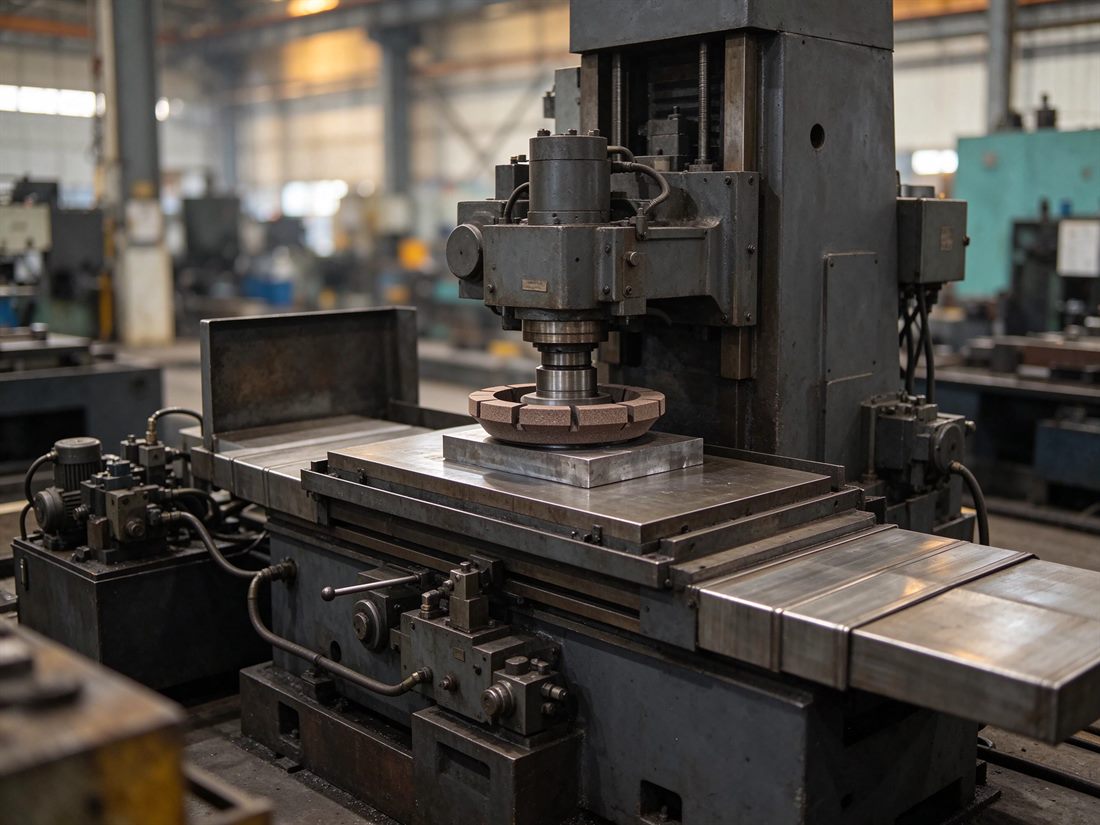
The distinction is the whole reason this line exists. A horizontal-spindle machine grinds with the rim of the wheel — a narrow contact strip, high specific pressure, good finish, low removal rate. A vertical-spindle machine grinds with the flat face of a cup wheel — a wide contact area, lower specific pressure, high removal rate, and a finish that typically lands at Ra 1.6–3.2 µm rather than Ra 0.4 µm.
| Horizontal spindle (reciprocating) | Vertical spindle (face) | |
|---|---|---|
| Removal rate | Baseline | 3–5× on the same power |
| Typical finish | Ra 0.4–0.8 µm | Ra 1.6–3.2 µm |
| Flatness capability | 0.005 mm | 0.005–0.01 mm |
| Best for | Tight finish, thin parts, tooling | Stock removal, castings, billets, wide faces |
If your operation is "take 1–3 mm off a cast iron housing and get it flat", the vertical machine does it in a fraction of the time. If it is "hold Ra 0.4 µm and 0.002 mm thickness", it is the wrong machine.
PSG-V500 (US$ 14,500) — the entry model, a Ø500 mm chuck for small housings, plates and covers. Its segment wheel makes it the cheapest way to remove real stock from small parts.
PSG-V700 (US$ 19,800) — the volume workhorse. Ø700 mm covers most pump and valve bodies and gearbox covers, and the 15 kW spindle removes 0.5 mm per pass in grey iron without complaint.
PSG-V900 (US$ 27,500) — the wide machine, Ø900 mm, for large covers, machine-tool castings and plates that are too big for a saddle machine but not long enough to justify a gantry.
Face grinding lives or dies on wheel selection:
Coolant through the spindle is standard on all three models — on face grinding, coolant reaching the centre of the contact area is what prevents the burn that otherwise limits removal rate. Plan a settling tank with a magnetic separator; a vertical machine produces swarf fast.
The V500 needs 11 kW and about 2.2 × 1.8 m; the V900 needs 22 kW and 3.5 × 2.5 m, plus the coolant tank. All three are rigid enough for a normal industrial slab — no isolated foundation — but the largest one benefits from a levelled pad. For tight finishes on flat work, the automatic hydraulic line reaches Ra 0.4 µm; for round parts the rotary table line is the better geometry; for very large plates the gantry line. Wheels, segments and dressers for the V series are in parts and accessories.
| Specification | PSG-V500 Vertical Spindle Surface Grinder (500 × 300 mm) | PSG-V700 Vertical Spindle Surface Grinder (700 × 400 mm) | PSG-V900 Vertical Spindle Surface Grinder (900 × 500 mm) | PSG-V600 Vertical Spindle Surface Grinder (600 × 300 mm) | PSG-V800 Vertical Spindle Surface Grinder (800 × 400 mm) | PSG-V1000 Vertical Spindle Surface Grinder (1000 × 500 mm) |
|---|---|---|---|---|---|---|
| Table size | 500 × 300 mm | 700 × 400 mm | 900 × 500 mm | 600 × 300 mm | 800 × 400 mm | 1000 × 500 mm |
| Max grinding length | 550 mm | 750 mm | 1000 mm | 610 mm | 860 mm | 1,060 mm |
| Max grinding width | 300 mm | 400 mm | 500 mm | 310 mm | 410 mm | 510 mm |
| Grinding wheel | Cup wheel ø200 mm | Cup wheel ø250 mm | Cup wheel ø300 mm | Ø350 mm cup wheel, segment type | Ø400 mm cup wheel, segment type | Ø500 mm cup wheel, segment type |
| Spindle motor | 5.5 kW | 7.5 kW | 11 kW | 7.5 kW | 11 kW | 15 kW |
| Flatness | 0.005 mm | 0.005 mm | 0.005 mm | 0.005 mm | 0.005 mm | 0.005 mm |
| Machine weight | 2,200 kg | 3,200 kg | 4,800 kg | 3,100 kg | 4,300 kg | 6,400 kg |
Figures are the catalogue specification for each model. Where a machine is built to order — larger tables, special voltages, extra coolant capacity — the final values are confirmed on the order drawing.
Typically Ra 1.6–3.2 µm with a segmented wheel. Ra 0.8 µm is achievable with a finer solid cup wheel and a spark-out pass, but if your drawing says Ra 0.4 µm, a horizontal-spindle machine is the correct tool.
Three to five times the removal rate at the same spindle power, because the full wheel face is in contact instead of a narrow strip. On a cast iron housing removing 1.5 mm, that is the difference between 25 minutes and over an hour.
Yes, and it is one of its strengths: a segmented wheel tolerates the gaps in a ribbed casting far better than a thin peripheral wheel. Keep the down feed conservative — 0.3–0.5 mm per pass in grey iron — and let the segments do the work.
PSG-V700. The chuck must be larger than the part so the full face is covered in one pass; a Ø600 housing on a Ø500 chuck would need the outer band ground separately, which defeats the purpose.
Flatness is 0.005–0.01 mm rather than a uniform 0.005 mm, because a wide contact area is more sensitive to wheel taper and to clamping distortion. For most housings and covers that is far inside the drawing.
No isolated foundation for the V500 and V700 — a normal levelled industrial slab is enough. The V900 benefits from a levelled pad. Connected load is 11 kW for the V500 up to 22 kW for the V900 at 380 V three-phase.

