Manual precision surface grinders with hand-scraped ways, 0.005 mm flatness and proven PSG…
A manual surface grinder puts the table traverse, cross feed and down feed under the operator's hands instead of a hydraulic pump or a servo. That makes it the cheapest way into precision flat grinding, and for tool rooms, maintenance shops and job shops running small batches it is still the right answer: the machine is mechanically simple, the finish depends on the operator rather than on tuning a control loop, and it takes a fraction of the floor space of an automatic machine.
We build two: the PSG-618M (450 × 150 mm) for punches, jigs, small mould inserts and knife work, and the PSG-250M (500 × 250 mm) for plates and blocks that need a wider chuck. Both hold 0.005 mm flatness on a ribbed Meehanite bed that is stress-relieved and hand-scraped.
Handwheel-driven surface grinders with hand-scraped ways and a 0.005 mm flatness guarantee — the entry machine for tool rooms, schools and small workshops.
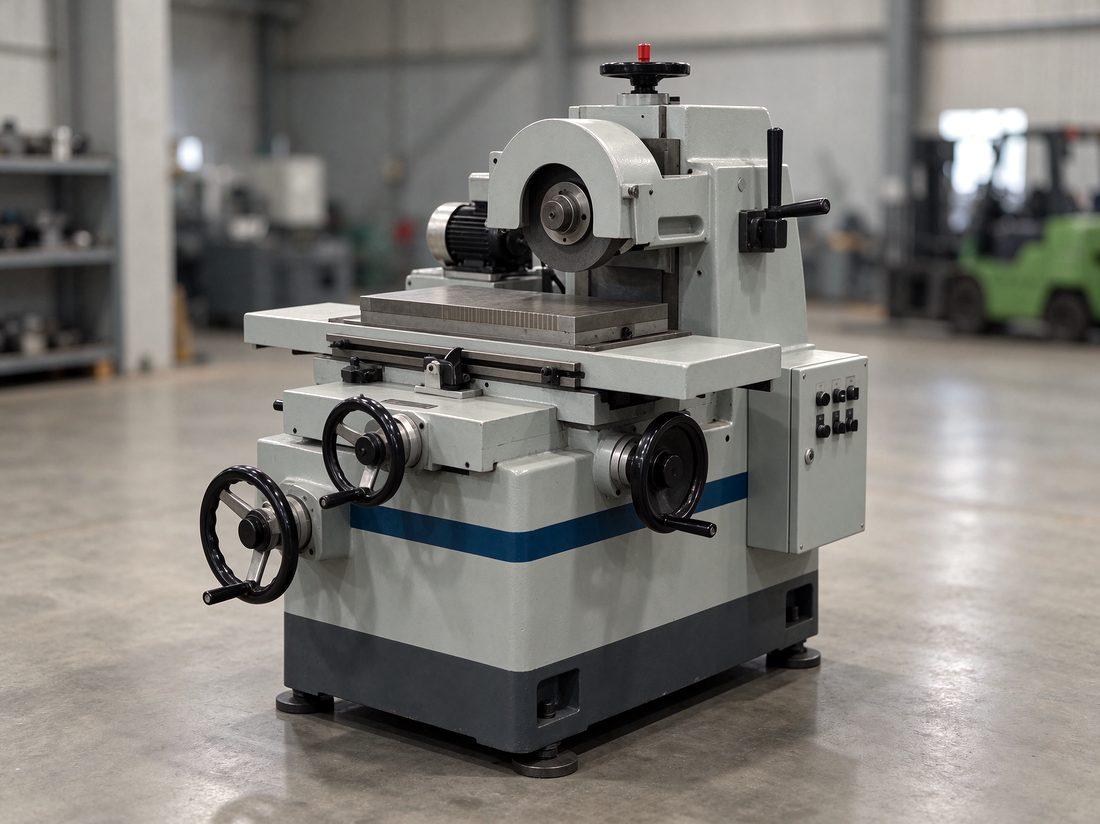
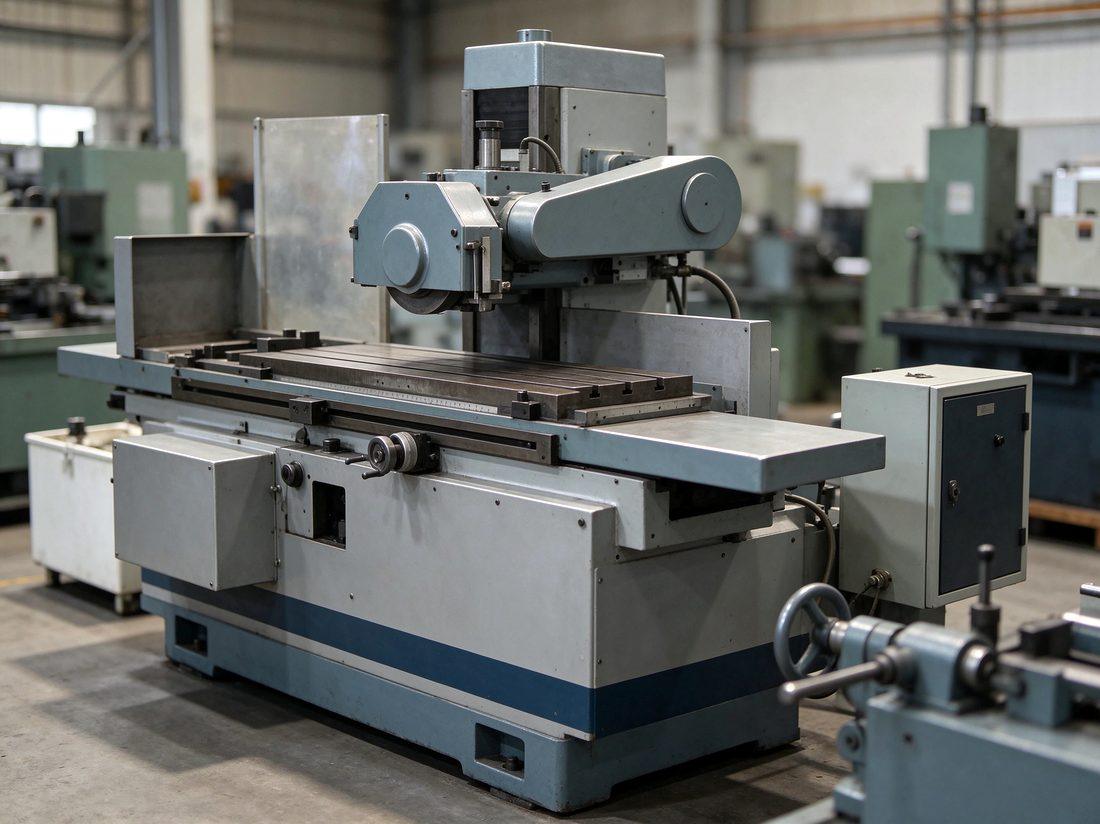
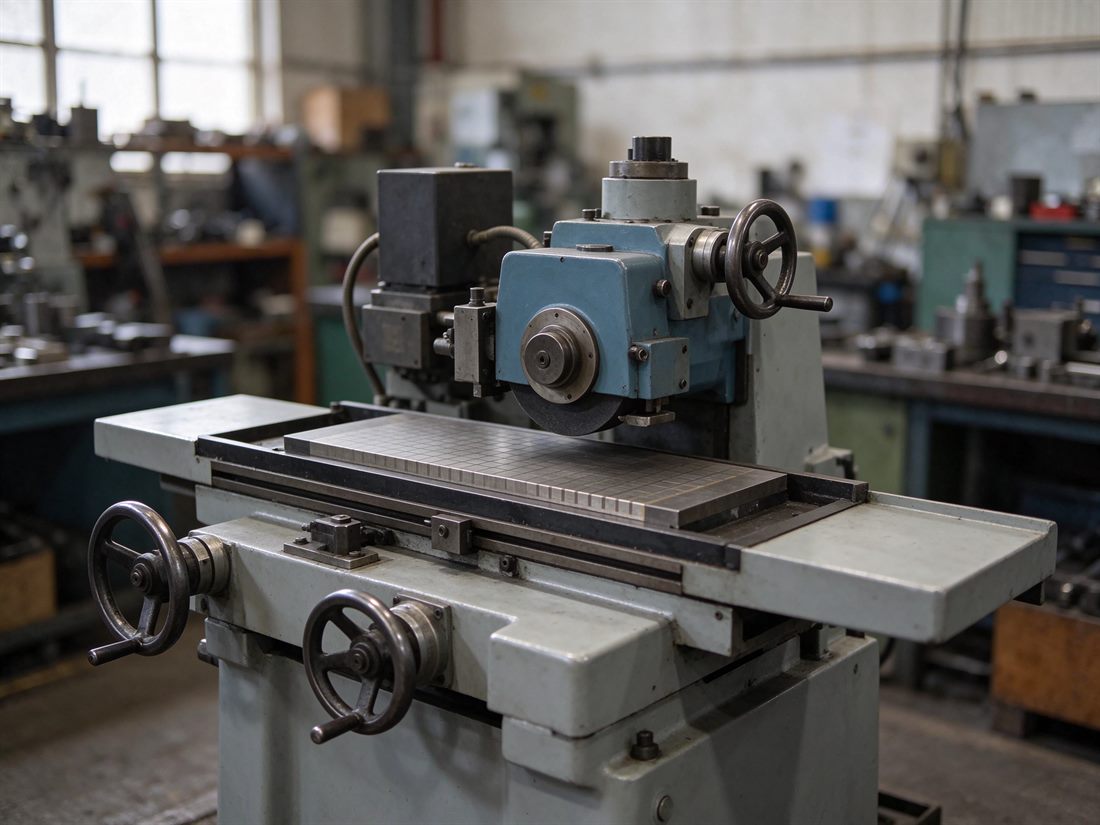
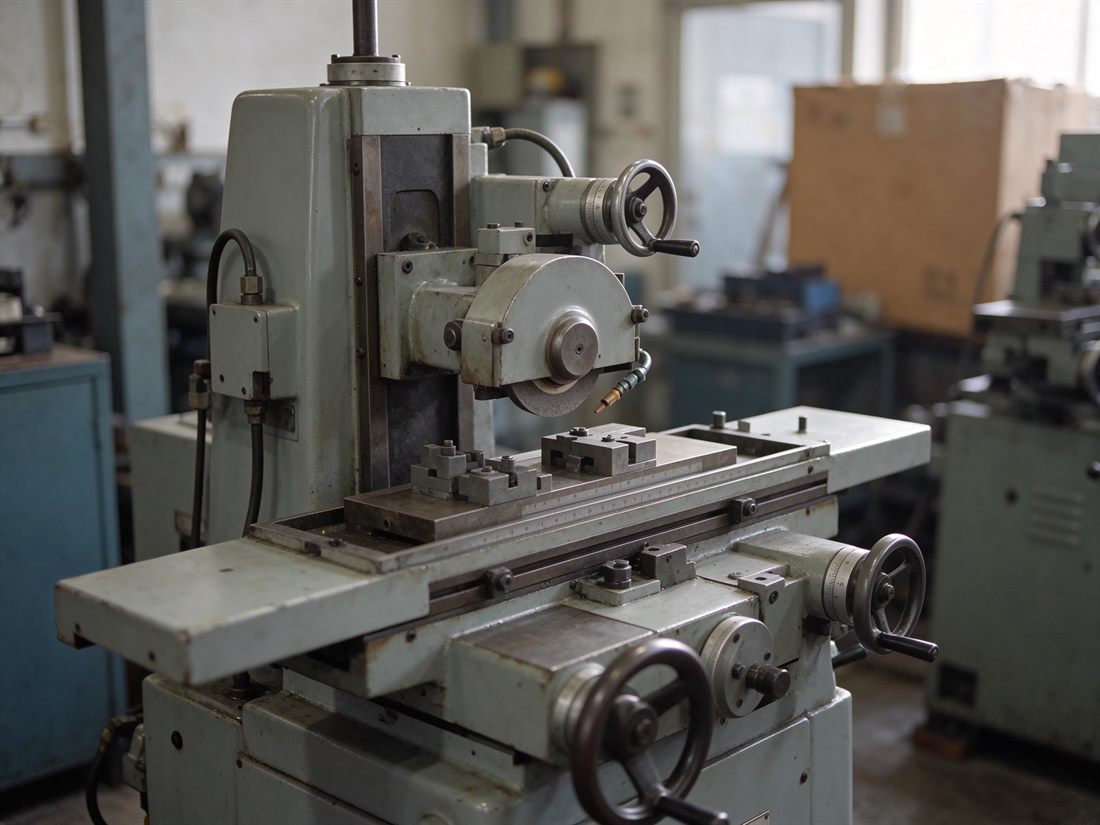
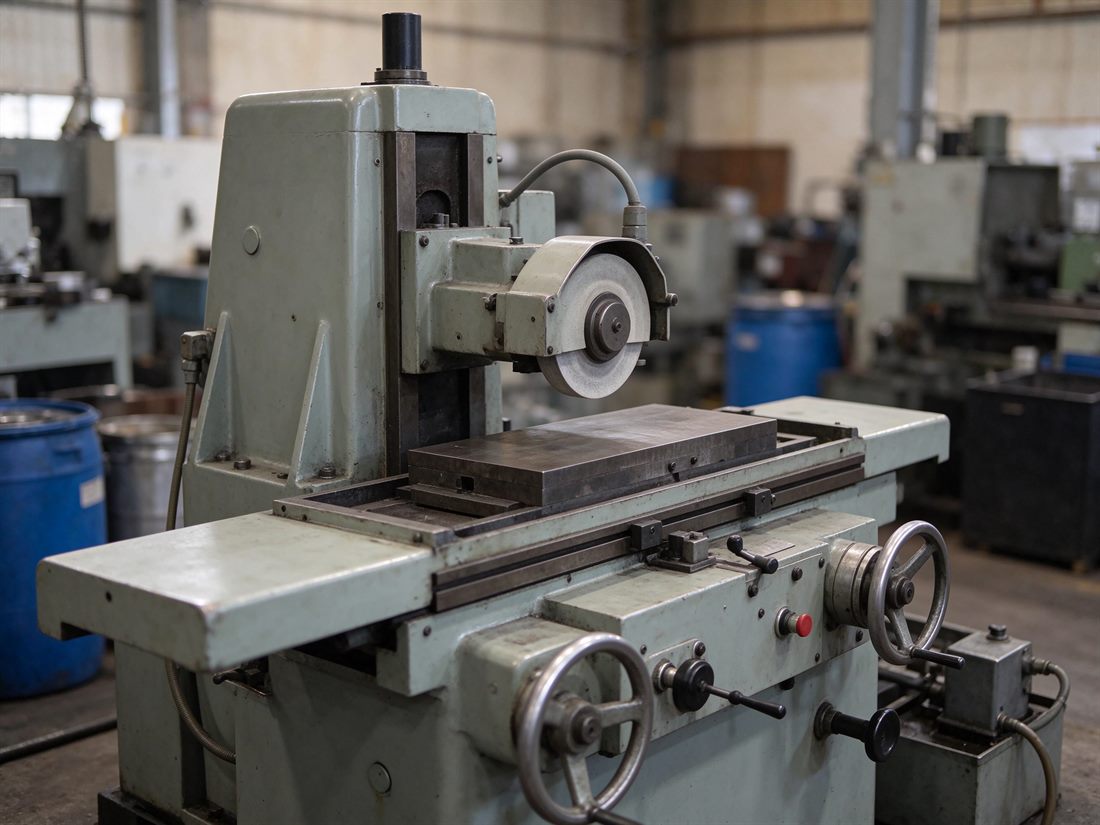
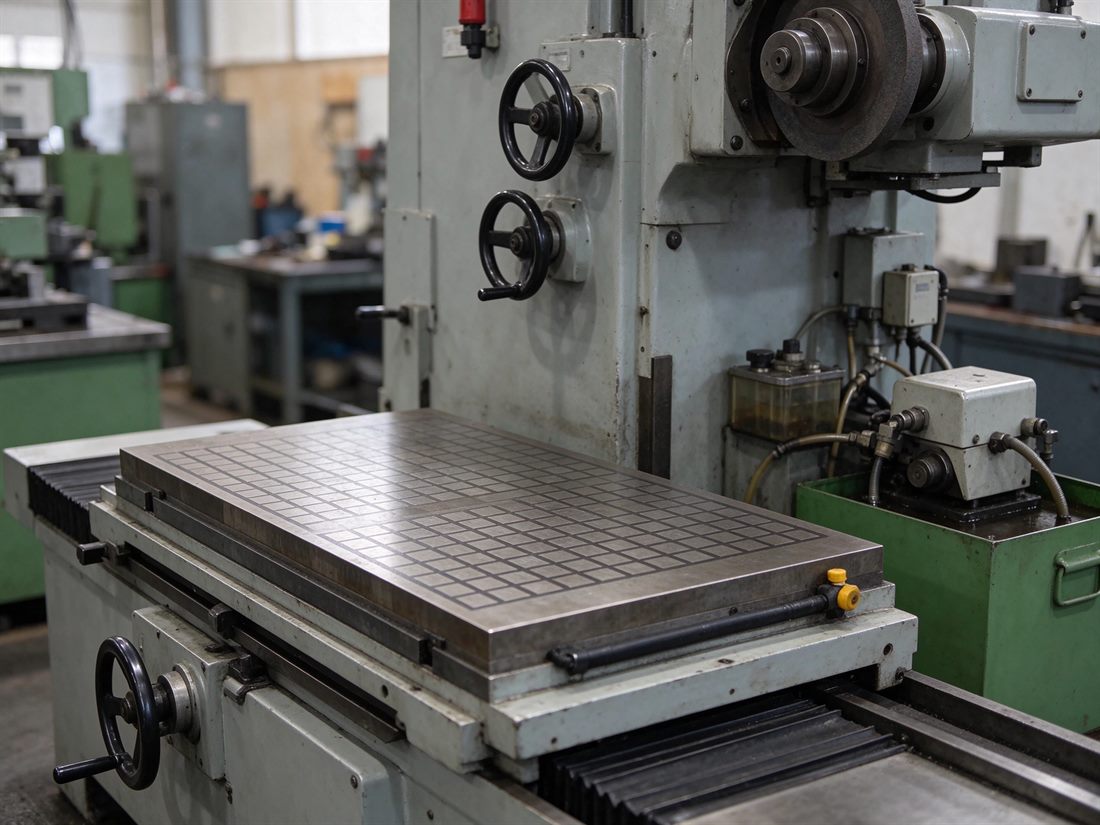
Manual grinding wins where the batch is small and the tolerance is tight. Typical work that comes off our 618M and 250M every week:
| Consideration | PSG-618M (450 × 150 mm) | PSG-250M (500 × 250 mm) |
|---|---|---|
| Best for | Punches, pins, small inserts, tools | Mould plates, blocks, wider dies |
| Magnetic chuck | 150 × 450 mm | 250 × 500 mm |
| Spindle motor | 1.1 kW | 1.5 kW |
| Machine weight | 550 kg | 1,050 kg |
| Indicative FOB | US$ 4,200 | US$ 6,800 |
Rule of thumb: if more than a third of your work is wider than 150 mm, take the 250M — the extra 100 mm of chuck width costs US$ 2,600 and saves re-fixturing every job. If your work is overwhelmingly punches and inserts, the 618M is the more productive machine because the wheel head is closer to the work and the traverse is lighter.
Feel. On a thin or interrupted cut, the operator hears and feels the wheel load before the part moves. On a hydraulic machine the table is already moving at 12–18 m/min and a grab happens before anyone can react. This is the single reason tool rooms still buy manual machines.
No hydraulic heat. A hydraulic power pack puts roughly 1–2 kW of heat into the oil and the bed casting over a shift. On long, thin parts that becomes measurable growth. Hand feed has no oil circuit to warm up, so a part ground at 8 am and 4 pm comes out the same size.
Maintenance you can do yourself. No pump, no solenoid valve, no pressure setting to drift. Way lubrication and wheel balancing are the whole routine.
Both machines are rated 0.005 mm flatness over the standard chuck, with spindle radial runout under 2 µm measured at the flange. What makes that repeatable is upstream of the grinder:
The practical limit is the operator and the wheel, not the iron. A lightly dressed 46-grit aluminium oxide wheel taking 0.005 mm per pass on hardened tool steel will hold flatness all day; a glazed wheel pushed at 0.02 mm per pass will burn the part whatever the machine is rated.
A manual machine is the cheapest way to own 0.005 mm flatness: US$ 4,200–6,800 FOB Ningbo or Shanghai, 25–35 days lead time, 1.1–1.5 kW of spindle power, and about 1.6 m² of floor space for the 618M. There is no hydraulic oil to change, no servo drive to fail, and the wear parts — wheel, flange, wiper, coolant nozzle — are the same stock items we air-freight within 72 hours for the whole range.
If throughput rather than cost is the constraint, compare with the automatic hydraulic line — same footprint class, four times the removal rate per hour, and one operator can run several. If you need to hold 0.002 mm on a family of parts with repeat batches, the CNC line is the step up. Consumables and fixtures for either machine are listed under parts and accessories.
| Specification | PSG-618M Manual Surface Grinder (450 × 150 mm) | PSG-250M Manual Surface Grinder (500 × 250 mm) | PSG-818M Manual Surface Grinder (450 × 200 mm) | PSG-1020M Manual Surface Grinder (500 × 250 mm) | PSG-1224M Manual Surface Grinder (600 × 300 mm) | PSG-1624M Manual Surface Grinder (600 × 400 mm) |
|---|---|---|---|---|---|---|
| Table size | 450 × 150 mm | 500 × 250 mm | 450 × 200 mm | 500 × 250 mm | 600 × 300 mm | 600 × 400 mm |
| Max grinding length | 460 mm | 600 mm | 460 mm | 510 mm | 610 mm | 610 mm |
| Max grinding width | 160 mm | 250 mm | 210 mm | 260 mm | 310 mm | 410 mm |
| Max spindle centre to table | 350 mm | 400 mm | 380 mm | 400 mm | 450 mm | 500 mm |
| Grinding wheel | 180 × 13 × 31.75 mm | 200 × 20 × 50.8 mm | 200 × 16 × 31.75 mm | 200 × 20 × 31.75 mm | 250 × 25 × 31.75 mm | 250 × 25 × 31.75 mm |
| Spindle speed | 2,850 rpm | 2,850 rpm | 2,850 rpm | 2,850 rpm | 2,850 rpm | 2,850 rpm |
| Spindle motor | 1.1 kW | 1.5 kW | 1.5 kW | 1.5 kW | 2.2 kW | 3 kW |
| Table feed | Manual, handwheel | Manual, handwheel | Manual, handwheel | Manual, handwheel | Manual, handwheel (hydraulic option) | Manual, handwheel (hydraulic option) |
| Flatness | 0.005 mm | 0.005 mm | 0.005 mm | 0.005 mm | 0.005 mm | 0.005 mm |
| Machine weight | 550 kg | 900 kg | 720 kg | 850 kg | 1,150 kg | 1,450 kg |
| Voltage | 220 V / 380 V, 50/60 Hz | 220 V / 380 V, 50/60 Hz | 220 V / 380 V, 50/60 Hz | 220 V / 380 V, 50/60 Hz | 220 V / 380 V, 50/60 Hz | 220 V / 380 V, 50/60 Hz |
Figures are the catalogue specification for each model. Where a machine is built to order — larger tables, special voltages, extra coolant capacity — the final values are confirmed on the order drawing.
Yes. Both the PSG-618M and PSG-250M are rated 0.005 mm flatness over the chuck, and the bed is hand-scraped rather than ground so the geometry holds after months of use. The limit in practice is wheel condition and pass depth: 0.005 mm per pass with a freshly dressed wheel, not 0.02 mm.
Roughly 35–50 minutes on the 250M: about 0.3 mm of stock removed at 0.01 mm per pass with a 46-grit wheel, then two spark-out passes. On the 618M the same plate needs re-fixturing because the chuck is narrower.
No. The 618M is available with a 220 V single-phase 1.1 kW spindle, the 250M with 220 V single-phase or 380 V three-phase 1.5 kW. Tell us the destination country and the machine ships with the matching motor.
Table and chuck size: 450 × 150 mm versus 500 × 250 mm, 1.1 kW versus 1.5 kW spindle, 550 kg versus 1,050 kg. The 250M costs about US$ 2,600 more and suits plate work; the 618M is the better tool-room machine for punches and inserts.
Included: magnetic chuck, coolant tray with settling tank, wheel and flange, balancing arbor, diamond dresser, toolbox, English manual and one set of wipers. Optional: sine table, demagnetiser, dust extractor, extra wheels, digital readout.
Fumigated plywood case with VCI film, then FOB Ningbo or Shanghai, or CIF/DAP to your port on request. Standard lead time is 25–35 days; a single 618M fits in a 20-foot container with two other machines.

