Genuine PyeahGrind surface grinder parts: wheel flanges, diamond dressers, balancing stands…
A surface grinder is a machine plus a set of parts that decide what it can actually do. The wheel flange and balancing arbor decide whether the spindle runs smooth at 1450 rpm; the chuck controller decides whether a finished part stays flat when you release it; the way wipers decide whether the slide still holds 0.005 mm after two years of cast iron dust.
We stock the consumables and fixtures that wear or get lost, for our own machines and for other makes, with air freight inside 72 hours when a line is down. Prices run from US$ 45 for a diamond dresser to US$ 1,250 for a balancing stand.
Wheel flanges, diamond dressers, balancing arbors, chuck controllers, coolant nozzles and wear parts — kept in stock and shipped by air within 72 hours.
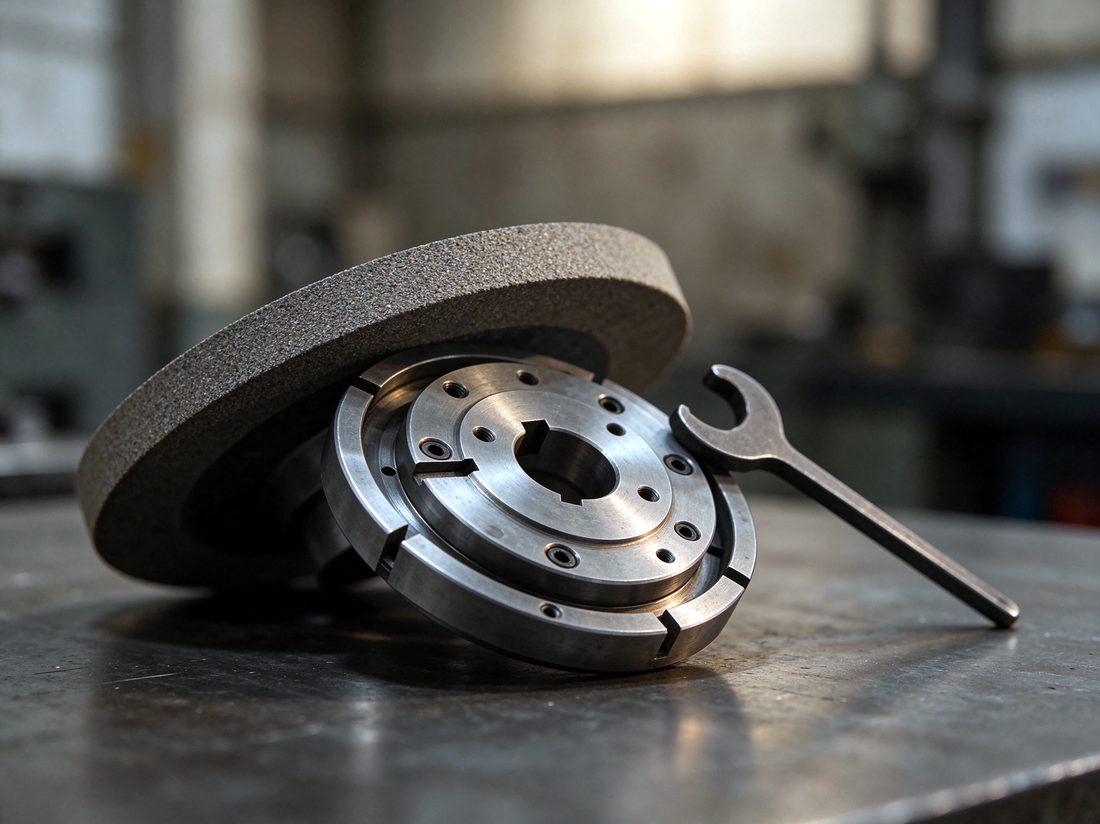
The flange is where spindle accuracy either survives or is thrown away. A wheel mounted on an unbalanced flange at 1450 rpm generates a vibration that shows up as chatter marks and taper on every part. Our flange and arbor sets are matched pairs, dynamically balanced to G2.5 at 1500 rpm, with a taper bore that repeats to 2 µm when remounted — which means re-balancing after a wheel change stops being a ritual.
Available for 200 mm, 250 mm and 300 mm wheels, in standard and heavy-duty versions. Price from US$ 320 per set.
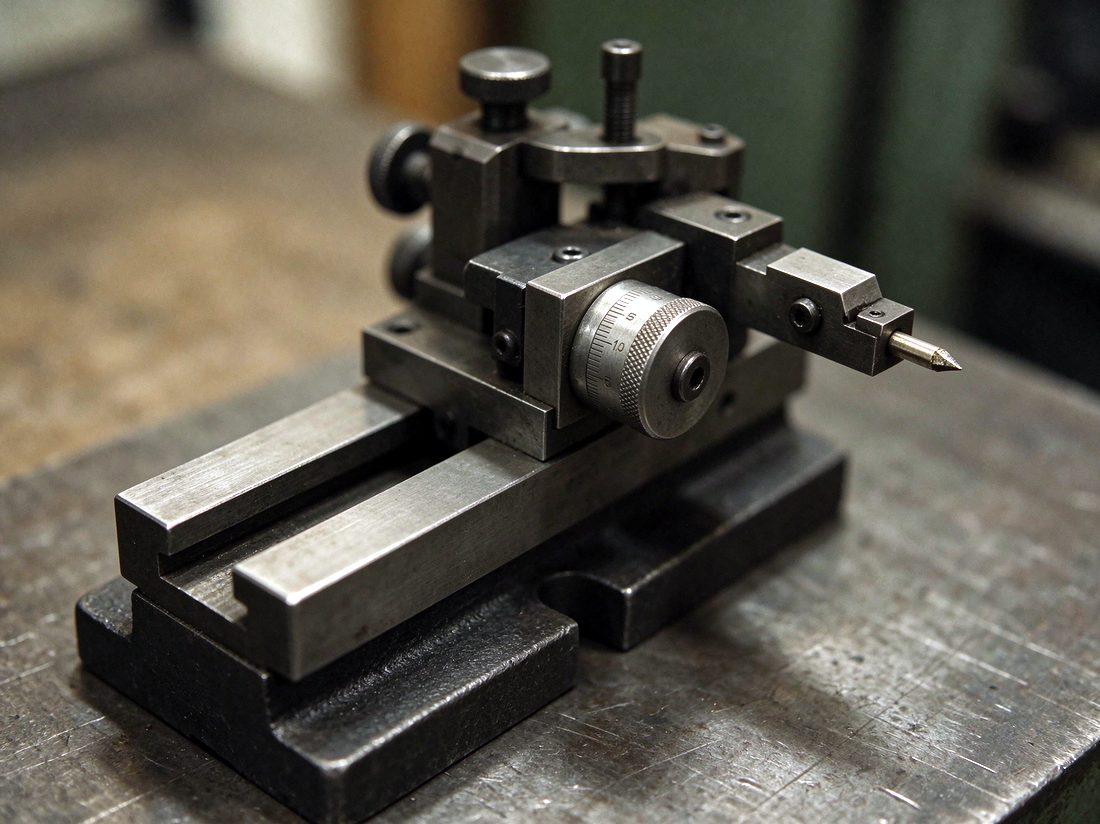
Dressing is the operation that decides the finish on every part that follows. A single-point diamond held in a rigid holder, traversed across the wheel at 0.02 mm depth and 0.1 mm per pass, restores a sharp, open wheel face. We supply natural and synthetic diamond points in 0.25, 0.5 and 1.0 carat, with holders for table-end and magnetic-base mounting.
From US$ 45 for the point, US$ 120 with holder. For high-volume dressing, a rotary diamond dresser is available on request.
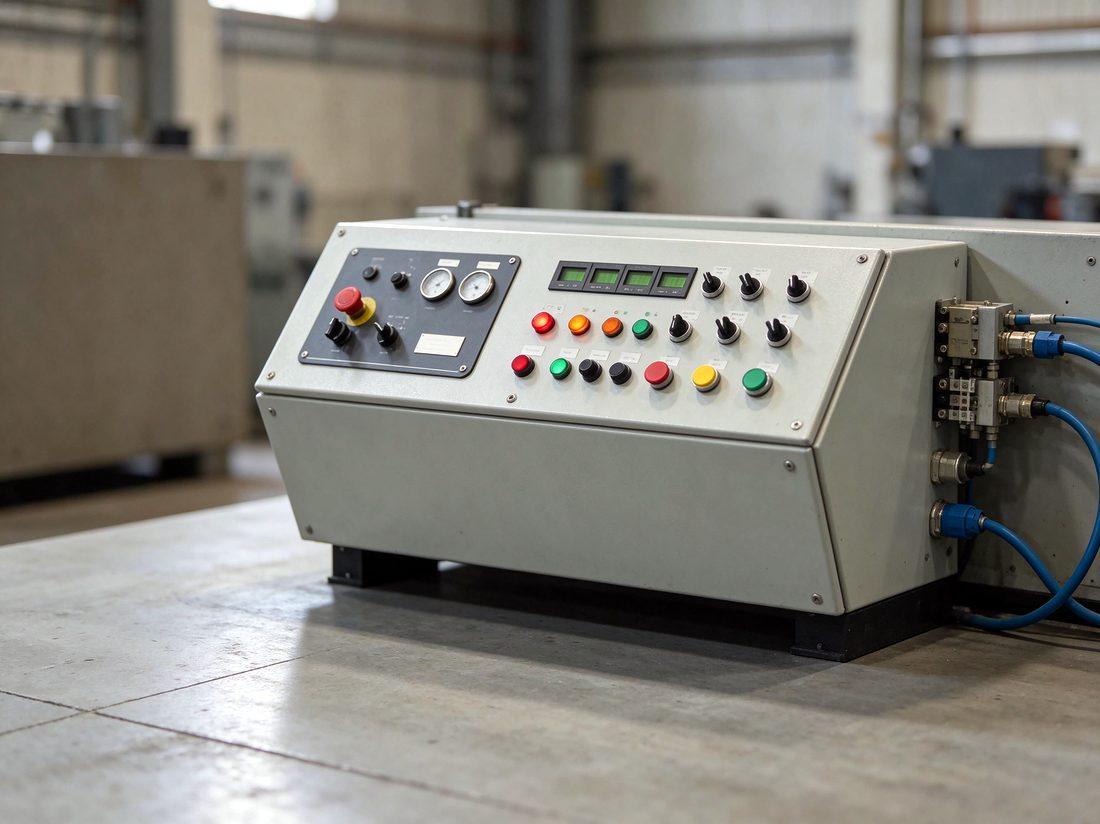
A permanent magnetic chuck holds the part while it is being ground — and keeps holding a residual field into it afterwards, which is why finished parts attract swarf and why thin parts sometimes measure differently once released. A controller with a demagnetising cycle solves both: variable holding force for thin work, and a controlled decay at the end of the cycle.
From US$ 480 for a single-axis controller, US$ 760 with demagnetiser. Compatible with our chucks and most third-party permanent chucks.
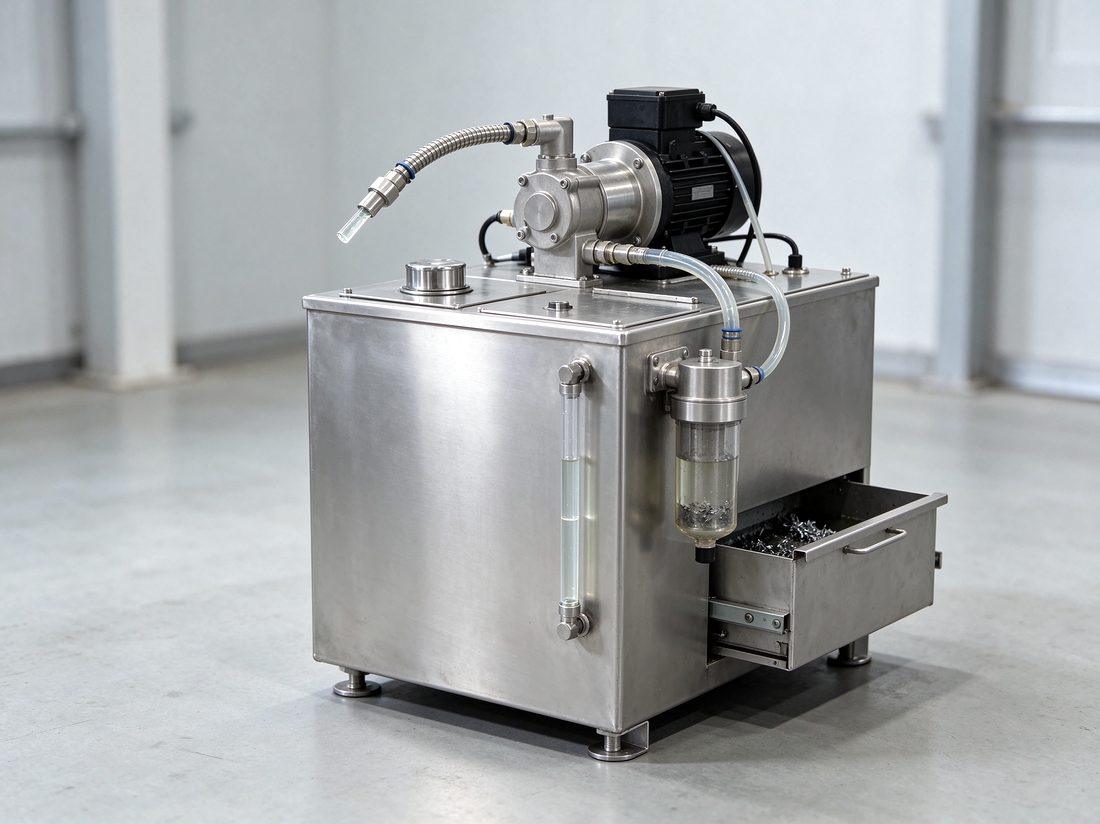
Coolant does three jobs at once: it cools the contact zone, flushes chips out of the wheel pores, and lubricates the cut. A nozzle that puts fluid where the wheel enters the work is the difference between Ra 0.4 µm and a burnt surface. Our adjustable nozzle assembly fits any surface grinder with a 1/2 inch coolant line.
The magnetic separator removes the fine iron that would otherwise circulate and score the ways. From US$ 210 for the nozzle assembly, US$ 590 for the separator and tank.
Before a wheel goes on a spindle it should be checked on a stand. Static imbalance of a few grams shows up as a 2–4 µm vibration at the spindle, which is a third of your flatness tolerance spent before the first pass. Our balancing stand takes wheels from 150 to 400 mm, with a hardened arbor and adjustable rails.
US$ 1,250 for the stand, US$ 1,450 with the balancing kit and weights.
Abrasive dust on the ways is the single largest cause of a machine losing accuracy. Wipers are consumable: replace them every 6–12 months, or every 3 months in a shop grinding cast iron dry. The lubrication kit includes the wiper set for a machine, the metering units and the correct way oil grade.
From US$ 95 per wiper set, US$ 180 for the full lubrication kit.
Tell us the machine model or just the wheel size and chuck size — most of these parts are dimensional, not proprietary, and fit other makes of surface grinder as well as ours. Everything is in stock as standard items; air freight reaches most destinations inside 72 hours, and a full set of consumables weighs under 30 kg, so it travels cheap.
If you are still specifying the machine itself, start from the manual line, the automatic hydraulic line or the CNC line.
Figures are the catalogue specification for each model. Where a machine is built to order — larger tables, special voltages, extra coolant capacity — the final values are confirmed on the order drawing.
Most do. Flanges, dressers, nozzles, wipers and chucks are dimensional rather than proprietary: give us the wheel size, the chuck size and a photo of the mounting, and we confirm fit before shipping.
After every wheel change, and any time a part shows chatter or taper. The balancing check itself takes five minutes on the stand; an unbalanced 250 mm wheel can cost several micrometres of the flatness tolerance.
Every 6–12 months in normal use, every 3 months if you grind cast iron dry. Worn wipers let abrasive into the slide, and that shows up later as taper or as a machine that no longer holds 0.005 mm.
If finished parts must be measured accurately, handled cleanly, or welded or coated afterwards, yes. Residual magnetism holds swarf, distorts thickness readings on thin parts, and causes arc blow in welding.
A single diamond dresser point ships by air express. There is no minimum order value; consumables travel as small parcels, and a full replenishment kit for one machine weighs under 30 kg.
Stock items dispatch in 1–3 days, with air freight reaching most destinations inside 72 hours. Special wheels, sine tables and custom fixtures take 15–25 days.

