Double column gantry surface grinders up to 9 m table length for large plates, mould bases and…
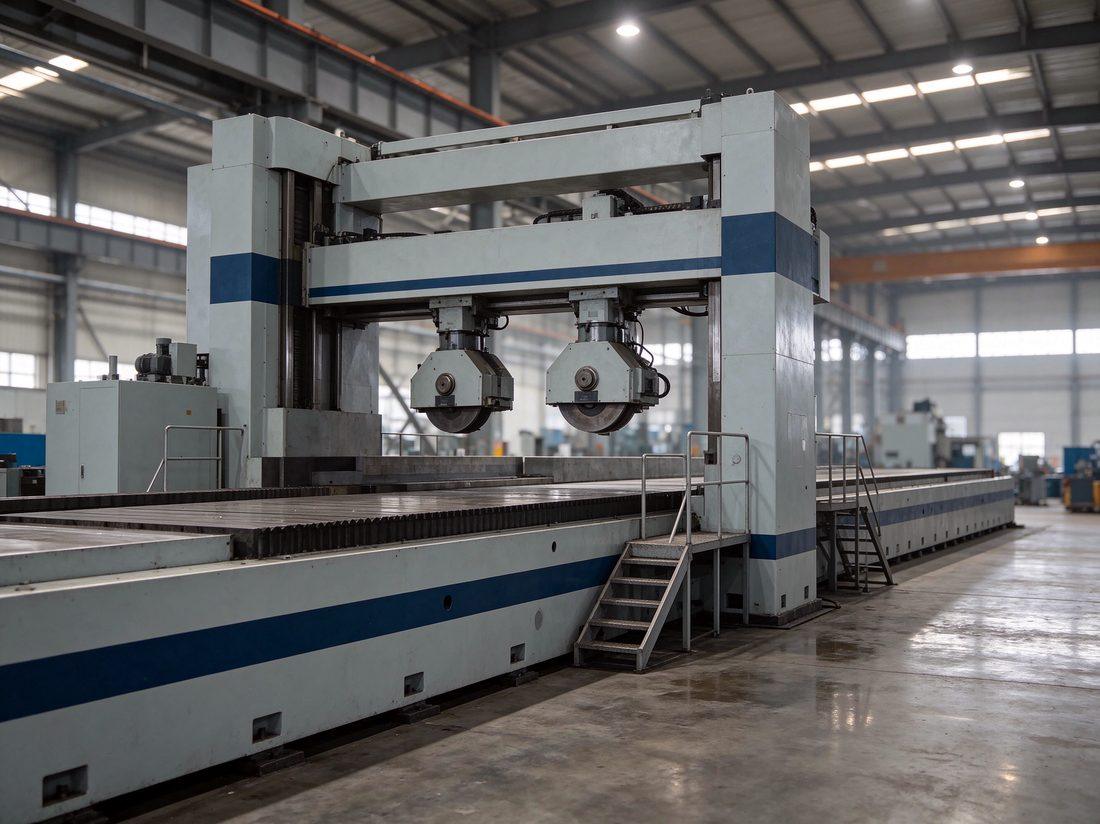
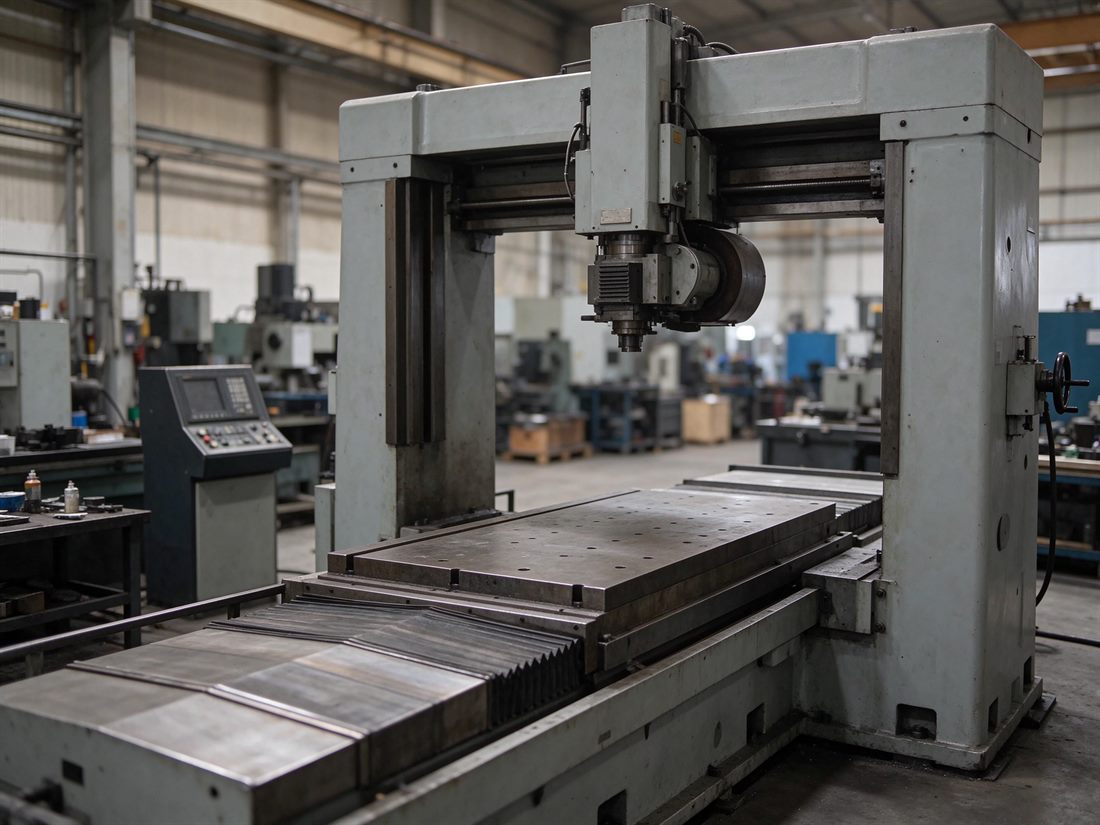
A gantry surface grinder puts the work on a fixed bed and moves a bridge over it. That single change removes the limit that stops every saddle machine: the part no longer has to fit on a table that travels, and its weight no longer hangs off the end of a slide. Plates of five, ten, twenty tonnes become ordinary work.
Five models cover 1200 × 400 mm up to 9000 × 2500 mm, from the PSG-12040GM at US$ 52,000 to the HZ-K90250 at US$ 340,000, holding 0.01–0.02 mm per 1000 mm over the full length.
Double column gantry grinders from 1200 mm to 9 m table length for large plates, mould bases, guide rails and machine-tool beds.
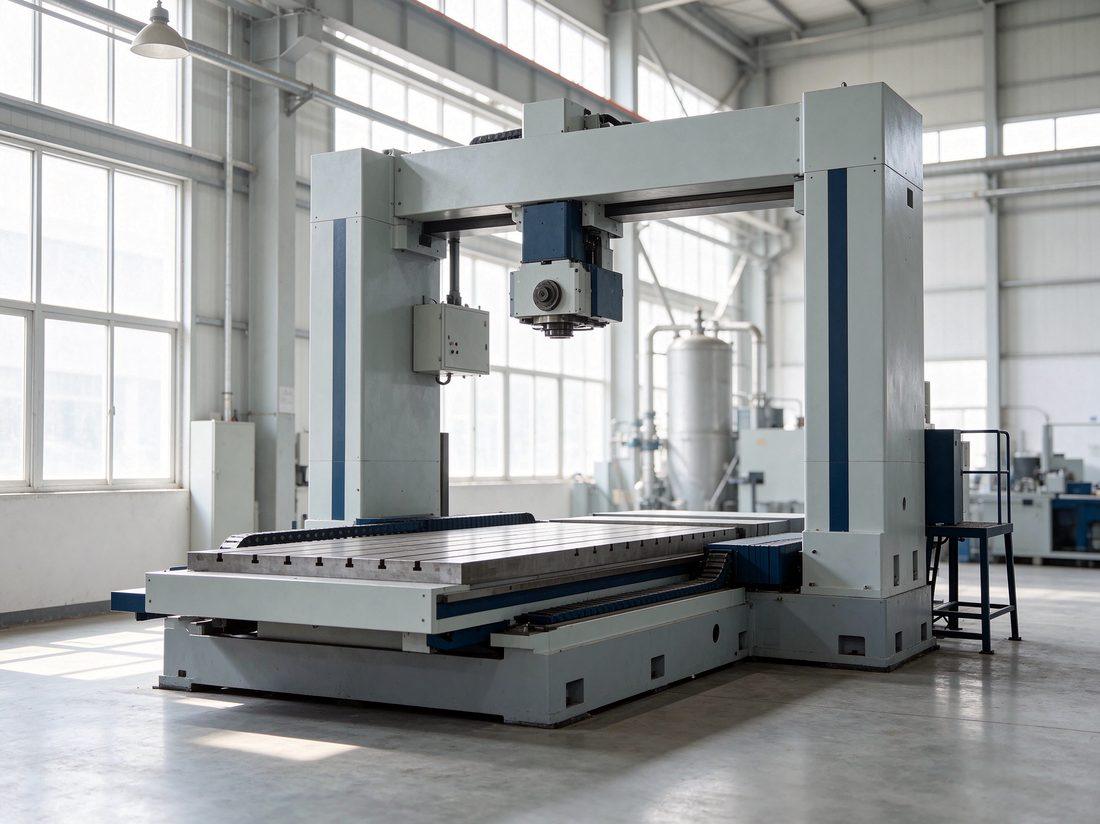
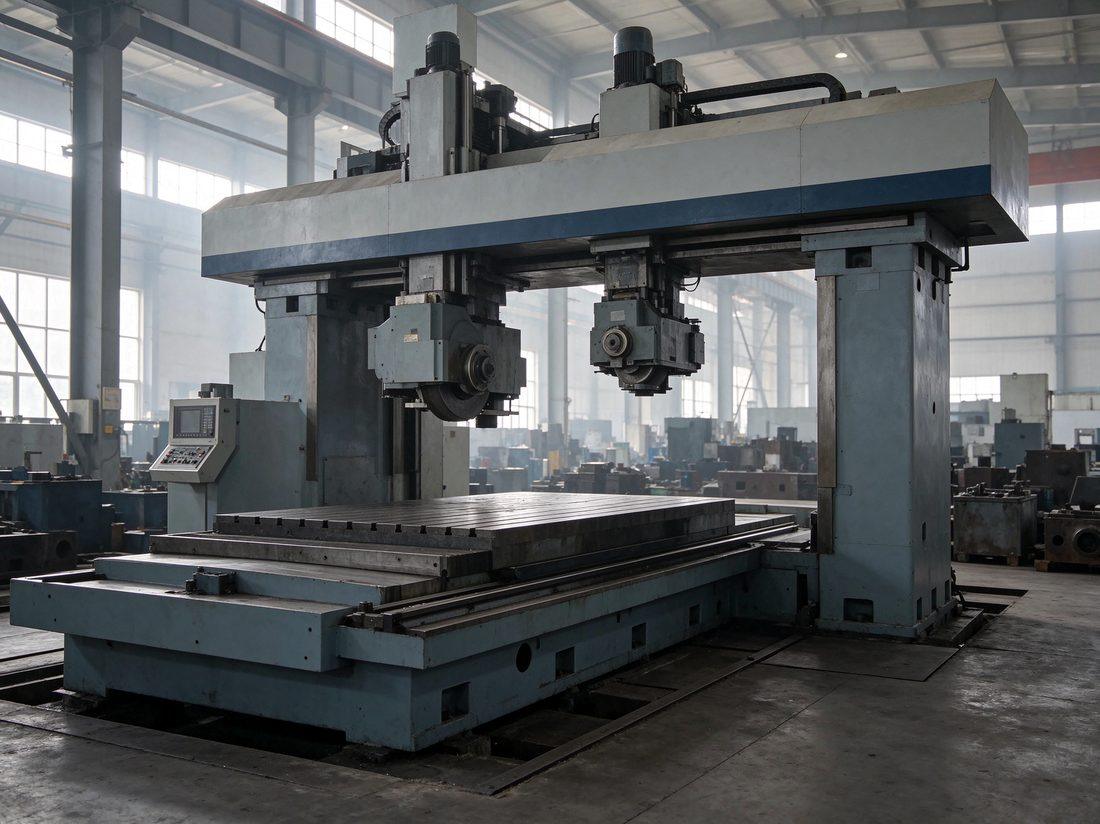
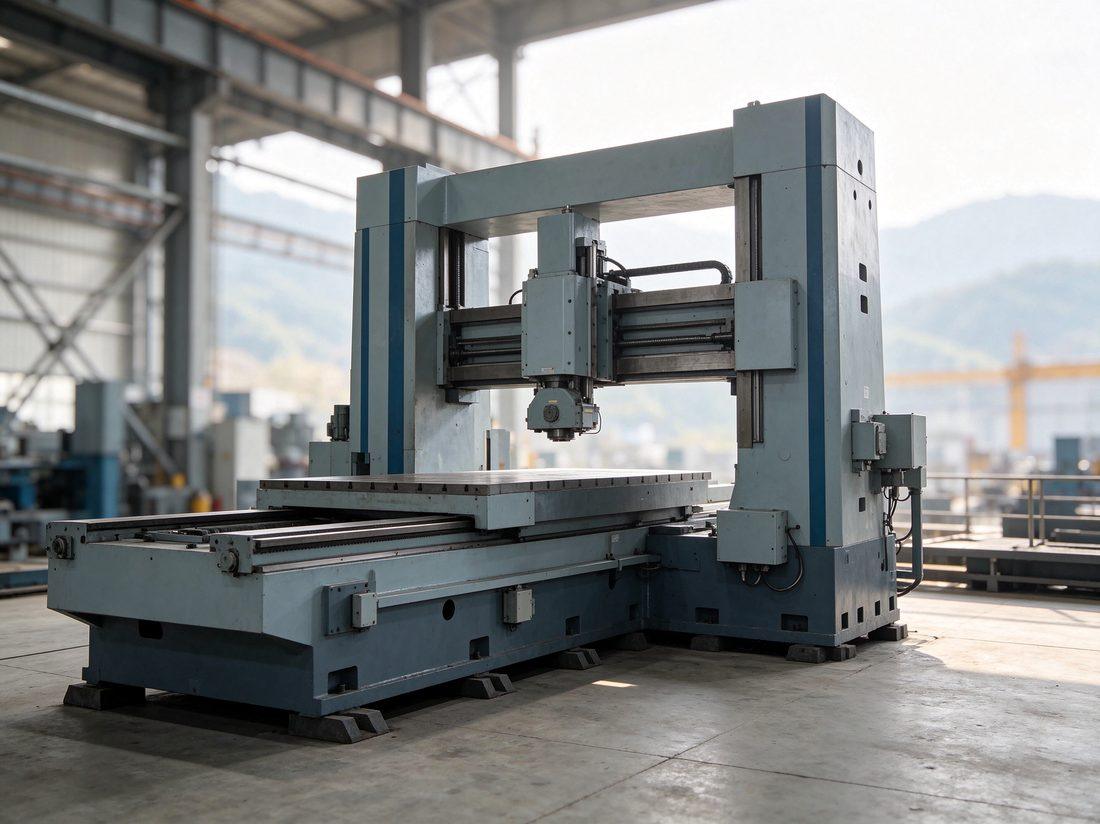
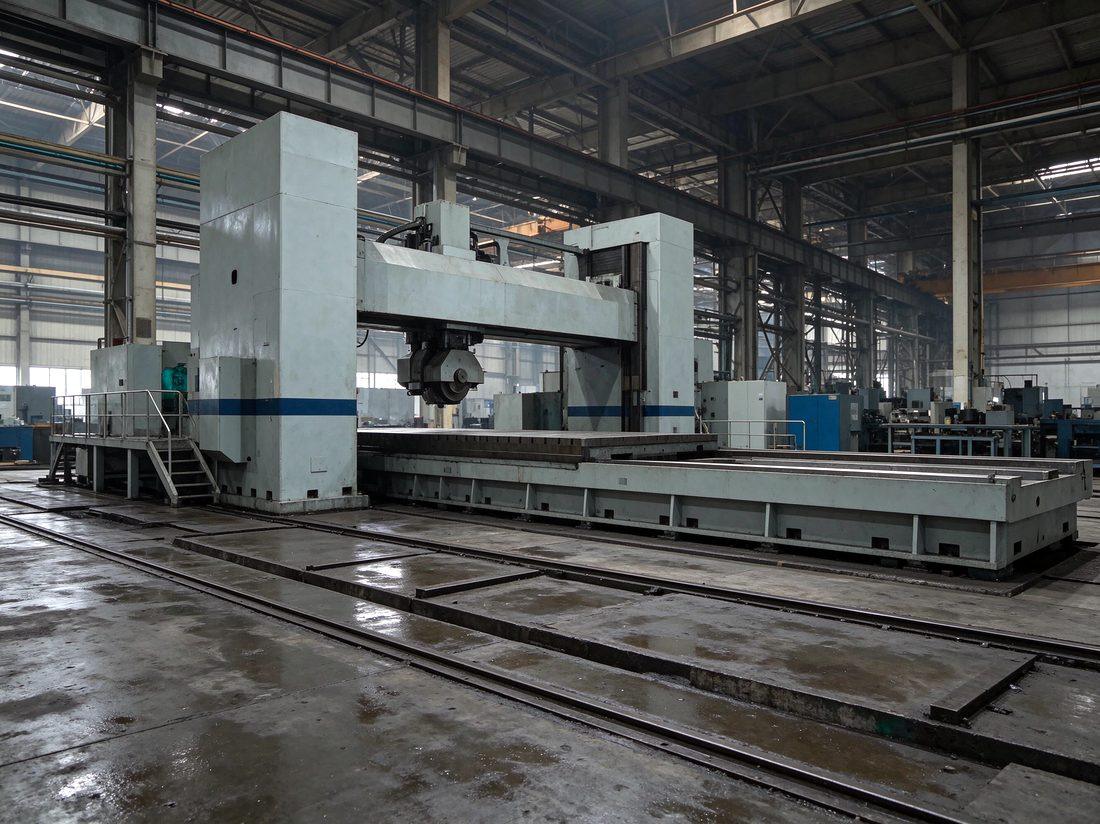
Three physical reasons, and they are the ones that decide the purchase:
The cost is height and foundation: a gantry needs a pit or a levelled slab, a crane over the bed, and a column structure tall enough to reach down onto the work.
| Model | Work area | Typical work | Indicative FOB |
|---|---|---|---|
| PSG-12040GM | 1200 × 400 mm | Small heavy plates, machine beds, guide rails | US$ 52,000 |
| PSG-32130GM | 3200 × 1300 mm | Large platens, press bolsters, wide die plates | US$ 128,000 |
| PSG-40100GM | 4000 × 1000 mm | Long plates, turbine and heavy-machine components | US$ 168,000 |
| HZ-K90200 | 9000 × 2000 mm | Very long and wide blocks, marine and press frames | US$ 285,000 |
| HZ-K90250 | 9000 × 2500 mm | The widest plate work in the range | US$ 340,000 |
The HZ-K series are the heavy-duty builds: a double-column frame, a box-section bridge and a wheel head sized for deep cuts in hardened plate, at nine metres of travel. If you are removing 3 mm of stock from a hardened 9000 × 2500 mm block, the K series is the machine; if you are skimming 0.3 mm off a 1200 mm plate, the PSG-12040GM is enough and costs far less.
Nobody quotes 0.005 mm on a nine-metre machine, and any supplier who does is quoting the wrong number. The meaningful figures are:
Those figures are held by hand-scraping the bed ways in sections — a nine-metre guide cannot be machined to that on a single pass and cannot be shipped if it is bolted together and hoped for — then verified with a laser interferometer over the full travel. We ship the laser record with every gantry machine, plus the set-up procedure for the foundation, because a gantry on a bad slab will not hold its own specification.
A gantry is a construction project as much as a machine purchase. Before the order is confirmed, we need:
Standard models ship in 60–90 days; the largest builds are engineered to order and run longer. Shipment is flat-rack or break-bulk from Shanghai or Ningbo, with the bed, columns and bridge as separate packages. Our engineers attend installation for the first machine of a type — commissioning, laser verification, first-part grinding and operator training — and remote support thereafter.
If your parts are under 1500 mm, a long-table hydraulic machine is cheaper and faster to install: see the automatic hydraulic line. For large round parts — rings, bearing seats, valve bodies — the rotary table line is the better geometry.
| Specification | PSG-12040GM Double Column Gantry Surface Grinder (1200 × 400 mm) | PSG-32130GM Double Column Gantry Surface Grinder (3200 × 1300 mm) | PSG-40100GM Double Column Gantry Surface Grinder (4000 × 1000 mm) | HZ-K90200 Double Column Gantry Surface Grinder (9000 × 2000 mm) | HZ-K90250 Double Column Gantry Surface Grinder (9000 × 2500 mm) | PSG-20100GM Double Column Gantry Surface Grinder (2000 × 1000 mm) |
|---|---|---|---|---|---|---|
| Table size | 1200 × 400 mm | 3200 × 1300 mm | 4000 × 1000 mm | 9000 × 2000 mm | 9000 × 2500 mm | 2000 × 1000 mm |
| Max grinding length | 1250 mm | 3300 mm | 4100 mm | 9200 mm | 9200 mm | 2,100 mm |
| Max grinding width | 400 mm | 1300 mm | 1000 mm | 2000 mm | 2500 mm | 1,000 mm |
| Grinding wheel | 350 × 40 × 127 mm | 400 × 50 × 203 mm | 400 × 50 × 203 mm | 500 × 63 × 203 mm | 500 × 63 × 203 mm | 400 × 50 × 203 mm |
| Spindle motor | 7.5 kW | 15 kW | 15 kW | 22 kW | 22 kW | 11 kW |
| Structure | Double column, moving table | Double column, moving table | Double column, moving table | Double column, moving table | Double column, moving table | Double column, moving table |
| Accuracy | 0.005 mm / 500 mm | 0.01 mm / 1000 mm | 0.01 mm / 1000 mm | 0.02 mm / 1000 mm | 0.02 mm / 1000 mm | 0.01 mm / 1000 mm |
| Machine weight | 8,000 kg | 26,000 kg | 32,000 kg | 45,000 kg | 52,000 kg | 16,500 kg |
Figures are the catalogue specification for each model. Where a machine is built to order — larger tables, special voltages, extra coolant capacity — the final values are confirmed on the order drawing.
The models cover work areas from 1200 × 400 mm up to 9000 × 2500 mm. The limit is not the table but the wheel-head reach and the clearance under the bridge: tell us the part envelope and the height under the wheel, and we confirm the build.
Because over metres of travel the dominant errors are guide straightness and thermal growth, not spindle runout. 0.01–0.02 mm per 1000 mm cumulative is the honest specification, and it is verified with a laser interferometer over the full length before shipment.
Yes. A pit or an isolated slab with anchor bolts, per the drawing we supply. A gantry installed on an ordinary shop floor will twist: the bed is long and the loads are concentrated at the columns.
Typically 10–20 working days on site for a mid-size gantry, including foundation checks, assembly, laser alignment and first-part grinding. Our engineers attend the first installation of each type.
Yes, and that is much of its value. The work is fixed to the bed, the bridge moves over it, so a fixture stays undisturbed for the whole cycle and the part can be checked in place.
60–90 days, longer for engineered builds. Flat-rack or break-bulk from Shanghai or Ningbo; the heaviest single package on the K90250 bridge exceeds 12 tonnes, so port and site lifting must be planned in advance.

