CNC surface grinders with closed-loop servo control, 0.002 mm positioning accuracy and…
A CNC surface grinder replaces the handwheel, the hydraulic valve and the timer with closed-loop servo axes and a program. The payoff is not speed — a hydraulic machine removes metal faster — it is repeatability on a family of parts: the same program produces the same part with 0.002 mm positioning and 0.003 mm repeat accuracy, whether it is the first part of the shift or the hundredth, and whether or not the operator has twenty years of feel.
Three models: PSG-250SK3 (500 × 250 mm), PSG-306SK3 (600 × 300 mm) and the PSG-525CNC (500 × 250 mm) with automatic wheel dressing. All three are laser-verified and ship in 25–45 days.
Closed-loop servo surface grinders holding 0.002 mm on form and position, with touch-screen programming, auto dressing and wheel-wear compensation.
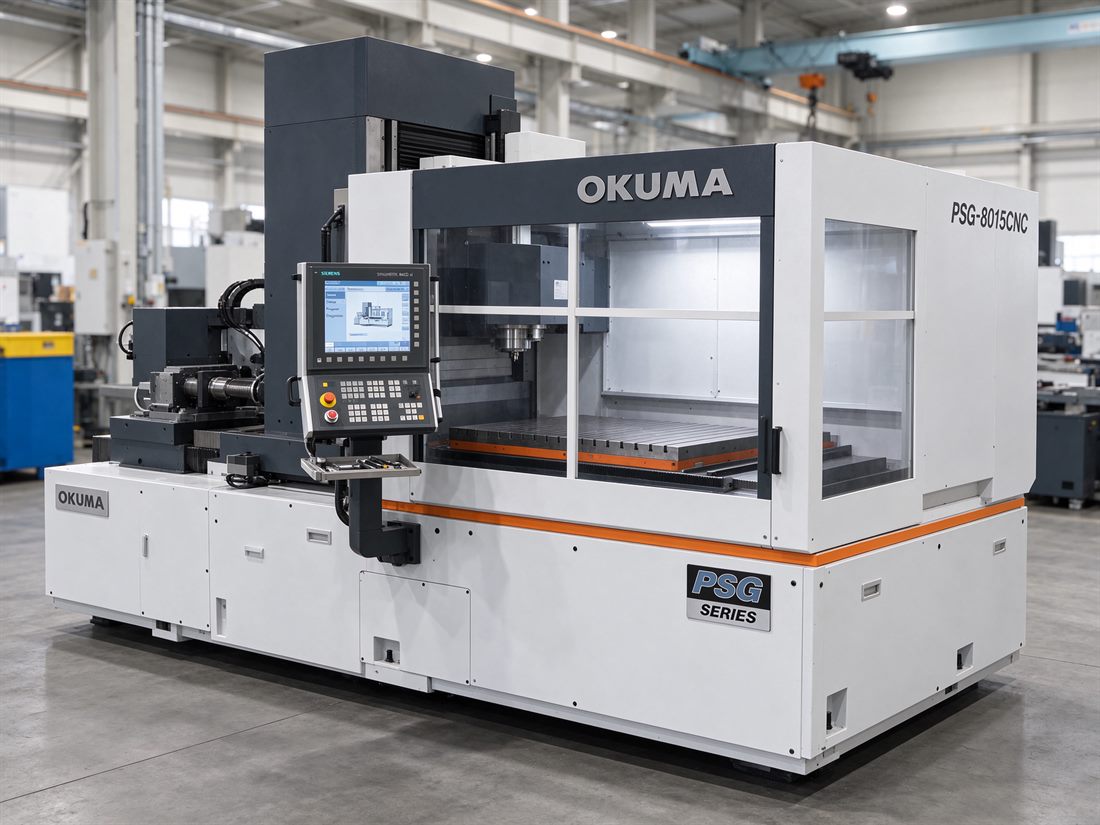
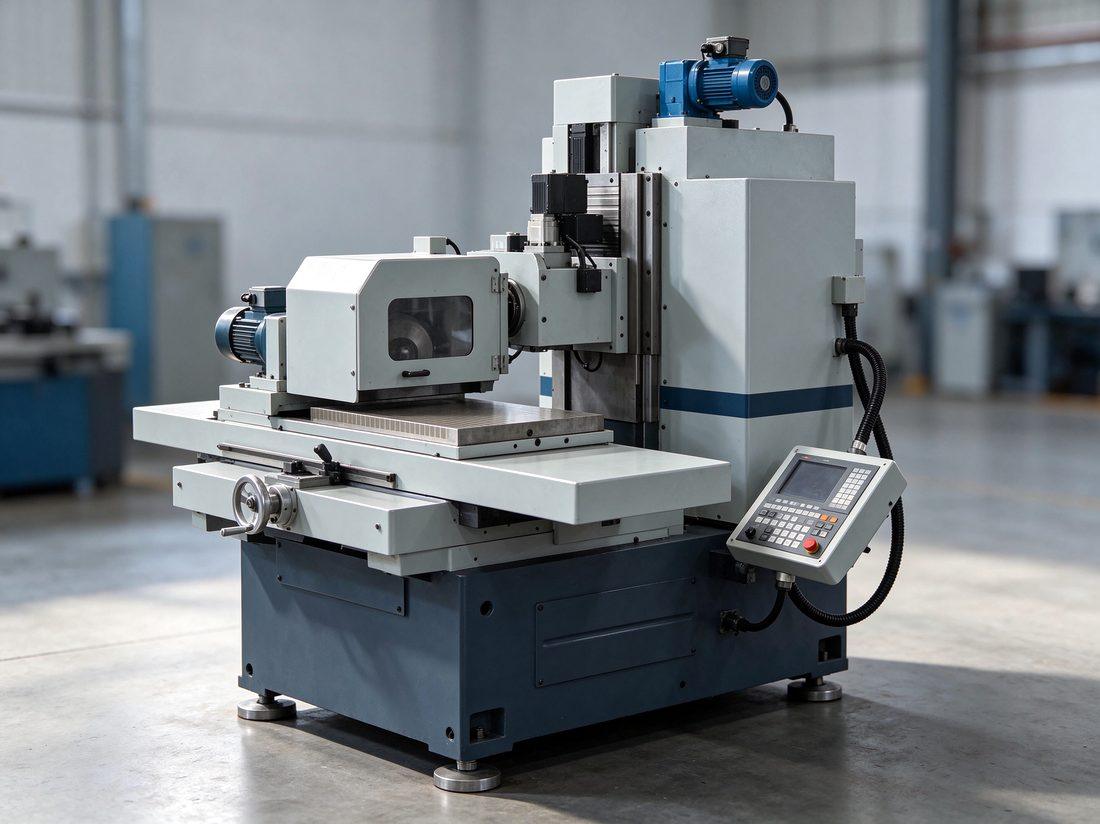
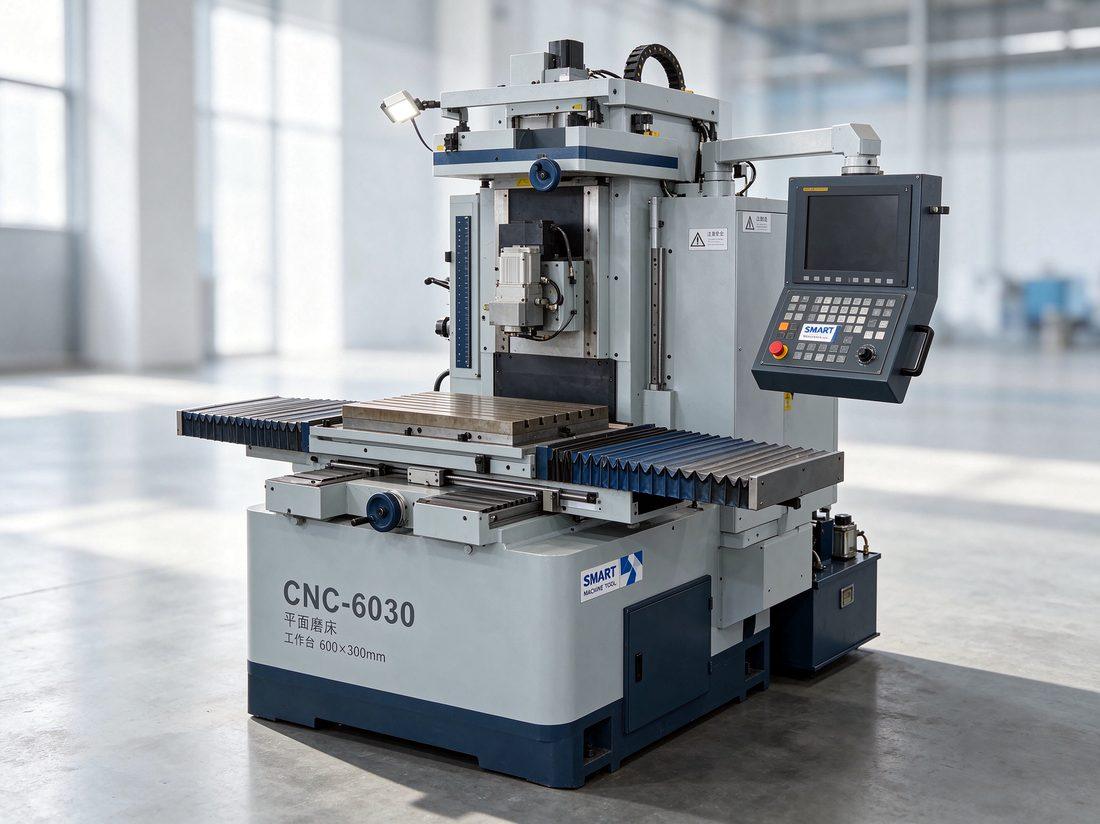
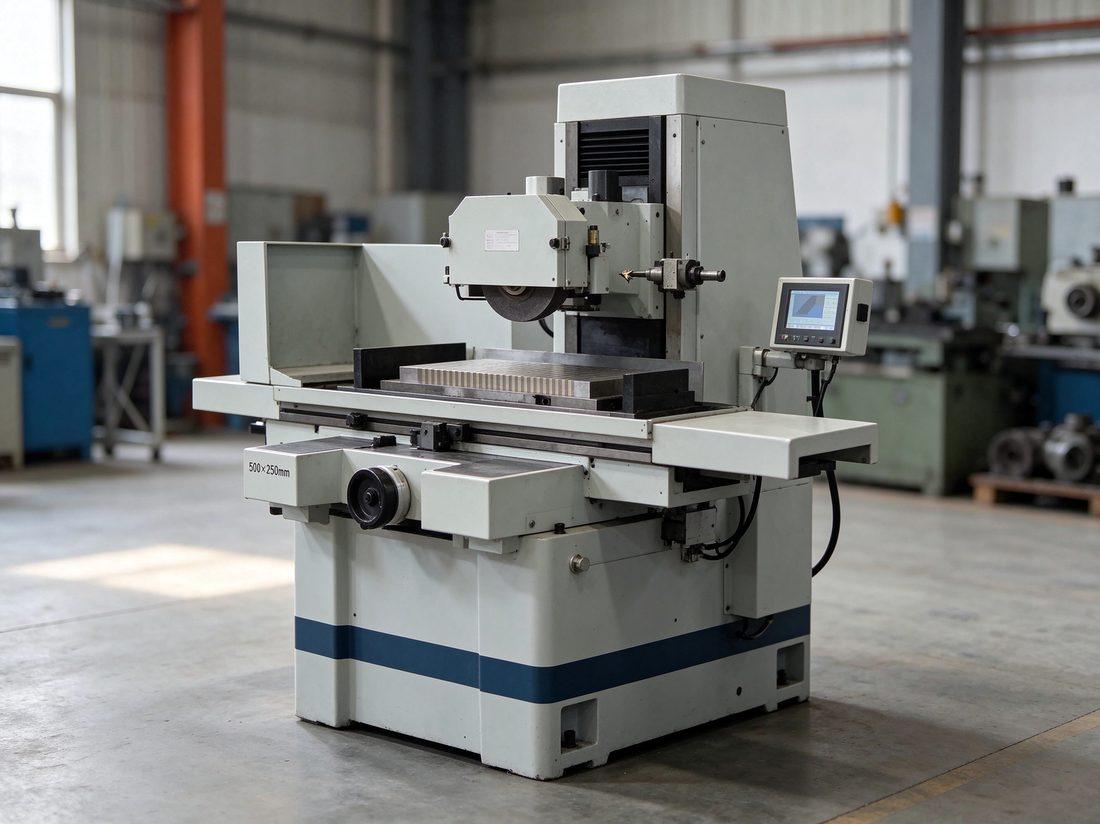
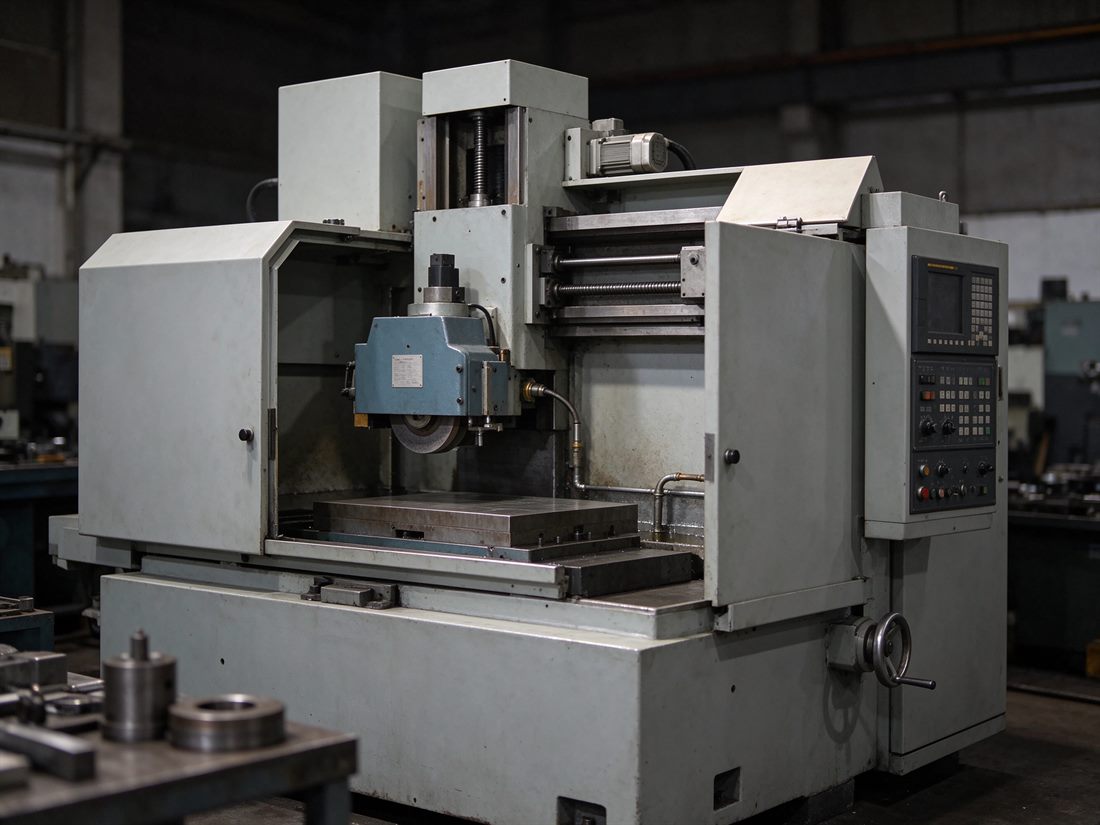
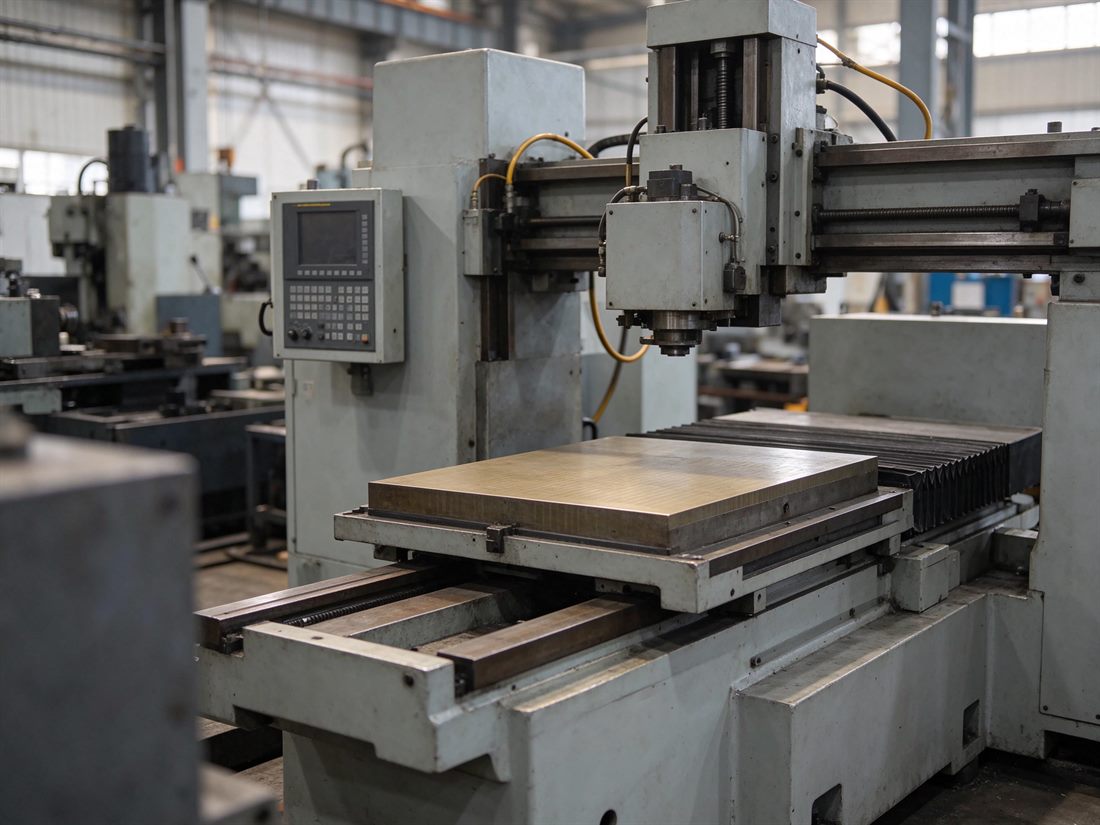
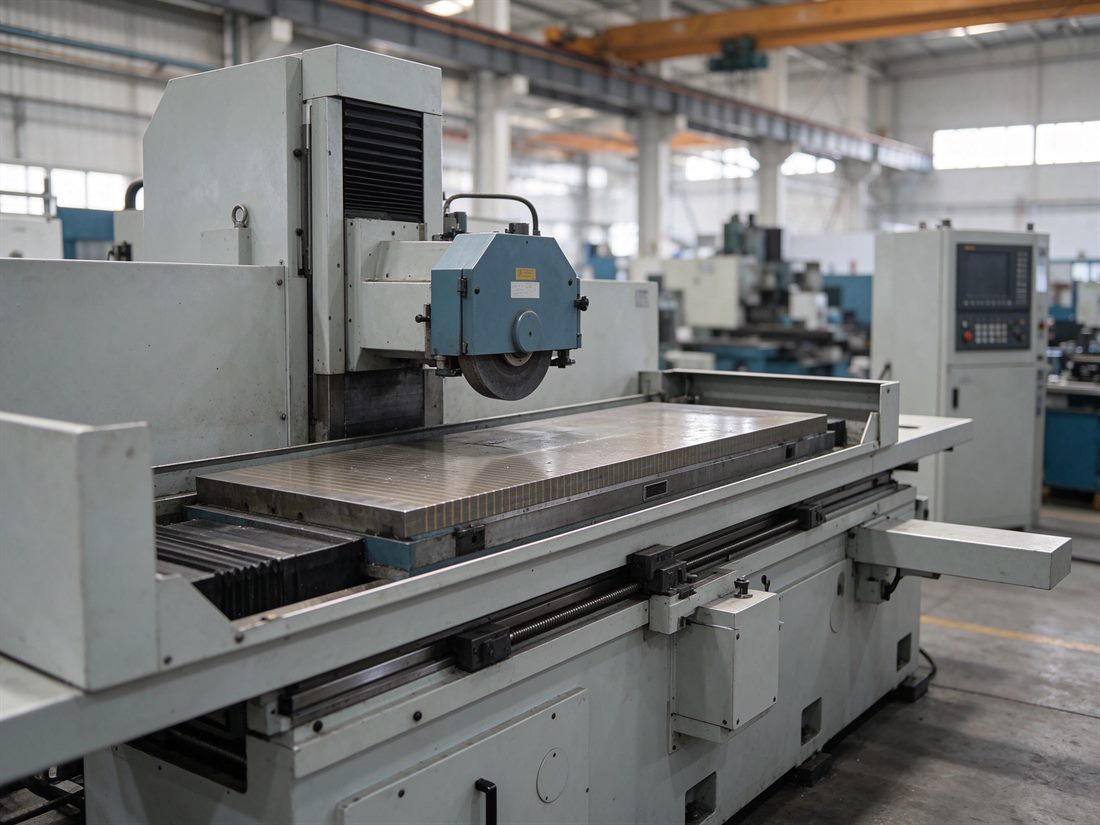
The three-axis servo system positions the wheel head and the cross axis, with the third axis handling the down feed in 0.001 mm increments. In practice that means:
| Model | Table | Positioning | Automatic dressing | Indicative FOB |
|---|---|---|---|---|
| PSG-250SK3 | 500 × 250 mm | 0.002 mm | No | US$ 28,000 |
| PSG-306SK3 | 600 × 300 mm | 0.002 mm | No | US$ 34,500 |
| PSG-525CNC | 500 × 250 mm | 0.002 mm | Yes | US$ 42,000 |
The 306SK3 is the size step: 600 × 300 mm takes most die plates and fixture bases that do not fit a 250 machine. The 525CNC is the automation step: same table as the 250SK3 but with a dressing cycle, coolant-through nozzle control and a stronger spindle package, built for runs where stopping to dress by hand would cost more than the machine.
Be honest about this before you spend US$ 28,000:
Positioning accuracy does not produce Ra 0.4 µm on its own. Three process choices do:
Every CNC machine is laser-checked on all three axes, then test-ground on a hardened sample block. You receive the positioning record, the test-part flatness and roughness figures, and the program used to produce it — so the machine's acceptance criteria can be re-run at your site with your own material. Installation and commissioning are supported by video call in English, and the control documentation is supplied in English.
For a cheaper route to repeatable batches without programming, the PLC line covers 500–900 mm tables at US$ 12,500–22,500. For consumables, chucks and coolant hardware across all three CNC models, see parts and accessories.
| Specification | PSG-8015CNC CNC Surface Grinder (1500 × 800 mm) | PSG-250SK3 CNC Surface Grinder (500 × 250 mm) — 0.002 mm | PSG-306SK3 CNC Surface Grinder (600 × 300 mm) — 0.002 mm | PSG-525CNC CNC Surface Grinder with Automatic Dressing (500 × 250 mm) | PSG-4080CNC CNC Surface Grinder (800 × 400 mm) | PSG-5010CNC CNC Surface Grinder (1000 × 500 mm) | PSG-8020CNC CNC Surface Grinder (2000 × 800 mm) |
|---|---|---|---|---|---|---|---|
| Table size | 1500 × 800 mm | 500 × 250 mm | 600 × 300 mm | 500 × 250 mm | 800 × 400 mm | 1000 × 500 mm | 2000 × 800 mm |
| Max grinding length | 1600 mm | 600 mm | 700 mm | 600 mm | 860 mm | 1,060 mm | 2,060 mm |
| Max grinding width | 800 mm | 250 mm | 300 mm | 250 mm | 420 mm | 520 mm | 820 mm |
| Grinding wheel | 400 × 50 × 203 mm | 250 × 25 × 76.2 mm | 300 × 30 × 76.2 mm | 250 × 25 × 76.2 mm | 350 × 50 × 127 mm | 400 × 50 × 203 mm | 400 × 63 × 203 mm |
| Spindle motor | 15 kW | 2.2 kW | 3 kW | 2.2 kW | 7.5 kW | 11 kW | 15 kW |
| Control | 3-axis CNC with stored cycles | 3-axis CNC, 100 programs | 3-axis CNC, interpolation | 3-axis CNC with auto-dressing | CNC, servo, 0.001 mm resolution, DXF import | CNC, servo, 0.001 mm resolution, DXF import, 4-axis ready | CNC, servo, 0.001 mm resolution, DXF import, 4-axis ready |
| Machine weight | 12,500 kg | 1,800 kg | 2,400 kg | 2,100 kg | 3,900 kg | 5,600 kg | 13,500 kg |
| Positioning accuracy | — | 0.002 mm | 0.002 mm | 0.002 mm | 0.002 mm | 0.002 mm | 0.002 mm |
| Repeatability | — | 0.003 mm | 0.003 mm | 0.003 mm | 0.003 mm | 0.003 mm | 0.003 mm |
Figures are the catalogue specification for each model. Where a machine is built to order — larger tables, special voltages, extra coolant capacity — the final values are confirmed on the order drawing.
Positioning is where the wheel head goes; flatness is what the finished surface measures. A CNC machine positions to 0.002 mm, and with a dressed wheel, correct coolant and a spark-out pass the resulting surface is flat to about 0.003–0.005 mm on a 500 mm part.
No. Programming is done at the control in plain cycles: a start point, a step depth, a cross-feed increment and a spark-out count. Most users never leave the machine console, and the English manual includes six worked examples from real parts.
The PSG-306SK3 at 600 × 300 mm. The 500 × 250 mm models cannot take a 600 mm plate, and re-fixturing a plate that long on a 250 table is never as flat as grinding it in one set-up.
On the 525CNC, yes, if you run more than about 30 parts between wheel changes. A dress cycle takes 2–3 minutes including compensation; doing it by hand at the same interval costs an operator hour per shift on a long run, plus the drift you get when dressing is skipped.
On a 500 mm hardened plate in one set-up: flatness 0.005 mm, parallelism 0.005 mm, thickness ±0.005 mm, Ra 0.4 µm. Tighter than ±0.003 mm is possible but depends on the material, the wheel and the temperature of your shop, not only on the machine.
25–45 days from order, 12 months warranty, spares held for 15 years, English manuals and remote commissioning by video call. Spindle and axis parts are air-freighted within 72 hours when a line is down.

