Rotary table surface grinders with ø400–800 mm circular chucks for rings, discs, valve plates…
A rotary table grinder turns the work under the wheel instead of running the wheel across it. For parts that are round, ring-shaped or rotationally symmetric — bearing seats, valve bodies, flanges, boss faces, sector plates — that geometry is simply more efficient: the wheel is in cut continuously, there is no reversal at the end of each stroke, and a face that would take forty passes on a reciprocating machine is finished in one.
Three models cover Ø400, Ø600 and Ø800 mm at US$ 18,500–34,000: the HZ-RT400, the HZ-RT600 and the HZ-RT800, with flatness held to 0.005 mm.
Vertical-spindle rotary table grinders with circular magnetic chucks for rings, discs, bearing races, valve plates and ceramic seals.
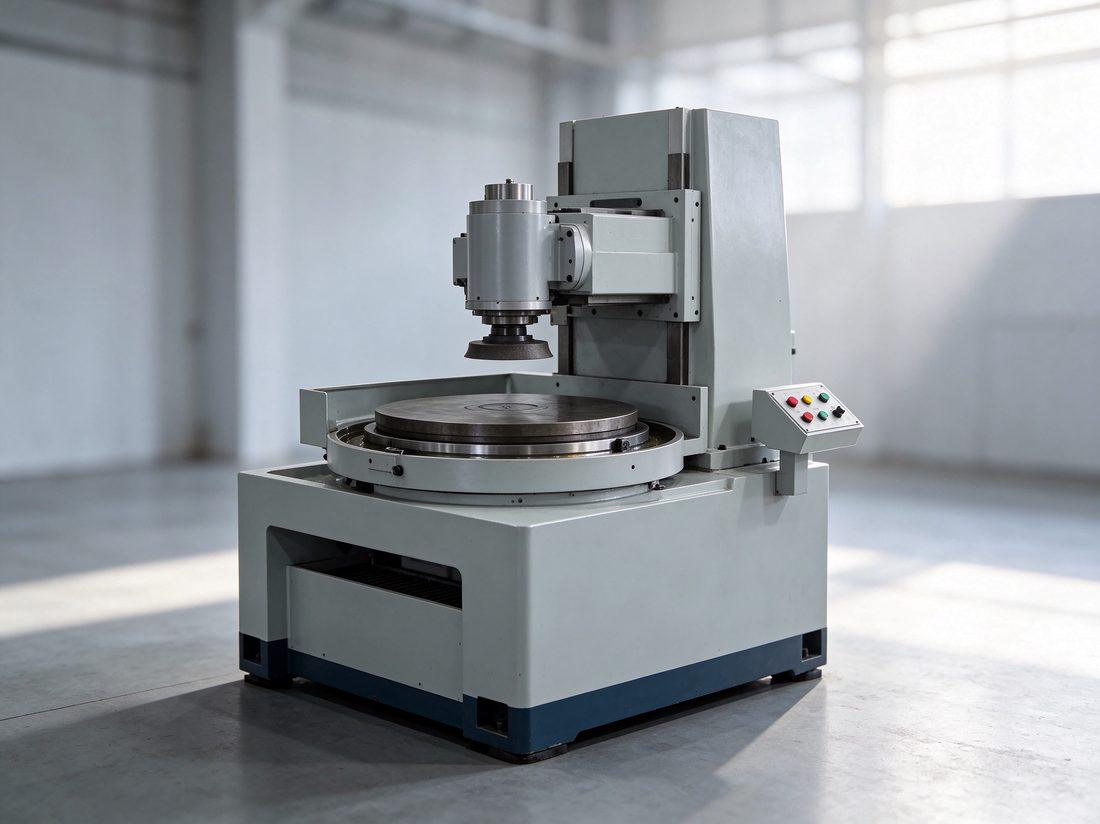
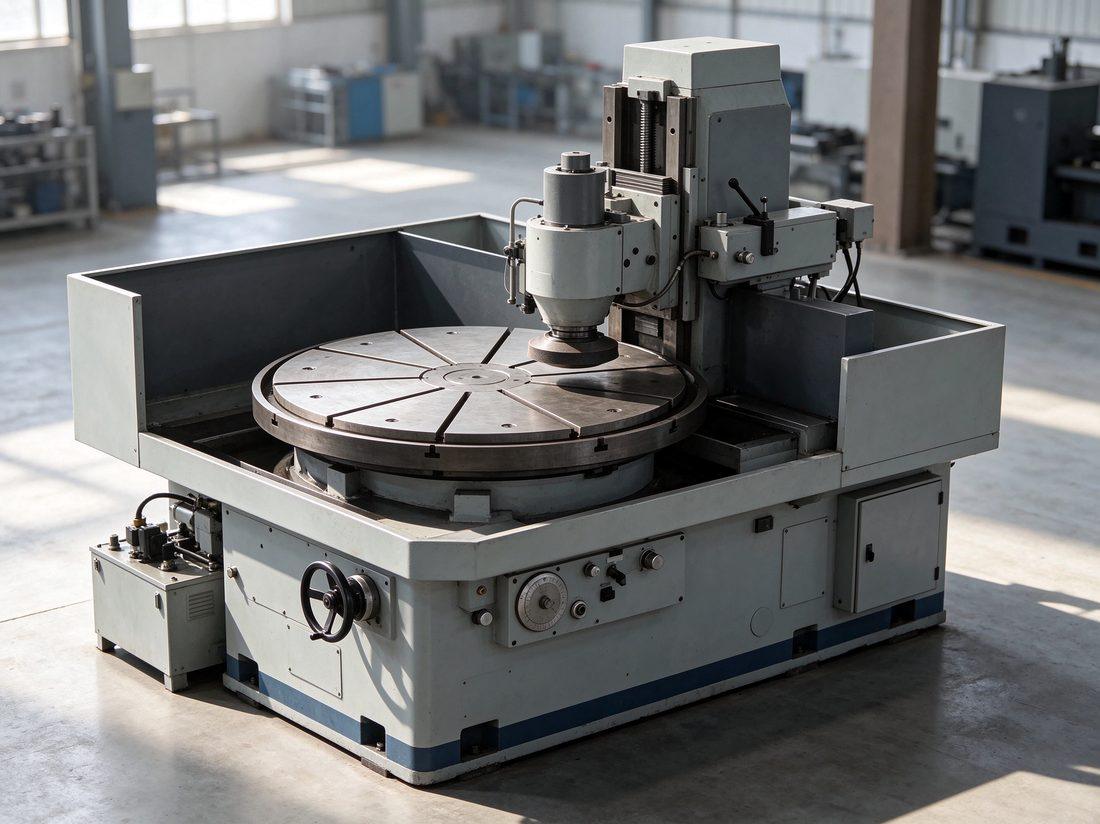
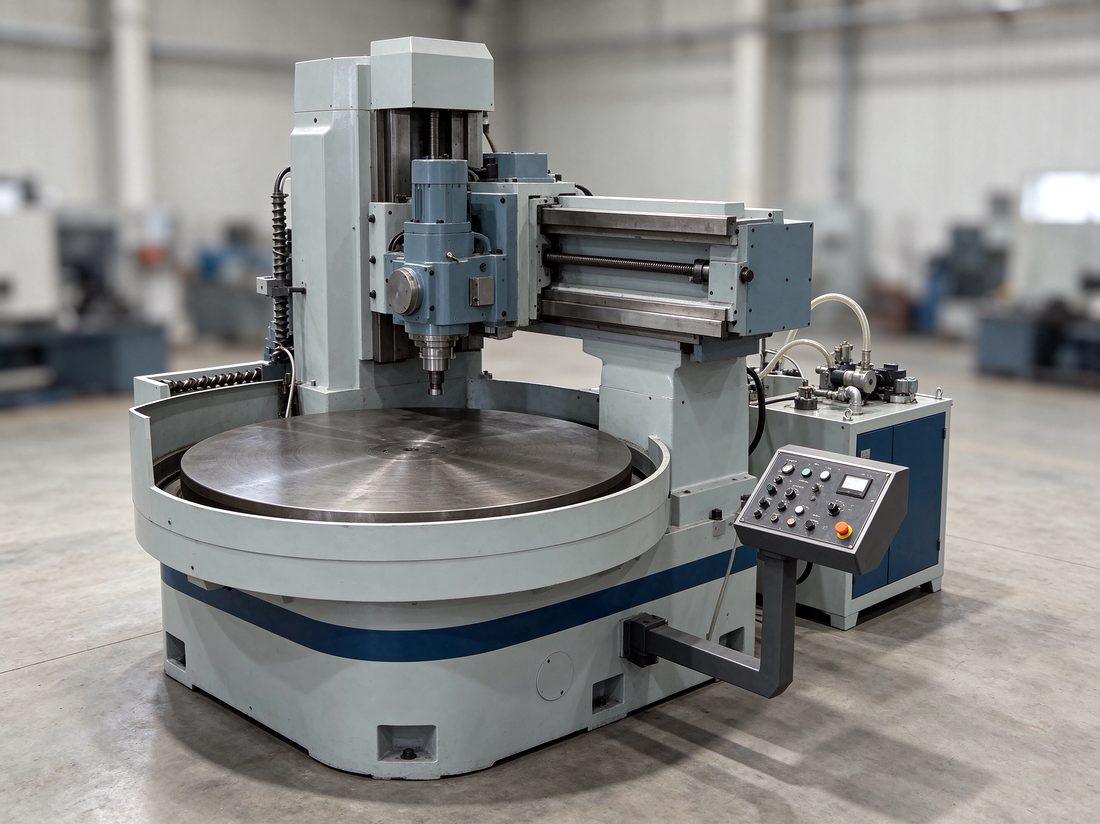
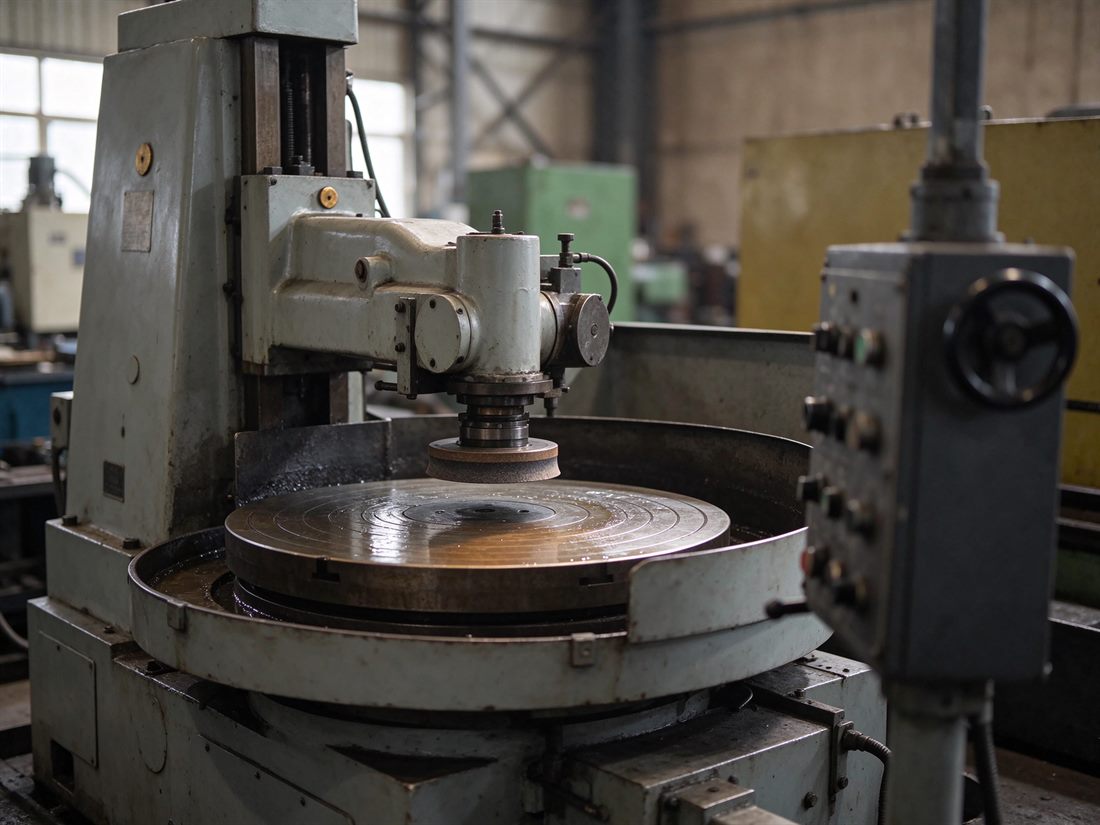
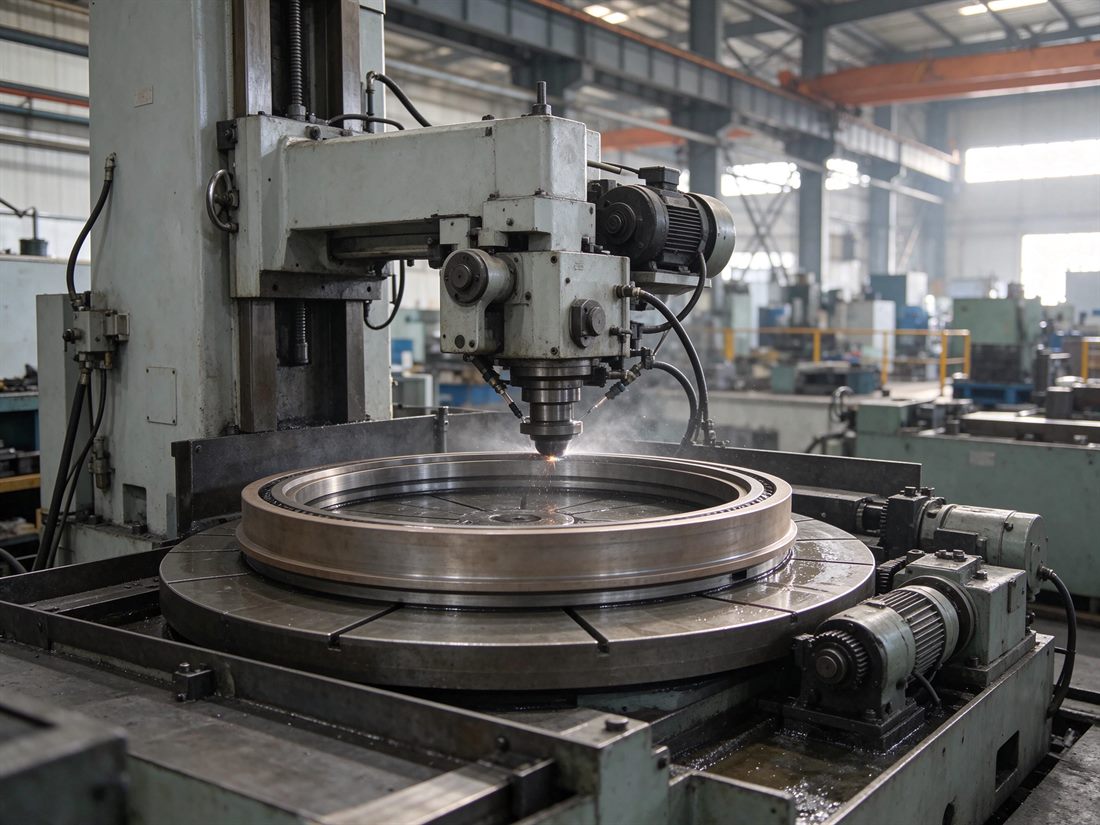
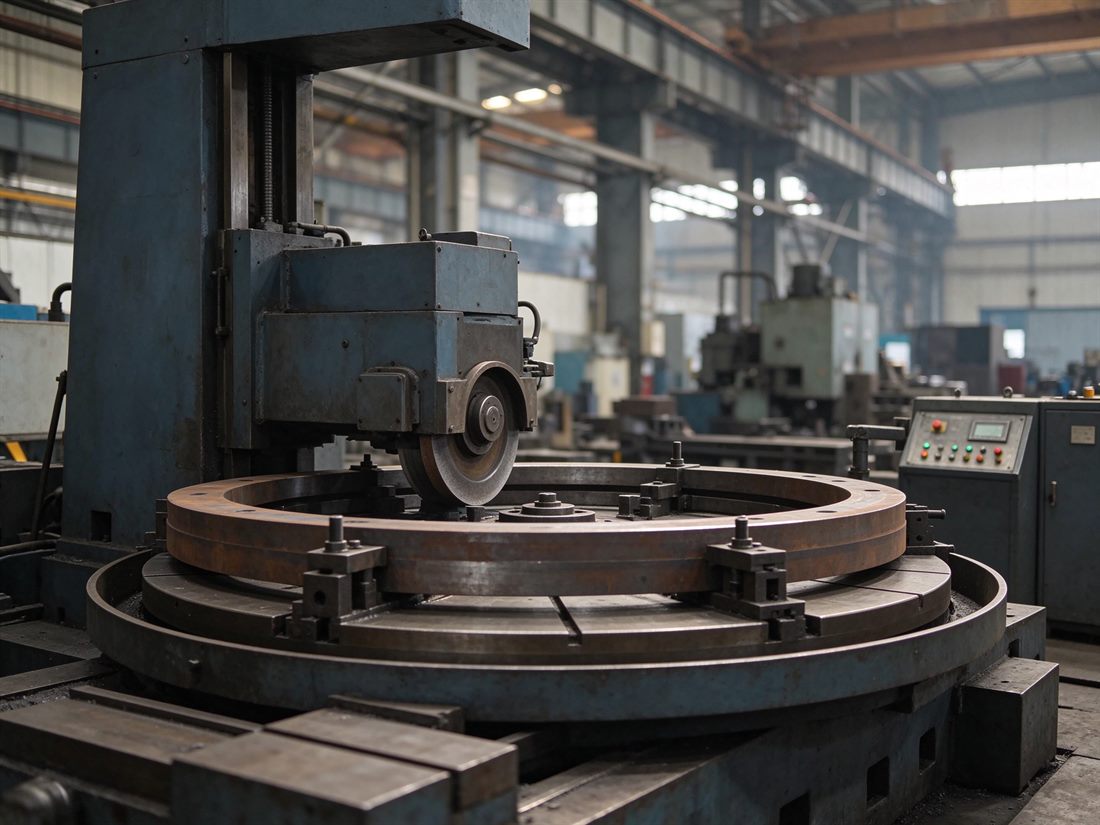
A reciprocating machine spends part of every stroke accelerating and decelerating the table, and the wheel is out of cut at each reversal. On a rotary machine the table turns at a constant rate and the wheel works the whole time. On a Ø600 mm part that is the difference between roughly 60% and 95% wheel engagement.
There is a second, less obvious benefit: the direction of the grinding marks changes continuously, so the surface is uniform with no directional pattern — which matters for sealing faces, gasket seats and slide-valve surfaces where a directional lay would leak.
| Model | Table diameter | Typical work | Indicative FOB |
|---|---|---|---|
| HZ-RT400 | Ø400 mm | Valve seats, small flanges, bearing end faces | US$ 18,500 |
| HZ-RT600 | Ø600 mm | Pump housings, gearbox faces, seal rings | US$ 26,000 |
| HZ-RT800 | Ø800 mm | Large flanges, turbine covers, ring gauges | US$ 34,000 |
A segmented magnetic chuck is built as concentric poles rather than one solid plate. It gives a strong, uniform hold across a ring or a sector — a solid chuck tends to hold a ring at two points and let the rest float. For thin rings that is the difference between a flat face and a dished one: clamping distortion is transferred into the part and released when you unclamp it.
All three RT models are supplied with a segmented pole chuck as standard, in the table diameter of the machine. For non-magnetic work — stainless, aluminium, bronze — a vacuum or fixture-plate arrangement is available instead, and we will quote it with the machine if you tell us the material at the order stage.
A rotary cycle has fewer variables than a reciprocating one:
The two numbers to specify are flatness (0.005 mm across the chuck, and 0.005 mm across a Ø600 ring when properly clamped) and parallelism of the ground face to the mounting face, which depends on how flat the part's back face was before grinding — worth measuring on the incoming part, not blaming the machine for afterwards.
Rectangular parts. A rotary machine can grind a rectangle on a rotary chuck, but it does it inefficiently: only part of the wheel is in cut, and the corners lift. If your work is 80% rectangular and 20% round, buy a reciprocating machine and grind the round parts on a fixture. If it is the other way round, the rotary machine will pay for itself in coolant and wheel life alone.
For round work that is also very large in diameter, or round work that must be ground on the outside diameter as well, tell us — the geometry changes and we will tell you honestly whether a rotary surface grinder is the right machine or whether you need a cylindrical grinder.
Rectangular plate work belongs on the automatic hydraulic line; long plate work on the gantry line. Chucks, demagnetisers and balancing equipment for the RT series are in parts and accessories.
| Specification | HZ-RT400 Rotary Table Surface Grinder (ø400 mm) | HZ-RT600 Rotary Table Surface Grinder (ø600 mm) | HZ-RT800 Rotary Table Surface Grinder (ø800 mm) | HZ-RT500 Rotary Table Surface Grinder (500 mm) | HZ-RT1000 Rotary Table Surface Grinder (1000 mm) | HZ-RT1200 Rotary Table Surface Grinder (1200 mm) |
|---|---|---|---|---|---|---|
| Max grinding diameter | ø450 mm | ø650 mm | ø850 mm | 560 mm | 1,100 mm | 1,300 mm |
| Grinding wheel | Segment cup wheel ø200 mm | Segment cup wheel ø250 mm | Segment cup wheel ø300 mm | 350 × 50 × 127 mm | 400 × 63 × 203 mm | 400 × 63 × 203 mm |
| Spindle motor | 3 kW | 5.5 kW | 7.5 kW | 5.5 kW | 11 kW | 15 kW |
| Table speed | 3–30 rpm, variable | 3–25 rpm, constant surface speed | 2–20 rpm, variable | 10–60 rpm, stepless | 6–45 rpm, stepless | 5–40 rpm, stepless |
| Machine weight | 2,600 kg | 4,200 kg | 6,200 kg | 3,200 kg | 8,600 kg | 11,200 kg |
Figures are the catalogue specification for each model. Where a machine is built to order — larger tables, special voltages, extra coolant capacity — the final values are confirmed on the order drawing.
The HZ-RT600. A part should sit within the chuck diameter with the wheel able to cover the full face, so the table must be larger than the work — a Ø500 flange on a Ø400 table would leave the outer edge unground.
It can, but inefficiently: the wheel is only partly in cut and the corners need a fixture. For mostly rectangular work a reciprocating machine is the better purchase; a rotary machine is for round, ring and sector geometry.
A magnetic chuck built as concentric poles so a ring or sector is held evenly instead of at two points. It is standard on all three RT models because uneven clamping on a thin ring distorts it into the part — you grind it flat, unclamp it, and it dishes.
0.005 mm across the face, provided the ring is not distorted by clamping and its back face is already flat within about 0.02 mm. Measure the incoming part; a dished back face cannot be corrected by grinding one side.
Not with the standard chuck. For stainless, aluminium, bronze or ceramic parts we supply a vacuum chuck or a dedicated fixture plate instead, quoted with the machine.
25–45 days, FOB Ningbo or Shanghai, crated in fumigated plywood with VCI film. The RT800 ships in a 20-foot container on its own; the smaller models can share a container with other equipment.

