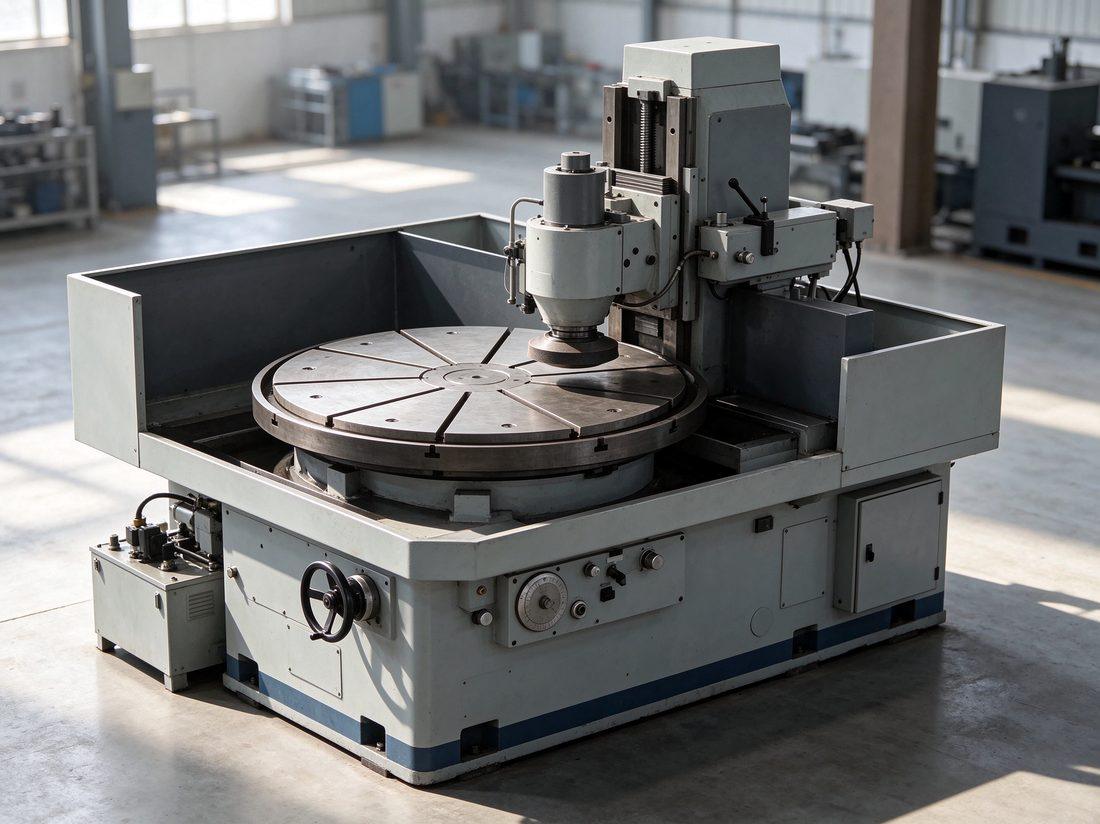
HZ-RT1200 Rotary Table Surface Grinder (1200 mm)

Model HZ-RT1200 Precision Rotary Table Grinders ISO 9001 built 12-month warranty
✓ Standard models ship in 25–35 days · gantry and CNC specials 45–60 days

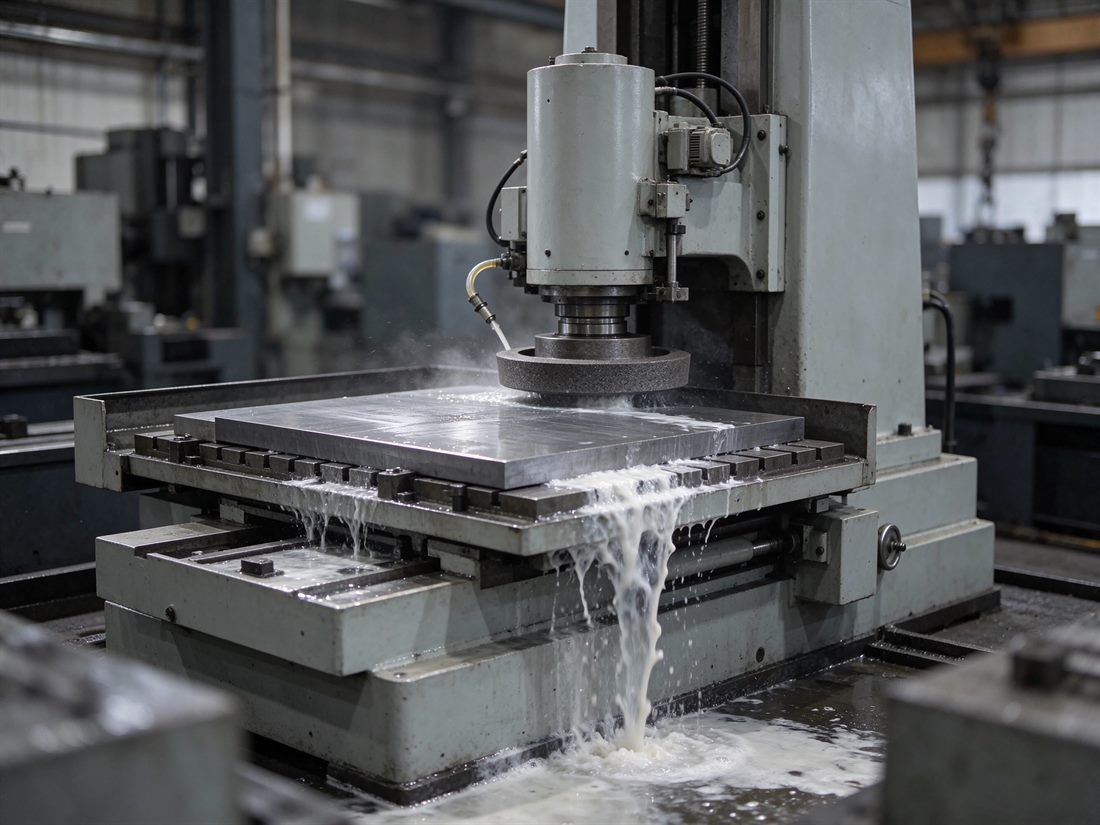
Ø1200 mm rotary grinder, 15 kW — the largest in the range, for rings and discs over a metre.

Send the drawing and the tolerance — we answer with the cycle time and the smallest machine that holds it, usually within 24 h. Comparing several models? Add them to the inquiry list and send one request.
Ask an engineer about this model Download the spec sheet (PDF) →

Product Details

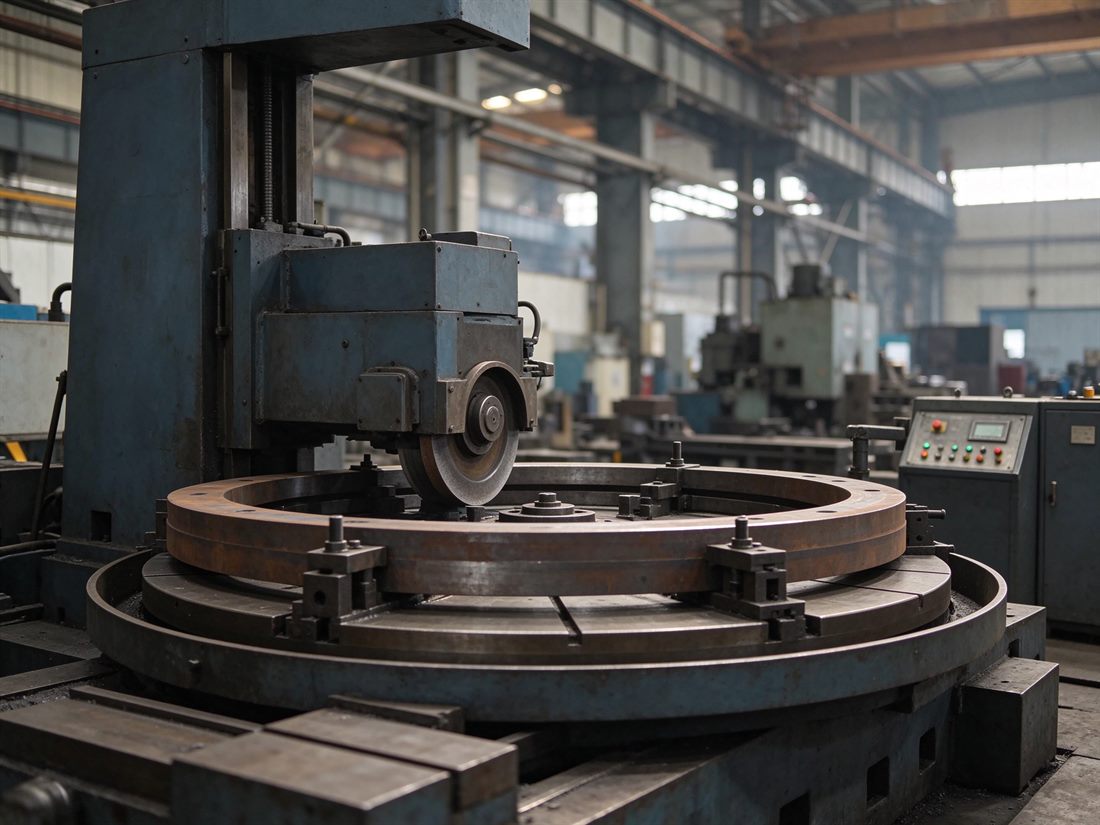
Above 1 m diameter the limiting factor stops being the wheel and becomes the fixture — nobody wants to build a rotating fixture on a reciprocating machine. The RT1200 carries a 1200 mm chuck with 15 kW behind it, which is enough to take 0.5 mm off a hardened ring face in a handful of passes.

Key features

  • Ø1200 mm chuck, 1,300 mm max grinding diameter, 500 mm height
  • 15 kW spindle with a 400 × 63 mm wheel, deep-cut capable
  • Stepless table speed from 5 to 40 rpm; servo vertical feed 0.001 mm
  • Chuck segment control and programmable dress position
  • Foundation plan and levelling pads supplied; on-site commissioning available

Technical specifications

Table sizeØ1200 mm magnetic chuck
Max grinding diameter1,300 mm
Max grinding height500 mm
Grinding wheel400 × 63 × 203 mm
Spindle motor15 kW
Table speed5–40 rpm, stepless
Vertical feedServo, 0.001 mm increment
Flatness0.005 mm
Machine weight11,200 kg
Voltage380 V / 415 V / 440 V, 50/60 Hz

Typical work

Very large bearing and seal rings, mill roll end faces, turbine components, large die rings and heavy discs.

Delivery and support

Every machine ships with a geometry inspection report, an English operation and maintenance manual, a wheel flange and balancing arbor, and a toolbox. Commissioning support is available by video or on site. Pricing is quoted per configuration: the final quotation depends on chuck size, dust extraction, coolant filtration, voltage and control options.

Specifications

Table sizeØ1200 mm magnetic chuck
Max grinding diameter1,300 mm
Max grinding height500 mm
Grinding wheel400 × 63 × 203 mm
Spindle motor15 kW
Table speed5–40 rpm, stepless
Vertical feedServo, 0.001 mm increment
Flatness0.005 mm
Machine weight11,200 kg
Voltage380 V / 415 V / 440 V, 50/60 Hz

Company Advantages

0
Manufacturing in Hangzhou since
0
Surface grinder product lines
0
Export countries served
0
Engineer reply on every RFQ

What Our Customers Say

★★★★★

"The CNC grinder holds 0.002 mm on our core inserts and the wear compensation keeps the size in band across a whole batch. Programming is simple enough that a new operator is productive after one shift."

Chen W.
Chen W.
Tool room lead · connector mould maker, Singapore
★★★★☆

"Documentation was complete: CE declaration, wiring diagram, geometry report and English manual in the crate. Customs clearance was straightforward and the machine was grinding two days after it arrived."

Khalid A.
Khalid A.
Purchasing manager · steel fabrication, Saudi Arabia
★★★★★

"We grind long blades that warp easily. Their engineer recommended a wider wheel and a lighter down-feed instead of selling us a bigger machine — the advice alone saved us the price difference."

Somchai K.
Somchai K.
Workshop owner · knife and blade maker, Thailand

Frequently Asked Questions

Selection

What is the difference between a PLC and a CNC surface grinder?
A PLC grinder automates the grinding cycle — table speed, cross-feed step, down-feed per pass and dressing interval — with stored programs, but the axes are not fully interpolated. A CNC grinder uses closed-loop servo axes with glass scales, so it can hold 0.002 mm positioning, grind stepped or shallow forms, and compensate for wheel wear automatically. If your tolerance is 0.005 mm and the work is flat plates, a PLC machine is enough; if the drawing says 0.002 mm or you grind forms, choose CNC.
How do I size a surface grinder for my largest part?
The table must be at least 100 mm longer and 50 mm wider than the part, so the wheel clears both ends before the table reverses. An 800 × 400 mm die plate therefore needs a 900 × 400 mm grinding envelope — a PSG-4080AH. Buying a machine that exactly matches the part leaves no room for clamping or for a larger job next year.
Which machine should a mould shop buy first?
Most mould shops start with one hydraulic automatic machine in the 800 × 400 mm class (PSG-4080AH) for plate flatting, then add a CNC (PSG-250SK3 or PSG-525CNC) when insert tolerances drop below 0.005 mm or when the same part repeats every month. Buying the CNC first is a valid choice only if your inserts drive the business.

Accuracy

What accuracy can I expect in real production?
A CNC PyeahGrind grinder holds 0.002 mm positioning and 0.003 mm repeatability on the machine, which typically produces 0.003–0.005 mm flatness on a real part in a temperature-controlled shop. Hydraulic machines hold 0.005 mm flatness with a skilled operator. Without temperature control and wheel discipline, expect one grade worse than the machine is capable of.
How is accuracy verified before shipment?
Each machine is checked on a granite plate with a 0.001 mm indicator for flatness and parallelism, with a laser interferometer for positioning and repeatability on servo axes, and with a dial indicator sweep for spindle runout. A test plate is ground on both faces and measured. The report ships in the crate.
Why does my part warp after grinding?
Warp comes from three causes: too much heat from an overloaded wheel, residual stress in the workpiece being released as stock is removed, and clamping distortion on the chuck. Rough grind, let the part equalise to shop temperature, then finish with a dressed wheel and shallower passes. Demagnetize before measuring — residual magnetism on thin plates reads as warp.

Export

What Incoterms do you quote?
FOB Ningbo or Shanghai by default, and CIF or DAP on request. For Southeast Asian buyers we prepare Form E for preferential duty where applicable. Prices are in USD.
What is the lead time?
Standard models ship 25–45 days after deposit, depending on options. Gantry machines and special widths take 60–90 days. Spare parts ship by air within 72 hours.
What payment terms do you accept?
30% deposit by T/T and 70% before shipment is the standard. L/C at sight is accepted for orders above USD 50,000. For repeat dealers we discuss open-account terms after the first two orders.

Service

How long is the warranty and what does it cover?
12 months from installation (or 14 months from the bill of lading, whichever comes first), covering manufacturing defects in the bed, column, table, spindle assembly and electrical system. Consumables and wear parts — wheels, coolant, wipers, belts, seals — are excluded.
How fast can you supply spare parts?
Standard wear parts are held in stock and ship by air within 72 hours of order. Send the machine model, serial number and a photo of the part. Parts remain available for at least 15 years after a model is discontinued.
Do you provide installation and training?
Commissioning support by video is included with every machine. On-site commissioning — levelling, geometry check, first-part grinding and operator training — is available as a paid option and is recommended for gantry machines and for first-time CNC buyers.

Send Your Grinding Requirement

Send part size, material, tolerance and volume — we reply with a model, FOB price and lead time within 24 hours.

captcha
WhatsApp