Used Surface Grinder: Inspect It in 30 Minutes
How to inspect a used surface grinder in half an hour: the measurements, the wear patterns and the accessories that decide if the price is fair.
- The thirty-minute sequence
- Read the wear pattern, not the paint
- Wear pattern to verdict
- Runout, flatness and squareness in plain numbers
- The hydraulic and spindle checks that need running time
- What the accessories are worth, and why they change the deal
- What to pay, by condition
- FAQ
- How many hours can a used surface grinder run before it needs a rebuild?
- Can I inspect a used surface grinder without an indicator?
- Is it worth buying a used machine with no magnetic chuck?
- What does a used hydraulic surface grinder cost in good condition?
- Bottom line
A used surface grinder can be judged in about thirty minutes if you bring four things: a 0.01 mm dial test indicator with a magnetic base, a 300 mm precision straight edge, a 0.02 mm feeler gauge and a 600 mm granite parallel. Measure runout, flatness, squareness and backlash first — those four readings decide whether the machine is a tool or a project. Everything you do after that is negotiating leverage, not a verdict.
The thirty-minute sequence
Time-box the visit. Sellers behave differently when they know you are measuring rather than admiring, and a fixed sequence stops you from being talked out of the readings you came for.
- 0–5 min: machine cold, spindle off. Look at the ways at full overhang, the wiper condition and the oil in the reservoir.
- 5–12 min: spindle runout at the taper, then at the mounted wheel flange. Two readings, not one.
- 12–20 min: table flatness with the straight edge and feeler, longitudinal and diagonal, with the table locked at three positions.
- 20–25 min: squareness: indicator on the wheel arbor sweeping the chuck.
- 25–30 min: backlash on both handwheels, then a ten-minute light cut to hear the spindle under load.
Read the wear pattern, not the paint
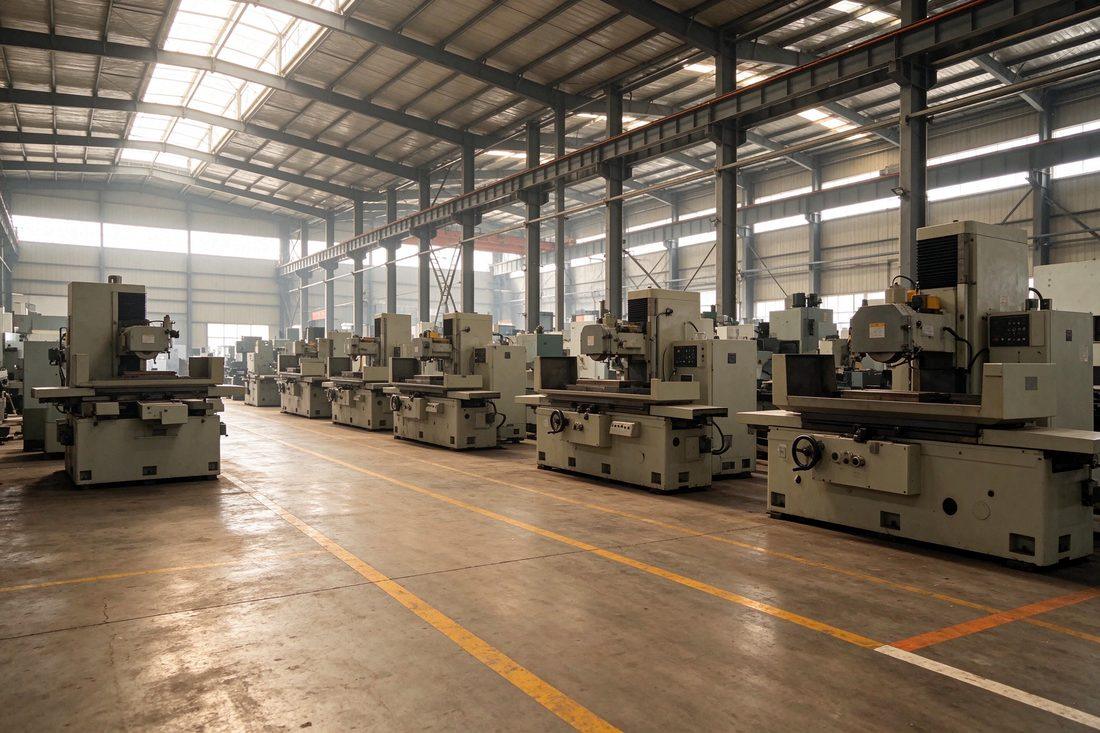
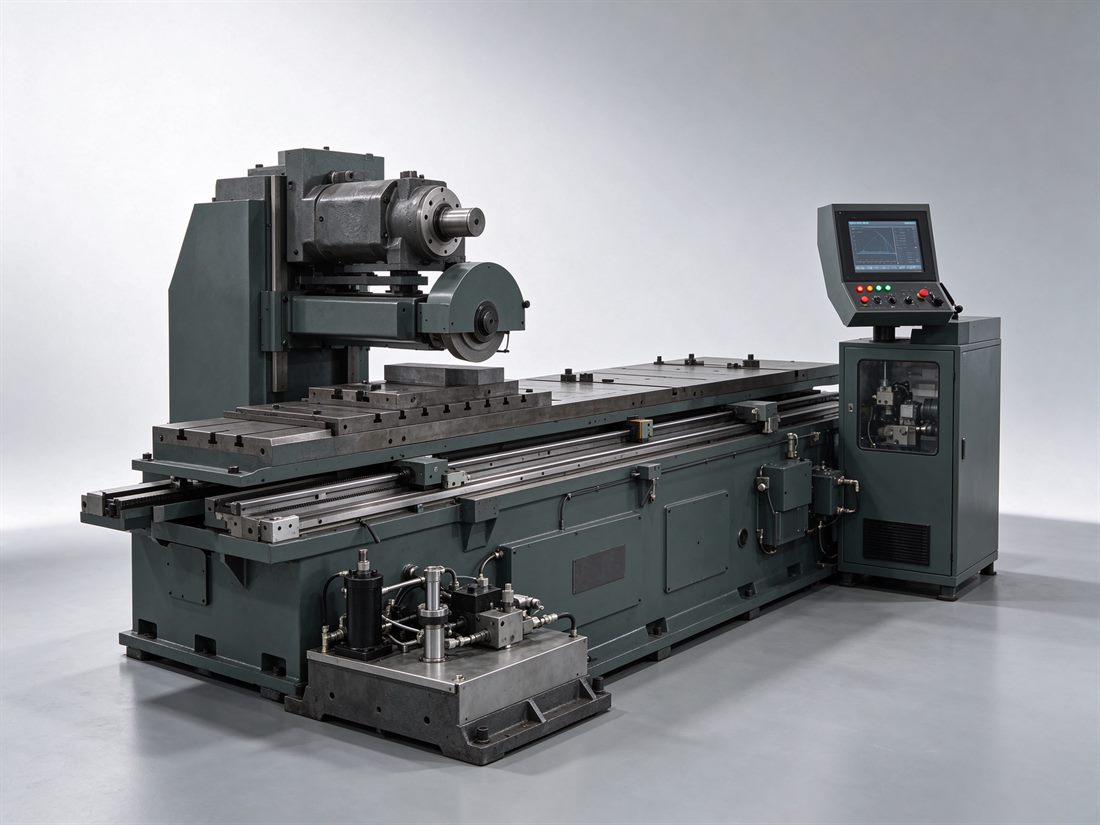
Fresh paint on a used surface grinder is a warning, not a feature. It hides the two things that tell you how the machine lived: the way surfaces and the area around the coolant nozzle. Look at the ways where the table never reaches — the last 40 mm at each end. If that unworn band is a different colour or has visible flaking texture while the working zone is mirror-polished, the ways have worn and the flaking pattern has been rubbed out. That is normal wear, and it is measurable; concealed wear under new paint is not.
Look at the underside of the table and the saddle for coolant staining. A machine that has been run dry, or run with a coolant tank that was never cleaned, will show a hard crust of dried sludge on surfaces that coolant should have washed. That sludge is what scored the ways.
Wear pattern to verdict
| What you see | What it means | Effect on price | Verdict |
|---|---|---|---|
| Unworn band at way ends, smooth transition | Normal bedding-in wear | None, if flatness still passes | Buy |
| Hard bright edge between worn and unworn zones | Ways scored by swarf | Deduct scraping cost, USD 600–1,500 | Buy only with deduction |
| Deep scratches across the full table travel | Wiper failure allowed grit onto the ways | Deduct way rework, USD 2,000+ | Walk away |
| Fresh paint over the whole machine, no photos of the rebuild | Cosmetic resale prep | Treat as unverified | Measure twice |
| Oil reservoir with sediment, one lube line capped off | Lubrication abandoned | Deduct pump and line restoration | Walk away unless cheap |
Runout, flatness and squareness in plain numbers
On a machine in good order, spindle runout at the taper measures 0.002–0.005 mm. At the mounted flange it can read up to 0.008 mm and still be acceptable, because the flange itself is a consumable that can be re-ground. Above 0.01 mm at the taper the front bearing set is done.
Table flatness over 300 mm should read 0.005–0.010 mm. What matters more than the absolute number is the shape: a table that is convex by 0.01 mm along the travel grinds a part that is 0.01 mm thin in the middle, and no amount of care in the cut will fix it. A table that is uniformly 0.01 mm out but straight will still grind parallel parts, because the wheel dresses to the same plane.
Squareness is where a used machine most often fails quietly. Put the magnetic base on the chuck, the indicator on the wheel arbor, and sweep from the centre to the edge of the table. Over 300 mm, 0.01 mm is the working limit; 0.02 mm means the column or the vertical slide needs scraping, which is a workshop job, not a shim job.
The hydraulic and spindle checks that need running time
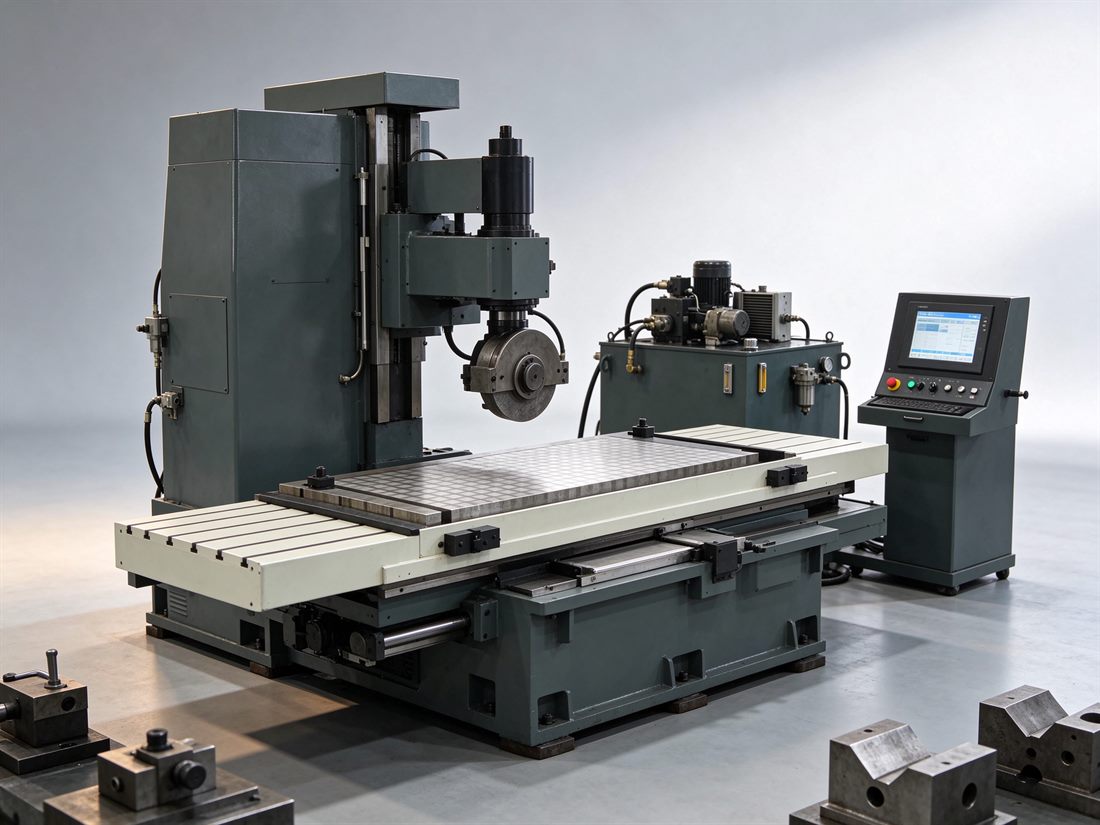
Static readings cannot find a tired hydraulic system. Run the table for ten minutes at half speed and watch three things: the reversal at each end of stroke, the drift when the valve is in neutral, and the noise from the tank. A clean reversal is instant and dry. A reversal that pauses, or a table that creeps 2 mm in ten seconds, points to a worn directional valve or a vane pump at the end of its life. Budget USD 300–800 and use it as a deduction.
For the spindle, the useful test is thermal, not acoustic. After ten minutes of light grinding, the front bearing housing should be warm but not hot — under 40 °C by touch. A housing that is uncomfortable to hold after ten minutes will grow 0.01–0.02 mm in the vertical axis between a cold morning start and an afternoon shift, and your parts will drift with it. That is a spindle rebuild, and on a used machine it is the single most common reason a "tight" machine cannot hold size.
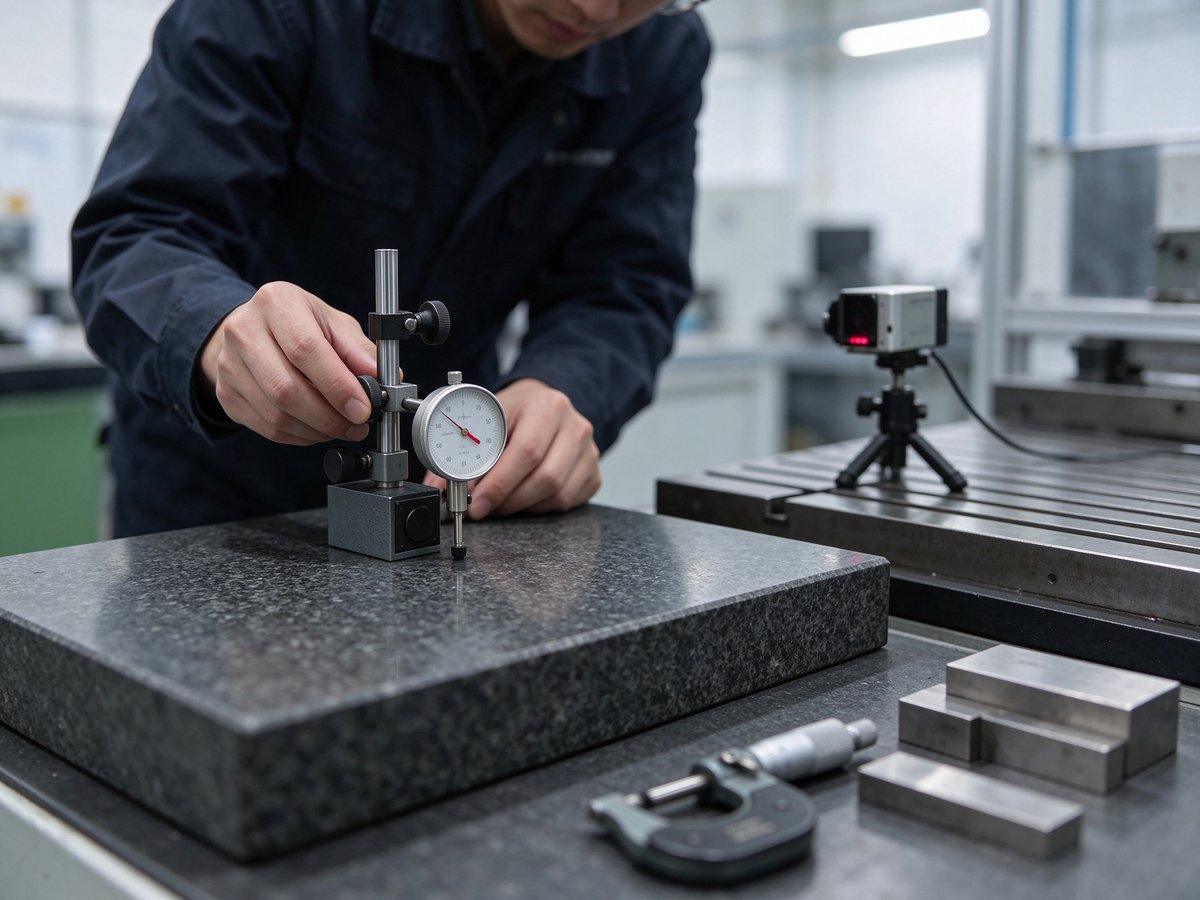
Geometry inspection on a granite reference: flatness and squareness readings are recorded numerically, never estimated by feel.
What the accessories are worth, and why they change the deal
On a used surface grinder the accessories often carry more value than the machine's badge. A magnetic chuck with its controller is USD 700–1,500 new; a wheel balancing arbor and flanges, USD 250–450; a diamond dresser with holder, USD 80–150; coolant tank and pump, USD 300–600. When two machines are within USD 500 of each other, the one with the chuck, controller and balancing set is the cheaper machine.
Check the chuck separately: a thin 0.5 mm plate should clamp hard across its whole face. If it clamps at the centre and lifts at the edges, the chuck has lost holding force or the table under it is no longer flat, and both defects hide each other. Put the plate on, then measure with a feeler at the corners.
What to pay, by condition
| Condition | What passes | Fair price vs new |
|---|---|---|
| Ready to work | All four numbers pass, accessories complete, spindle cool after 10 min | 50–60% of new |
| Good with minor work | Flatness or backlash marginal, no spindle heat | 40–50% of new |
| Needs one repair | Spindle runout 0.01–0.02 mm, or ways scored | 25–35% of new, minus repair cost |
| Project machine | Two or more numbers fail | Scrap value plus accessories |
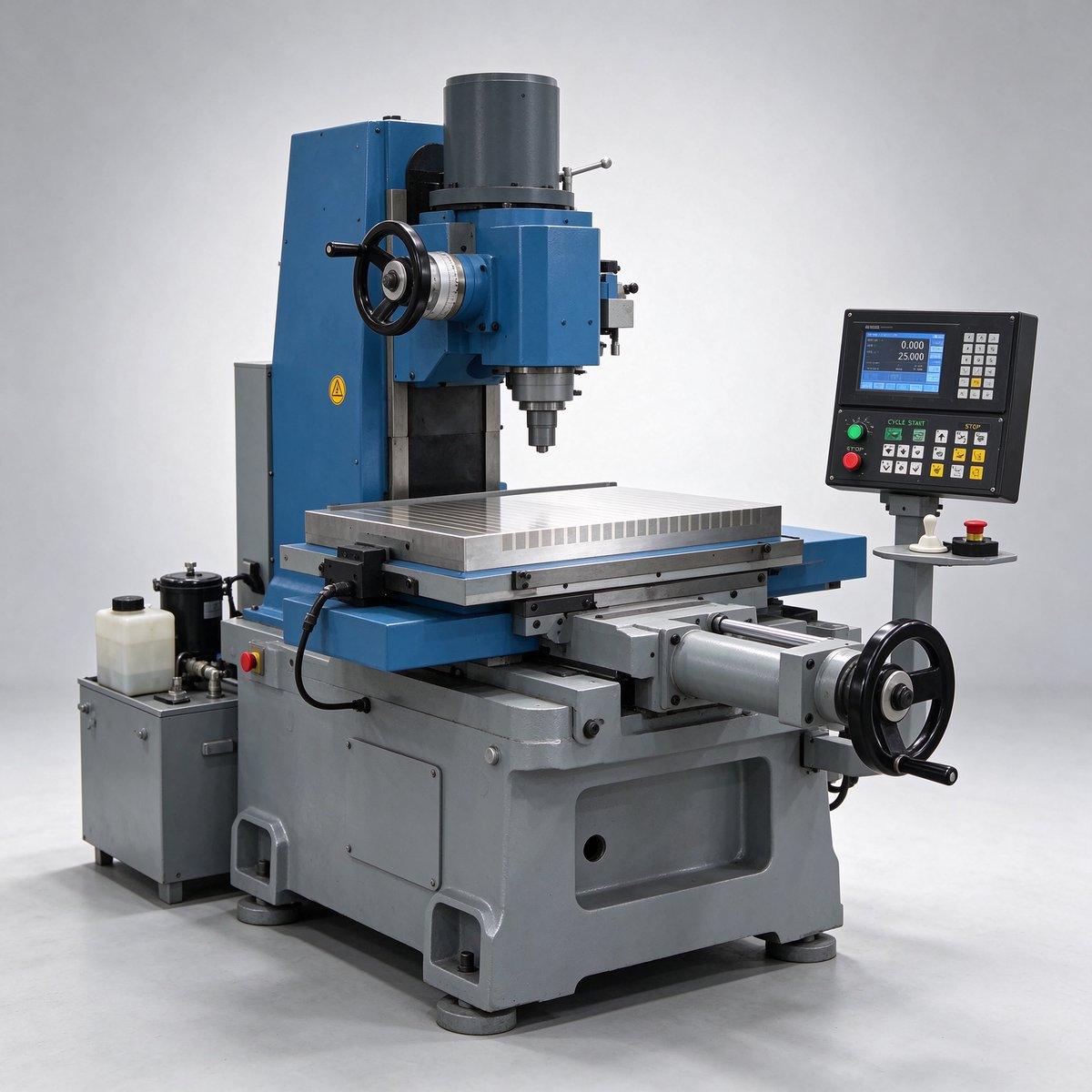
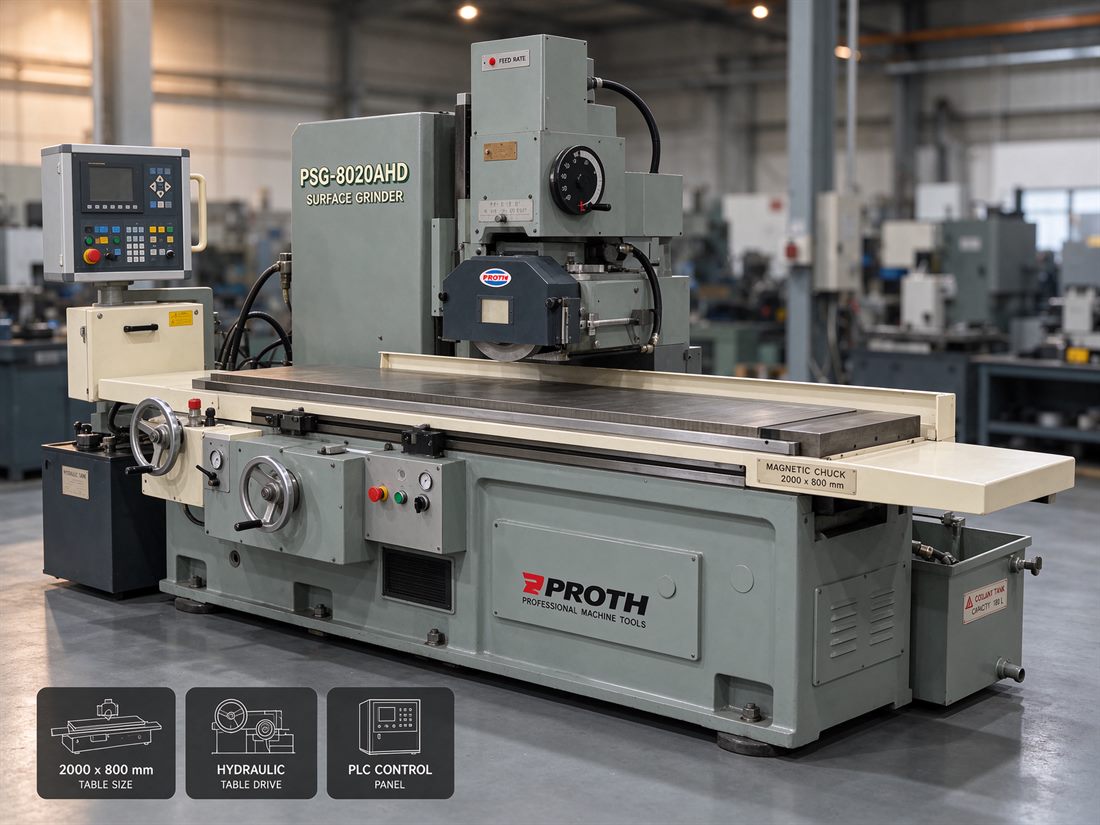
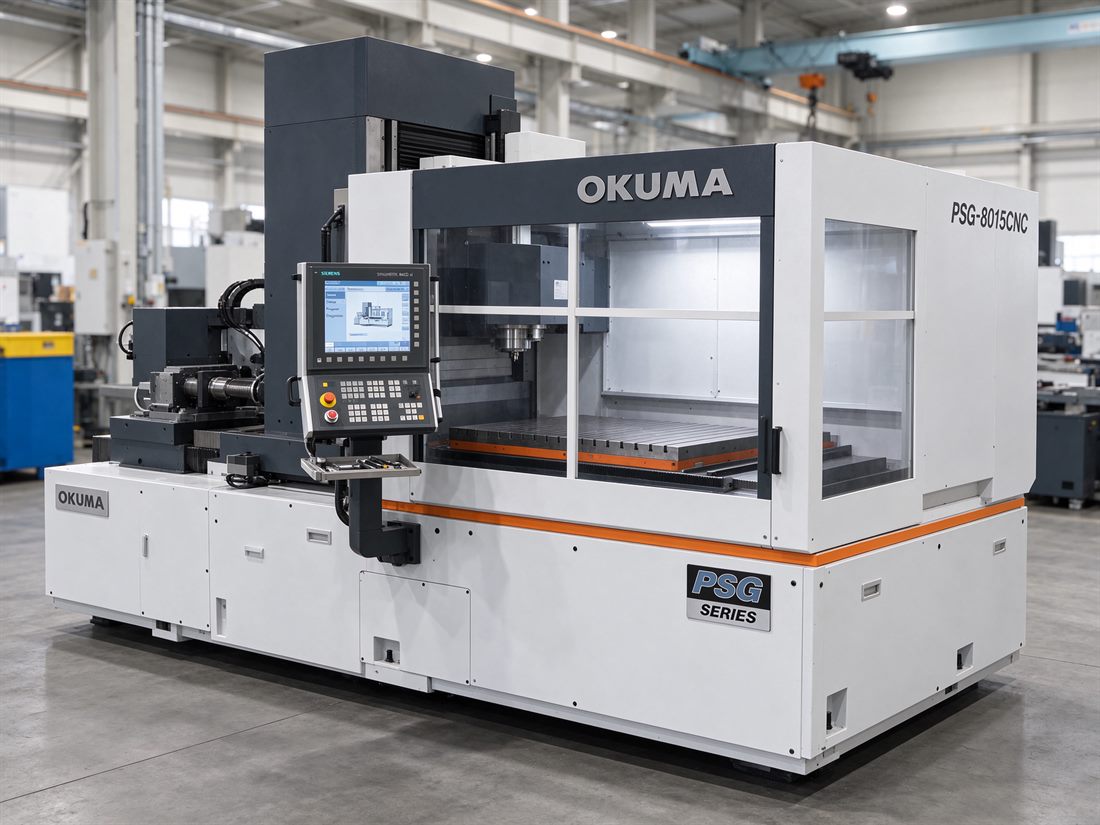
If the seller wants more than 65% of the new price for a machine with no geometry report and no service history, the honest comparison is a new machine with a warranty. A 500 × 250 mm new hydraulic machine such as the PSG-250AH arrives with an acceptance grinding report, a documented spindle runout figure and a spare parts channel — three things a used machine cannot offer at any discount.
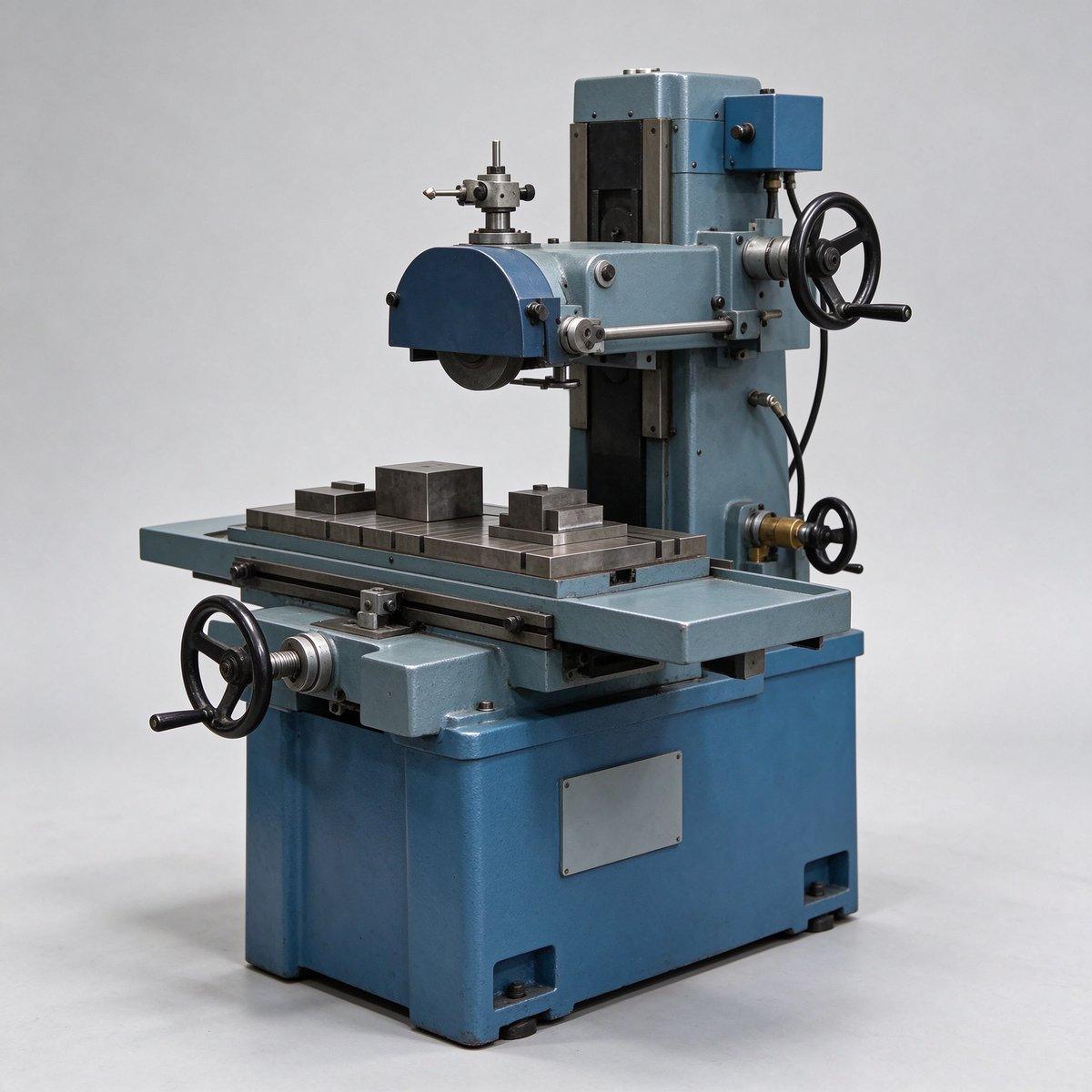
If the used machine you are looking at is a manual toolroom type, compare it against the PSG-618M before you commit: a worn manual machine with a scored table is often within USD 1,500 of a new one, and the new one comes with flaking you can see.
FAQ
How many hours can a used surface grinder run before it needs a rebuild?
A well-lubricated machine with clean coolant typically reaches 8,000–12,000 spindle hours before a bearing set is due, and 15,000+ hours before ways need scraping. Machines run without way oil or with unfiltered coolant often need both before 5,000 hours.
Can I inspect a used surface grinder without an indicator?
No. A straight edge and feeler will find a convex table, but runout, squareness and backlash need an indicator. A 0.01 mm dial indicator with a magnetic base costs less than the first repair you would otherwise miss.
Is it worth buying a used machine with no magnetic chuck?
Yes, if the price reflects it — a chuck and controller add USD 700–1,500 — and if the table under it is still flat. Buying unchucked is actually safer, because you get to measure the bare table and see the wear pattern.
What does a used hydraulic surface grinder cost in good condition?
For a 500 × 250 mm machine, USD 4,000–7,000 when all four tolerance numbers pass; USD 2,500–4,000 when one number is marginal. Above that band you are paying for a warranty you are not getting.
Bottom line
Bring the indicator, time-box the visit, and price the repair before you price the machine. If the inspection finds one failing number, send us the readings and the part you intend to grind — we can tell you whether the defect actually touches your work, and what a new machine in the same envelope would cost delivered. Ask our application engineers with the numbers in hand.