Small Surface Grinder for the Home Shop: 6x18 Guide
What a small surface grinder really needs in a home shop: power supply, floor load, noise, weight and the 6x18 class machines that fit a garage.
- What "small" means in numbers
- Power: single phase is available, but read the fine print
- Floor, leveling and noise
- Coolant, dust and swarf in a small space
- The home-shop fit check, in order
- Buying: new import versus used local
- FAQ
- Can a small surface grinder run on single phase power?
- How much does a small surface grinder weigh?
- Is a bench surface grinder worth buying?
- How much floor space does a 6 × 18 surface grinder need?
- Bottom line
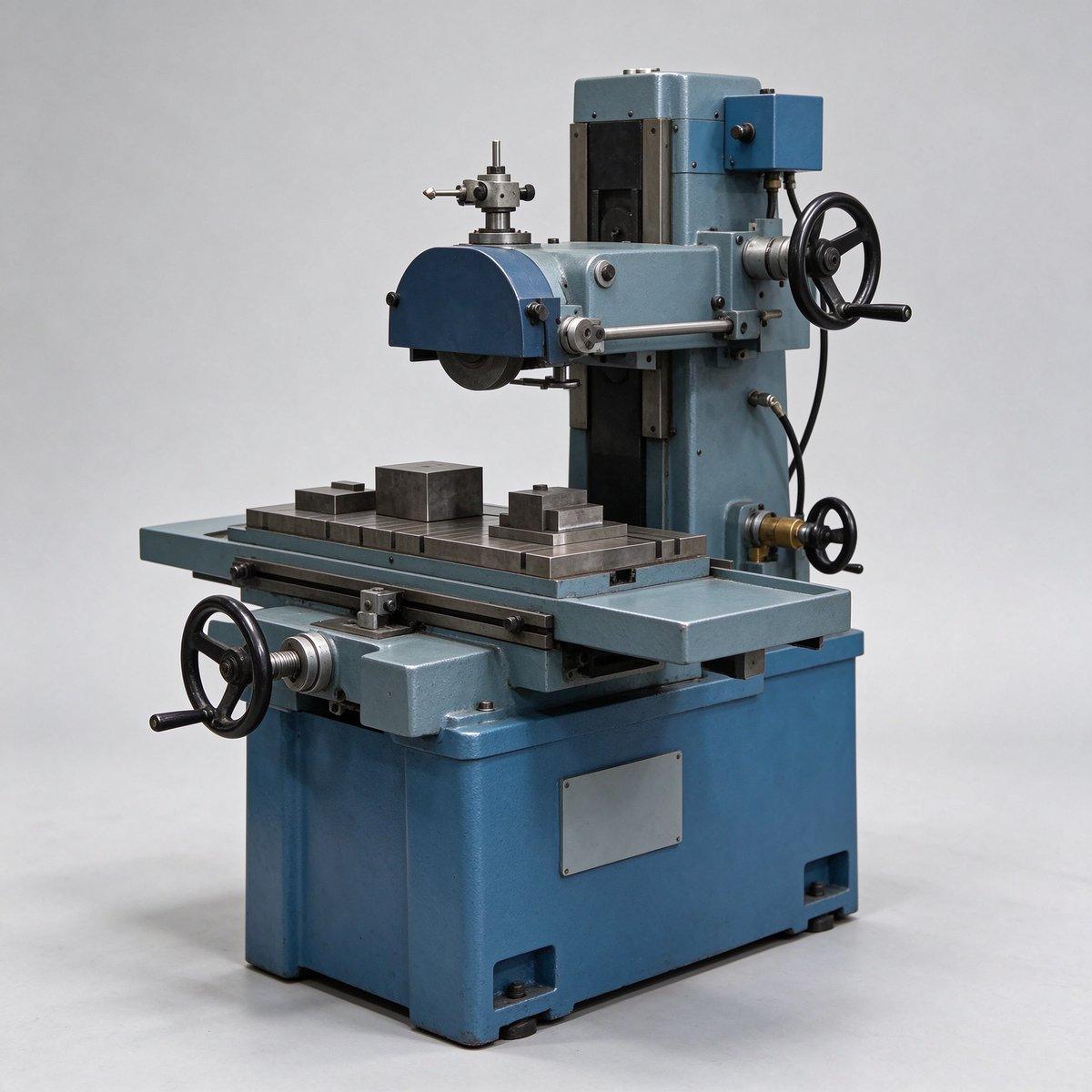
A 6 × 18 (450 × 150 mm) manual surface grinder is the practical entry point for a home shop: about 450–550 kg, 1.5 kW, 1,450 mm × 1,200 mm of floor space, and available with a single-phase 220 V motor so it runs from a domestic supply without a converter. What stops most home-shop buyers is not the machine but three site conditions — a floor that cannot take 500 kg on four small feet, a supply that trips on a 1.5 kW motor start, and a wheel that makes noise and dust in a space shared with living areas. Those are the things to solve before the machine arrives.
What "small" means in numbers
The 6 × 18 class is the smallest machine that still does real work: it holds a 450 mm long part in one clamp, grinds a 300 mm die plate or a set of blade blanks, and holds 0.005 mm flatness when it is leveled properly. Anything smaller is a tool and cutter grinder or a bench machine with a 100 mm wheel, and neither will hold a flatness callout.
| Model class | Table size | Weight | Spindle power | Floor space |
|---|---|---|---|---|
| PSG-618M | 450 × 150 mm | ≈ 450 kg | 1.5 kW | 1.45 × 1.2 m |
| PSG-818M | 450 × 200 mm | ≈ 520 kg | 1.5 kW | 1.5 × 1.25 m |
| PSG-1020M | 500 × 250 mm | ≈ 700 kg | 2.2 kW | 1.7 × 1.4 m |
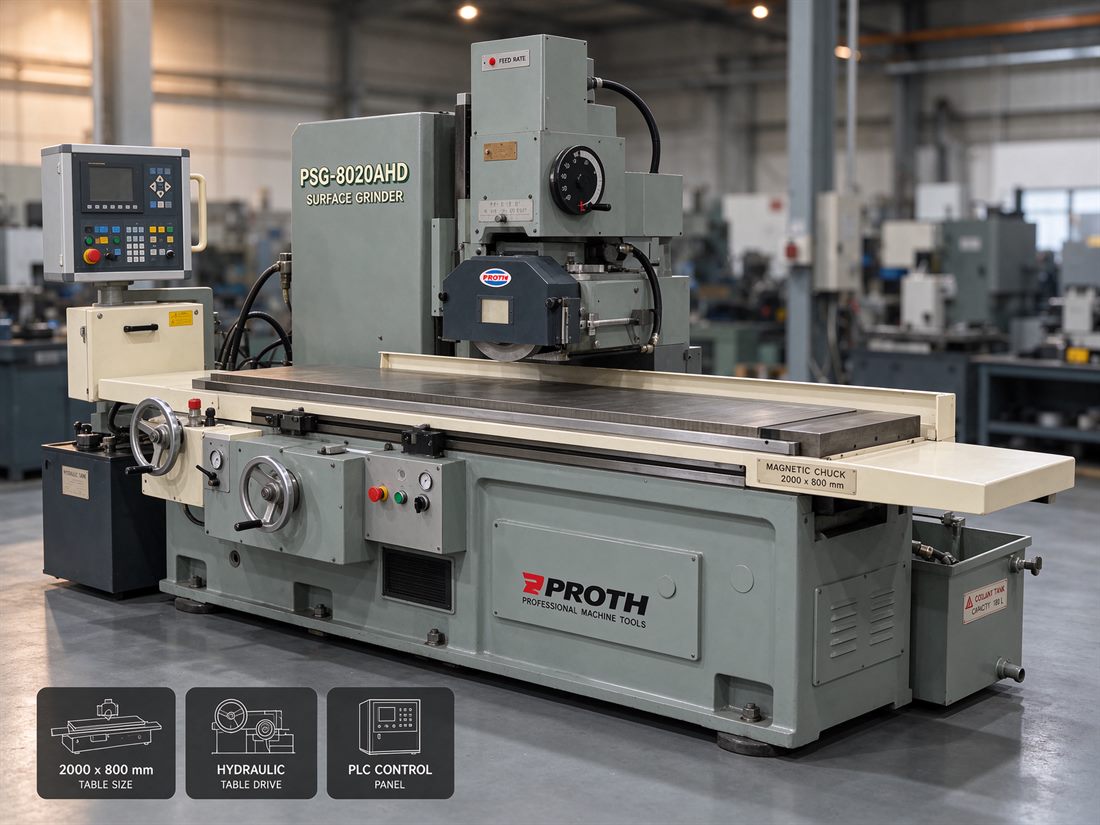
| PSG-250AH (hydraulic) | 500 × 250 mm | ≈ 900 kg | 2.2 kW | 1.9 × 1.5 m |
The weight jump between a 450 × 150 mm manual and a 500 × 250 mm hydraulic machine is roughly double, and so is the floor requirement. That is the real dividing line for a home shop: not the price, but whether the building can carry 900 kg in one corner and whether the supply can start a 2.2 kW motor.
Power: single phase is available, but read the fine print
A 1.5 kW 3-phase motor can be run from a single-phase supply with a variable frequency drive (VFD) or a static converter, and Chinese builders offer 220 V single-phase versions of the 6 × 18 class for exactly this market. Three practical points:
- VFD is the better route. A VFD for a 1.5 kW motor costs USD 80–150, gives soft start so the supply does not trip, and adds variable speed — which is genuinely useful when running small wheels.
- Check the circuit. A 1.5 kW motor draws about 7 A at 220 V single-phase, so a dedicated 16 A circuit is adequate; a shared ring main is not.
- Coolant pump and work light are separate loads. Budget another 0.5 A and put both on the same circuit as the spindle so one switch controls them.
If the building only has a 32 A service and the shop also runs a welder or a compressor, the grinder start is what will trip the breaker — the VFD solves that for less than the cost of a rewire.
Floor, leveling and noise
Four feet carrying 450 kg means 110 kg per foot, concentrated on maybe 80 cm² each. A wooden garage floor with joists will deflect and the machine will lose its leveling within weeks; a concrete slab at least 100 mm thick is the practical floor. If the slab is thin, spread the load with a 10 mm steel plate under the feet.
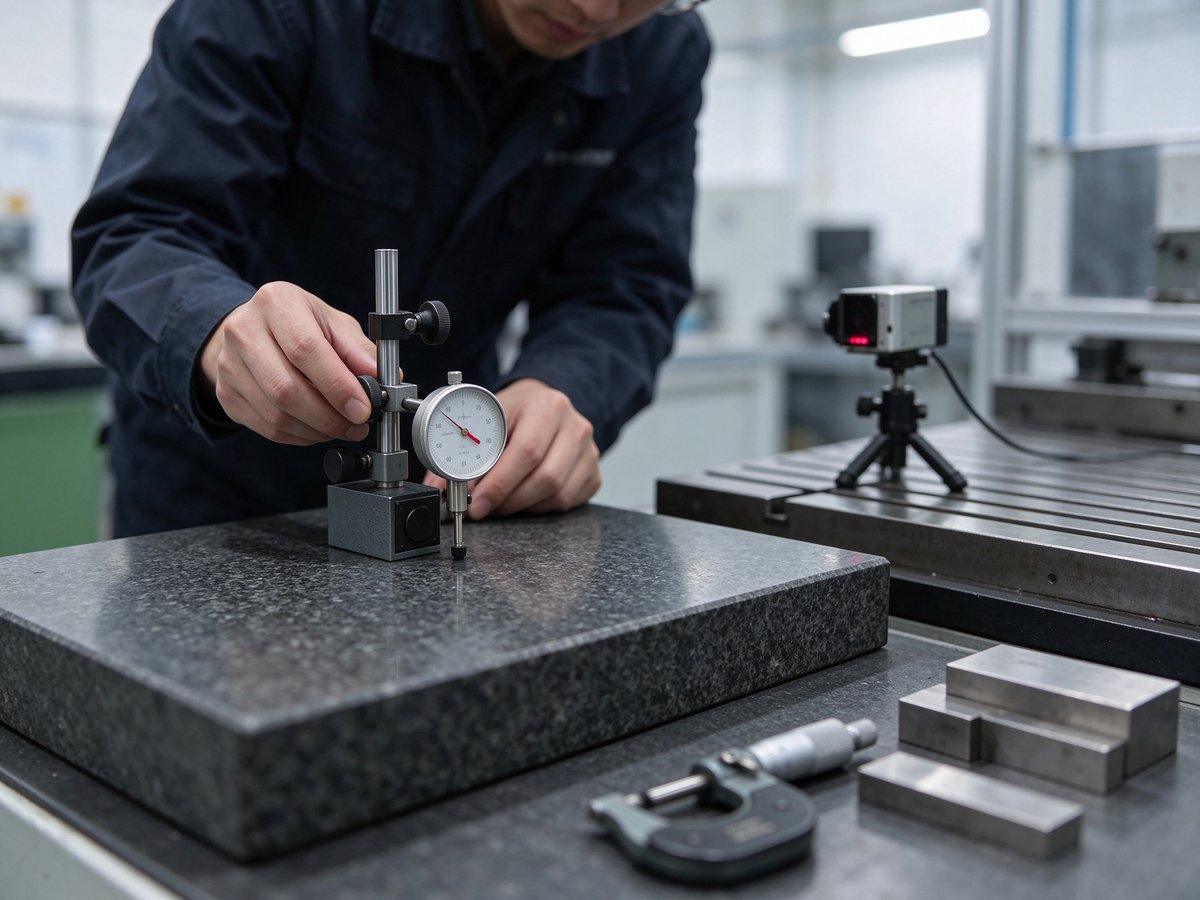
Leveling matters more than most home-shop owners expect: a 6 × 18 machine out of level by 0.05 mm over its footprint grinds a twist into every part, and no operator skill compensates. Use a machinist level on the table in both axes and adjust the feet until both read within 0.02 mm per 300 mm. Re-check after a month — new machines settle.
Noise is the other domestic issue. A surface grinder at idle is quiet, around 65–70 dB, but grinding emits a high-frequency component that carries through walls more than a router does. If the shop shares a wall with living space, put the machine on rubber pads and consider a wheel guard with a dust extraction hood; the fine metallic dust is the more serious problem, and it settles on everything within 3 m of the machine.
Coolant, dust and swarf in a small space
Flood coolant in a garage is a commitment: a 30–60 L tank, occasional mist, and wet swarf that has to go somewhere. The alternatives, in order of practicality for a home shop:
- Mist or drip coolant — adequate for light passes, far less mess, but it will not control burn on a 0.03 mm cut.
- Flood with a small tank — the honest choice if you grind hardened steel. Add a magnetic separator to keep the tank from turning into sludge.
- Dry grinding — acceptable only for very light finishing passes on soft steel with a coarse wheel, and never on hardened stock.
Dust extraction is worth more attention than most buyers give it. A magnetic chuck and a surface grinder generate fine iron and abrasive dust; a shop vacuum with a water trap at the wheel guard captures most of it and prevents it from reaching the rest of the house.
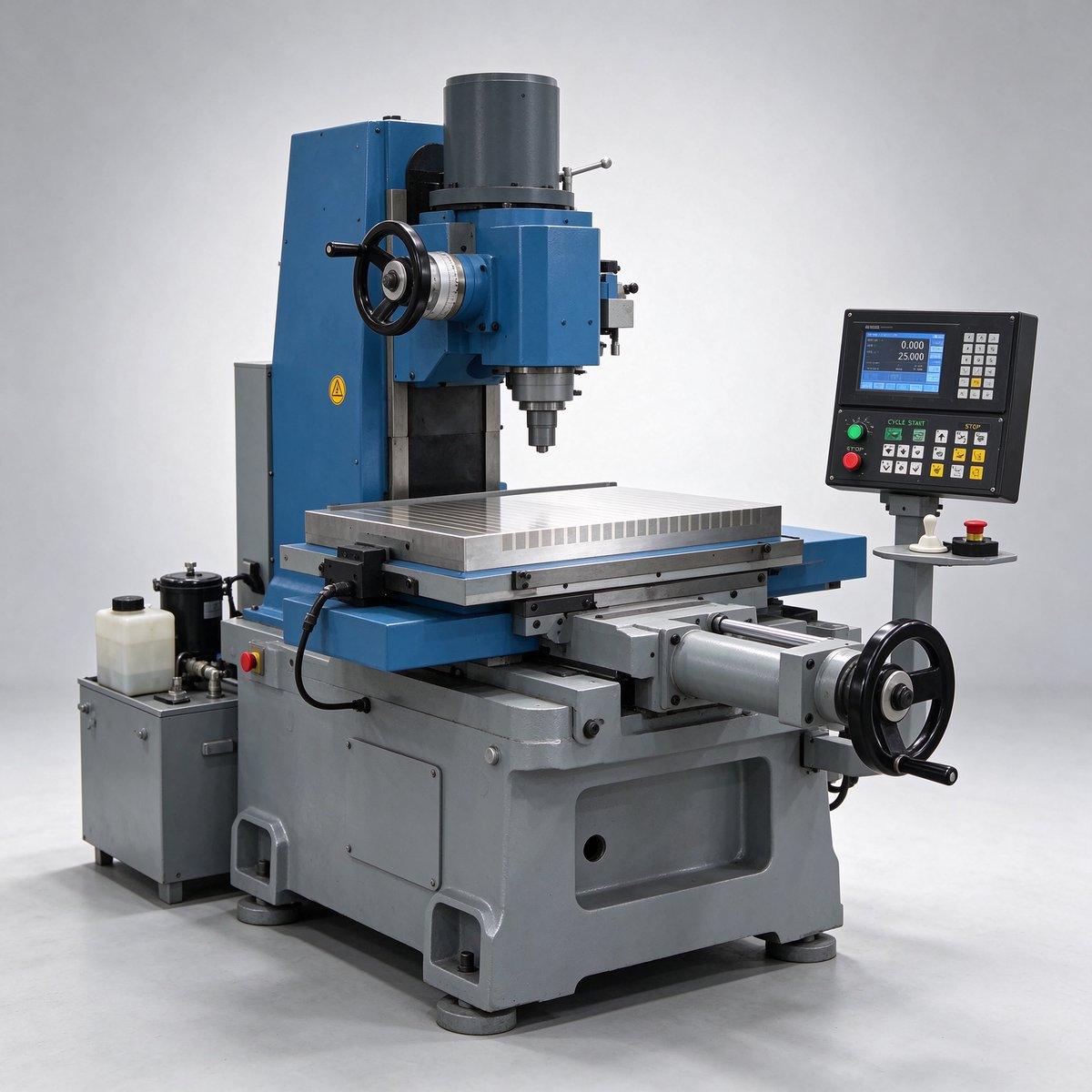
A 6 × 18 manual machine needs about 1.45 × 1.2 m of floor, a 16 A circuit and a level concrete slab — the three constraints that decide whether it belongs in a garage.
The home-shop fit check, in order
| Condition | Why it matters | If it fails |
|---|---|---|
| Slab at least 100 mm, or a steel spreader plate | 450–900 kg on four feet | Machine loses level, parts twist |
| Dedicated 16 A circuit, 220 V | 1.5–2.2 kW motor start | Breaker trips on every start |
| 1.5 × 1.2 m clear floor plus access | Table travel and wheel changes | Cannot grind long parts |
| Wheel guard with extraction | Fine metallic dust | Dust through the whole building |
| Somewhere for wet swarf | Coolant and sludge volume | Tank overflows, coolant everywhere |
| Noise path away from living space | High-frequency grinding noise | Neighbour complaints |
If four of the six pass, the machine is viable. If the floor and the circuit both fail, no machine size will help, and a subcontract grinding arrangement is the cheaper answer.
Buying: new import versus used local
For a home shop, the used-market argument is strong — but only with an indicator. A used 6 × 18 machine at 40–60% of new is good value when runout, flatness, squareness and backlash pass; it is a trap when one fails, because a spindle rebuild on a home-shop budget is 20% of the machine's price.
New import has two advantages that matter more in a home shop than in a factory: a documented geometry report so you know what you bought, and a spare-parts channel for the small items that fail in the first year. The PSG-618M manual surface grinder is the direct 6 × 18 option at 450 × 150 mm and 1.5 kW, available with single-phase power; the PSG-818M adds 50 mm of table width for a little more money and fits the same footprint class.
FAQ
Can a small surface grinder run on single phase power?
Yes — 1.5 kW single-phase versions exist, or run the 3-phase motor from a VFD sized at twice the motor rating. A 16 A dedicated circuit is enough.
How much does a small surface grinder weigh?
A 450 × 150 mm manual machine weighs about 450 kg; a 500 × 250 mm hydraulic machine about 900 kg. Both need a level concrete slab.
Is a bench surface grinder worth buying?
Only for light toolroom work. Bench machines with 100–150 mm wheels cannot hold 0.005 mm flatness over 300 mm and are not a substitute for a 6 × 18 machine.
How much floor space does a 6 × 18 surface grinder need?
About 1.45 × 1.2 m for the machine, plus 0.5 m at each end for table travel and access — plan on 2.4 × 1.7 m clear.
Bottom line
Check the floor, the circuit and the dust path before you compare prices; those three decide whether a surface grinder belongs in a home shop at all. Tell us your available space, supply and the largest part you intend to grind, and we will confirm which table size fits without over-specifying. Send your shop constraints for a fit check.