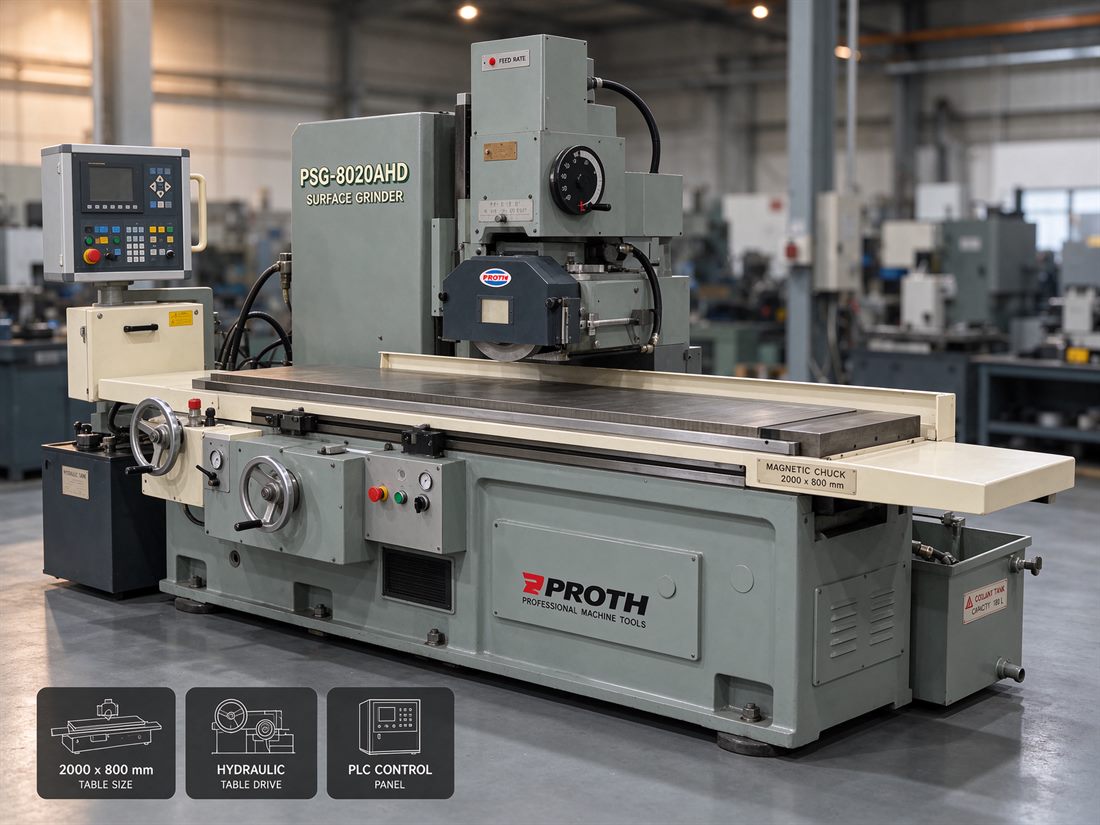
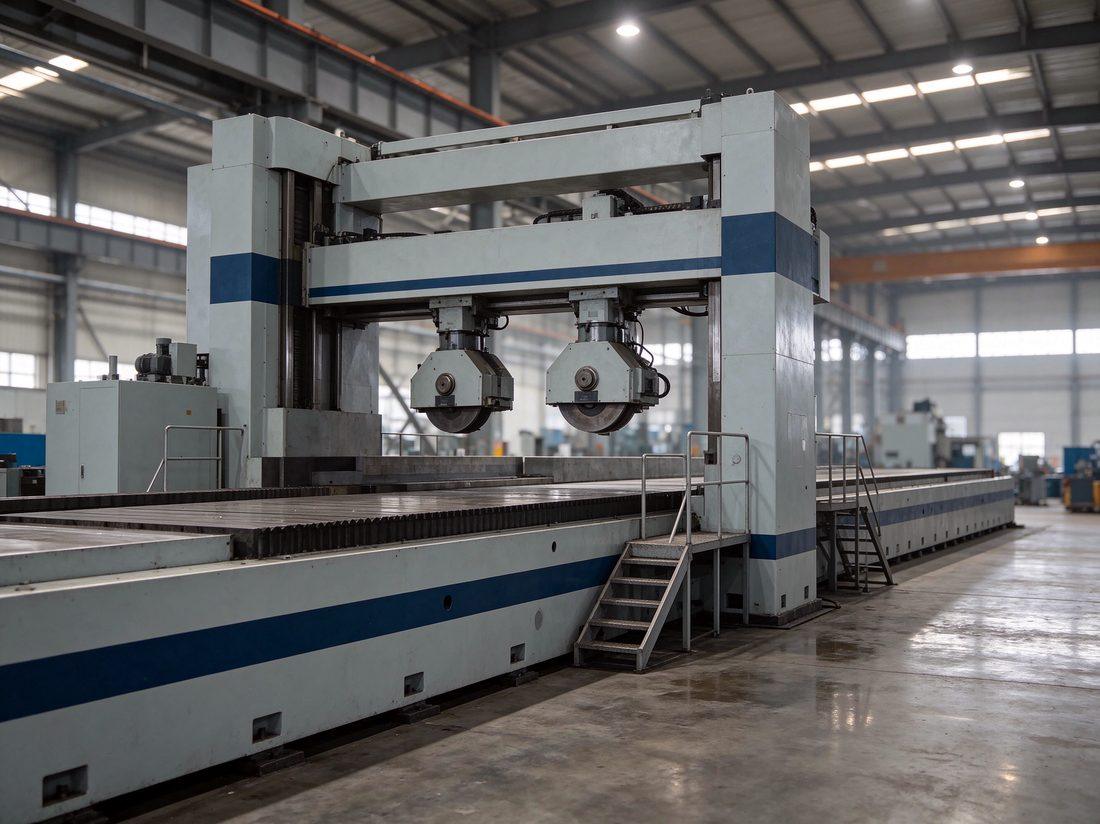
PSG-8020AHD Automatic Hydraulic Surface Grinder (2000 × 800 mm)

Model PSG-8020AHD Automatic Precision Surface Grinders ISO 9001 built 12-month warranty
✓ Standard models ship in 25–35 days · gantry and CNC specials 45–60 days

2000 × 800 mm automatic hydraulic grinder with PLC cycle control — long, wide plates in one set-up without a CNC budget.

Send the drawing and the tolerance — we answer with the cycle time and the smallest machine that holds it, usually within 24 h. Comparing several models? Add them to the inquiry list and send one request.
Ask an engineer about this model Download the spec sheet (PDF) →

Product Details

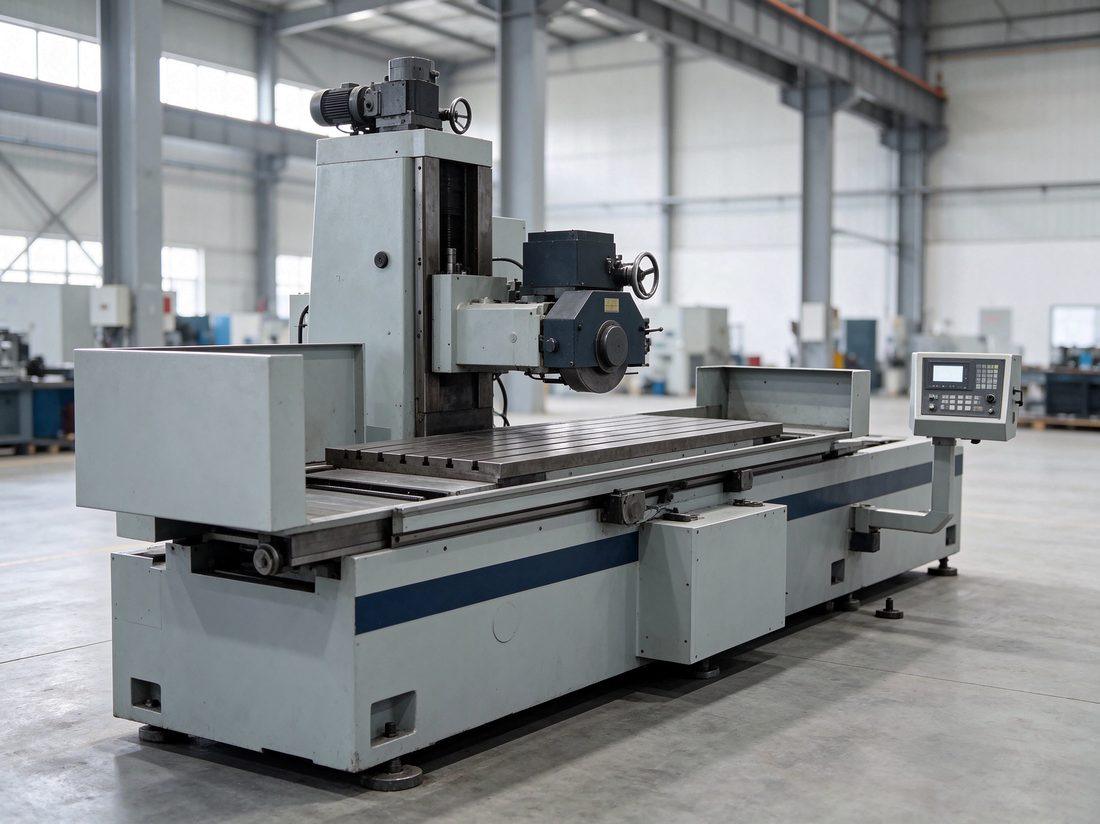
The 8020AHD is the widest automatic-hydraulic machine in the line: a 2000 × 800 mm table on an extra-long cast base, with a PLC-driven cycle that runs rapid approach, coarse and fine down feed and spark-out without an operator at the handwheel.

Key features

  • 2000 × 800 mm table, 400 × 50 × 203 mm wheel
  • PLC cycle: rapid approach → coarse → fine → spark-out → retract
  • Automatic cross feed 0.1–0.6 mm per table reversal
  • 15 kW spindle on a balanced cartridge assembly
  • Hydraulic table 5–25 m/min with independent power unit and oil cooler
  • Double-walled base and ribbed column for wide-plate work

Specifications

Table size2000 × 800 mm
Max grinding length2100 mm
Max grinding width800 mm
Max spindle centre to table700 mm
Grinding wheel400 × 50 × 203 mm
Spindle motor15 kW
Cross feedAutomatic, 0.1–0.6 mm per reversal
Down feedPLC cycle with spark-out, 0.001 mm
Table speed5–25 m/min hydraulic
Flatness0.005 mm / 500 mm
Machine weight11,800 kg

Where it fits

Die plates, bolster plates, shear blades, machine-tool beds and long structural plates up to 2.1 m. Buyers who need the 2 m stroke but cannot justify a CNC choose this machine: the cycle is automatic, the axis drives are hydraulic and mechanical, and the price sits well below the CNC line.

Accuracy and inspection

Table flatness and parallelism are measured on a granite reference with a 0.001 mm indicator, squareness against a granite square, and the surface finish on a roughness tester. The measured values are recorded on the test certificate supplied with the machine.

Delivery, installation and spares

Seaworthy packing on a steel skid with rust-preventive coating, FOB Shanghai or CIF. Installation, commissioning and operator training are quoted per site; consumables and wear parts — flanges, nozzles, wiper seals, coolant separator media — ship from stock.

Specifications

The 8020AHD is the widest automatic-hydraulic machine in the line: a 2000 × 800 mm table on an extra-long cast base, with a PLC-driven cycle that runs rapid approach, coarse and fine down feed and spark-out without an operator at the handwheel.

Key features

  • 2000 × 800 mm table, 400 × 50 × 203 mm wheel
  • PLC cycle: rapid approach → coarse → fine → spark-out → retract
  • Automatic cross feed 0.1–0.6 mm per table reversal
  • 15 kW spindle on a balanced cartridge assembly
  • Hydraulic table 5–25 m/min with independent power unit and oil cooler
  • Double-walled base and ribbed column for wide-plate work

Specifications

Table size2000 × 800 mm
Max grinding length2100 mm
Max grinding width800 mm
Max spindle centre to table700 mm
Grinding wheel400 × 50 × 203 mm
Spindle motor15 kW
Cross feedAutomatic, 0.1–0.6 mm per reversal
Down feedPLC cycle with spark-out, 0.001 mm
Table speed5–25 m/min hydraulic
Flatness0.005 mm / 500 mm
Machine weight11,800 kg

Where it fits

Die plates, bolster plates, shear blades, machine-tool beds and long structural plates up to 2.1 m. Buyers who need the 2 m stroke but cannot justify a CNC choose this machine: the cycle is automatic, the axis drives are hydraulic and mechanical, and the price sits well below the CNC line.

Accuracy and inspection

Table flatness and parallelism are measured on a granite reference with a 0.001 mm indicator, squareness against a granite square, and the surface finish on a roughness tester. The measured values are recorded on the test certificate supplied with the machine.

Delivery, installation and spares

Seaworthy packing on a steel skid with rust-preventive coating, FOB Shanghai or CIF. Installation, commissioning and operator training are quoted per site; consumables and wear parts — flanges, nozzles, wiper seals, coolant separator media — ship from stock.

Company Advantages

0
Manufacturing in Hangzhou since
0
Surface grinder product lines
0
Export countries served
0
Engineer reply on every RFQ

What Our Customers Say

★★★★★

"The gantry machine was specified for 2.4 m press tools. PyeahGrind sent the laser report before shipping and the installer re-checked geometry on our floor. It matched the report — that never happens with the second-hand machines we used before."

Ahmed S.
Ahmed S.
Production engineer · press tool plant, UAE
★★★★★

"Started with the small PSG-618M because the budget was tight. It holds 0.005 mm flatness on punch plates and the handwheels are still tight after three years of daily use. We have since ordered a hydraulic machine from the same dealer."

Rizky H.
Rizky H.
Owner · jobbing workshop, Indonesia
★★★★☆

"We grind bearing races on the HZ-RT600 rotary table. Parallelism is stable and the circular chuck holds thin rings without distortion. Spare wheel flanges arrived in four days when we needed them urgently."

Nguyen V. L.
Nguyen V. L.
Grinding supervisor · bearing plant, Vietnam

Frequently Asked Questions

Selection

What is the difference between a PLC and a CNC surface grinder?
A PLC grinder automates the grinding cycle — table speed, cross-feed step, down-feed per pass and dressing interval — with stored programs, but the axes are not fully interpolated. A CNC grinder uses closed-loop servo axes with glass scales, so it can hold 0.002 mm positioning, grind stepped or shallow forms, and compensate for wheel wear automatically. If your tolerance is 0.005 mm and the work is flat plates, a PLC machine is enough; if the drawing says 0.002 mm or you grind forms, choose CNC.
How do I size a surface grinder for my largest part?
The table must be at least 100 mm longer and 50 mm wider than the part, so the wheel clears both ends before the table reverses. An 800 × 400 mm die plate therefore needs a 900 × 400 mm grinding envelope — a PSG-4080AH. Buying a machine that exactly matches the part leaves no room for clamping or for a larger job next year.
Which machine should a mould shop buy first?
Most mould shops start with one hydraulic automatic machine in the 800 × 400 mm class (PSG-4080AH) for plate flatting, then add a CNC (PSG-250SK3 or PSG-525CNC) when insert tolerances drop below 0.005 mm or when the same part repeats every month. Buying the CNC first is a valid choice only if your inserts drive the business.

Accuracy

What accuracy can I expect in real production?
A CNC PyeahGrind grinder holds 0.002 mm positioning and 0.003 mm repeatability on the machine, which typically produces 0.003–0.005 mm flatness on a real part in a temperature-controlled shop. Hydraulic machines hold 0.005 mm flatness with a skilled operator. Without temperature control and wheel discipline, expect one grade worse than the machine is capable of.
How is accuracy verified before shipment?
Each machine is checked on a granite plate with a 0.001 mm indicator for flatness and parallelism, with a laser interferometer for positioning and repeatability on servo axes, and with a dial indicator sweep for spindle runout. A test plate is ground on both faces and measured. The report ships in the crate.
Why does my part warp after grinding?
Warp comes from three causes: too much heat from an overloaded wheel, residual stress in the workpiece being released as stock is removed, and clamping distortion on the chuck. Rough grind, let the part equalise to shop temperature, then finish with a dressed wheel and shallower passes. Demagnetize before measuring — residual magnetism on thin plates reads as warp.

Export

What Incoterms do you quote?
FOB Ningbo or Shanghai by default, and CIF or DAP on request. For Southeast Asian buyers we prepare Form E for preferential duty where applicable. Prices are in USD.
What is the lead time?
Standard models ship 25–45 days after deposit, depending on options. Gantry machines and special widths take 60–90 days. Spare parts ship by air within 72 hours.
What payment terms do you accept?
30% deposit by T/T and 70% before shipment is the standard. L/C at sight is accepted for orders above USD 50,000. For repeat dealers we discuss open-account terms after the first two orders.

Service

How long is the warranty and what does it cover?
12 months from installation (or 14 months from the bill of lading, whichever comes first), covering manufacturing defects in the bed, column, table, spindle assembly and electrical system. Consumables and wear parts — wheels, coolant, wipers, belts, seals — are excluded.
How fast can you supply spare parts?
Standard wear parts are held in stock and ship by air within 72 hours of order. Send the machine model, serial number and a photo of the part. Parts remain available for at least 15 years after a model is discontinued.
Do you provide installation and training?
Commissioning support by video is included with every machine. On-site commissioning — levelling, geometry check, first-part grinding and operator training — is available as a paid option and is recommended for gantry machines and for first-time CNC buyers.

Send Your Grinding Requirement

Send part size, material, tolerance and volume — we reply with a model, FOB price and lead time within 24 hours.

captcha
WhatsApp