Surface Grinder for Sale: 12 Checks Before You Buy
A surface grinder for sale is only worth the price if the table, spindle and ways still hold tolerance. The 12 checks that decide it, in cost order.
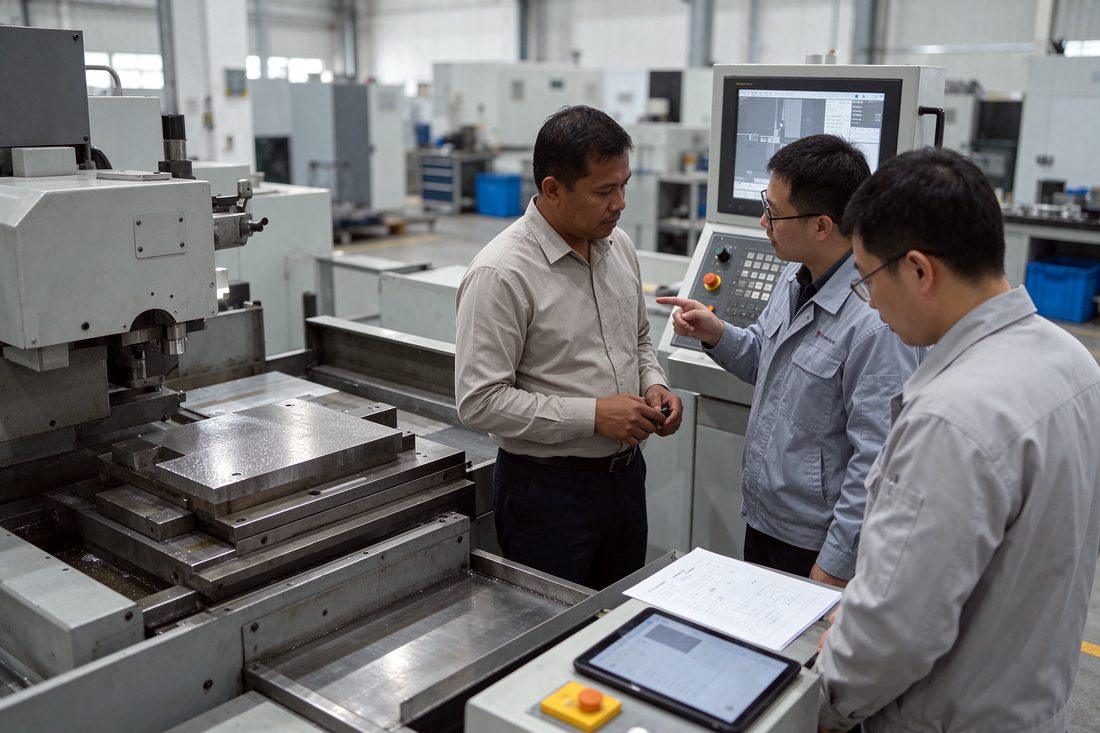
- Why the advertised price is never the final price
- Checks 1 to 4: the four tolerance numbers
- Checks 5 to 7: ways, lubrication and the table slide
- Checks 8 to 10: hydraulics, spindle motor and electrics
- Checks 11 and 12: chuck, wheel guard and what travels with the machine
- What a fair price looks like by machine type
- Matching the machine to the parts you actually grind
- FAQ
- Is a used surface grinder for sale cheaper than a new one in the long run?
- What is a reasonable price for a small surface grinder for sale?
- How do I check a surface grinder I cannot inspect in person?
- What accessories should be included in the price?
- Bottom line
A surface grinder for sale is worth buying only if four numbers can still be measured on the machine itself: spindle runout at or under 0.005 mm, table flatness within 0.01 mm over 300 mm, table-to-spindle squareness within 0.01 mm per 300 mm, and handwheel backlash under 0.02 mm on both the longitudinal and cross axes. If the seller cannot demonstrate those four numbers with an indicator on the machine, the machine is not a bargain — it is a repair project with a price tag. This page lists the twelve checks that separate the two, arranged so the most expensive failure is caught first.
Why the advertised price is never the final price
A 6 × 18 surface grinder advertised at USD 3,200 is rarely a 6 × 18 surface grinder at the end of the first month. The cheap listings on the used market are usually machines with one of three hidden faults: a spindle that has run without lubrication, ways that have been scored by swarf because the wipers were never replaced, or a hydraulic table that creeps because the reversal valve is worn. Each of those is a four-figure repair. Sorting the machine before you pay is the only way to keep a used surface grinder price honest.
The same logic applies to new machines: what changes the delivered price is not the badge but the table size, spindle power, whether the table is driven hydraulically, manually or by a PLC, and whether a magnetic chuck, coolant system and dust extraction are included or quoted separately.
Checks 1 to 4: the four tolerance numbers
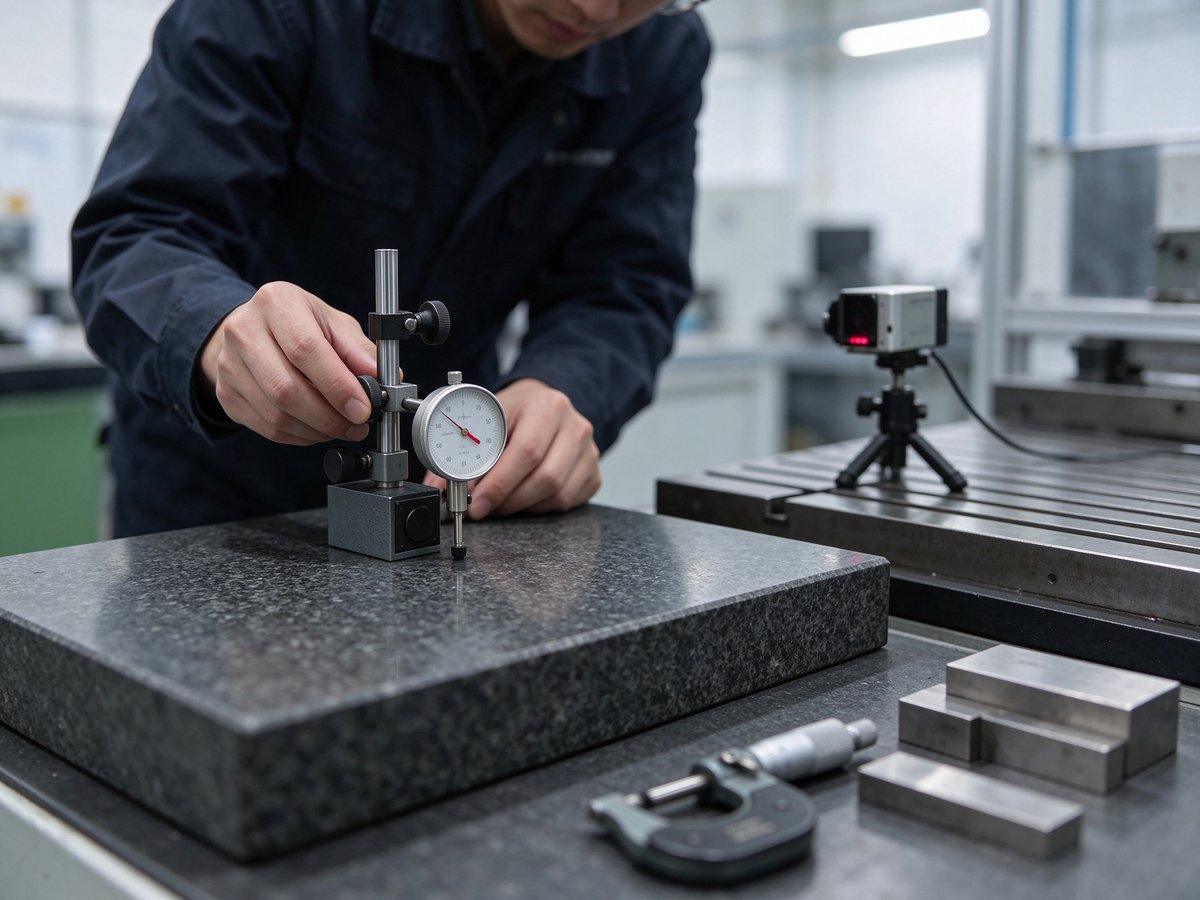
Measure these on the machine, with your own indicator, before money changes hands. They are the only checks that cannot be argued with.
| What to measure | Pass value | How to measure it | Repair cost if it fails |
|---|---|---|---|
| Spindle runout | ≤ 0.005 mm (0.0002 in) | Dial test indicator on the wheel flange taper, spindle rotated by hand | Spindle rebuild or replacement USD 900–2,500 |
| Table flatness | ≤ 0.01 mm over 300 mm | Precision straight edge plus feeler gauge, or granite plate and indicator | Hand scraping and re-flaking USD 600–1,500 |
| Table to spindle squareness | ≤ 0.01 mm per 300 mm | Magnetic base on the chuck, indicator sweeping the wheel arbor | Column and way rework USD 1,500 and up |
| Handwheel backlash (longitudinal and cross) | ≤ 0.02 mm | Indicator against the table, handwheel turned both directions | Feed nut or screw replacement USD 400–900 |
A runout figure of 0.01 mm sounds small until you translate it into surface finish: every revolution of a 200 mm wheel writes that error into the work as a wave, and the resulting roughness is roughly four times the runout value in Ra terms. That is how a machine that "still grinds fine" leaves a 1.6 µm finish where the drawing asks for 0.4 µm.
Checks 5 to 7: ways, lubrication and the table slide
Slide the table to both extremes by hand with the machine stopped, then look at the exposed ways on the overhang. Scoring, bright polished bands with a hard edge, or a varnish-like film of dried oil all mean the same thing: lubrication failed at some point in the machine's life. Check the lube pump reservoir for sediment, and check whether the oil lines to the ways are still connected — it is common to find one line plugged off because it dripped.
Swap the wipers with your thumb. A wiper that has gone hard, or one with a gap at the ends, lets fine swarf onto the ways. That swarf does not fail gradually, it fails suddenly: one chip under the table and the flatness reading moves from 0.008 mm to 0.03 mm.
Then check the table travel stops and the cross feed nut access cover. If the covers are missing, the machine has been running in a dirty shop, and the nut is the first thing to wear.
Checks 8 to 10: hydraulics, spindle motor and electrics
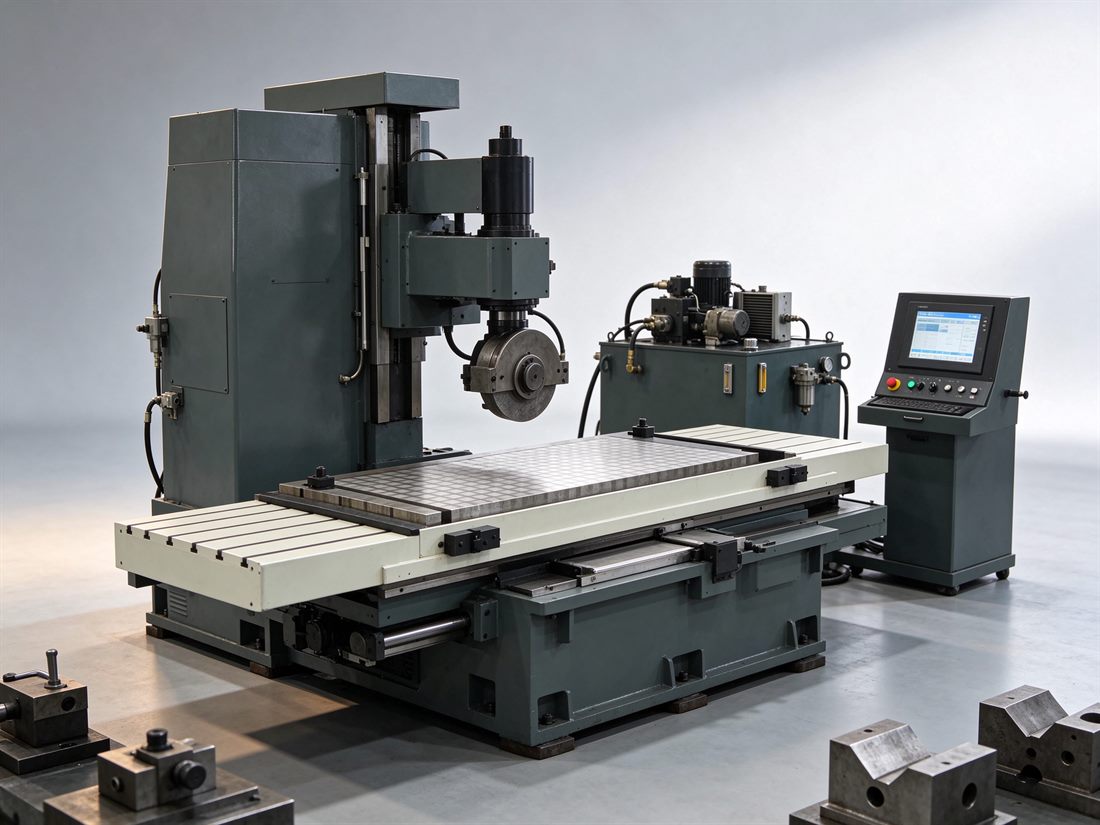
On a hydraulic surface grinder, run the table at both ends of its speed range for ten minutes. The table should reverse without a pause at the end of stroke, without a knock, and without drifting when you stop the feed. A reversal that hesitates, or a table that slowly creeps while the valve is in neutral, points at a worn directional valve or a tired vane pump. Both are hydraulic-shop repairs measured in hundreds of dollars, not thousands, but they must come off the asking price.
Listen to the spindle for 5 minutes at no load, then take a light cut. A spindle that is quiet unloaded but howls under load has a bearing preload problem. A spindle whose front bearing housing is warmer than 40 °C after ten minutes of light cutting will not hold size through a shift.
On the electrical side, open the cabinet and look for three things: whether the spindle motor starter is original or has been replaced with a smaller unit, whether the coolant pump wiring is still present, and whether the emergency stop actually drops the spindle contactor. Cameras and phone photos of the nameplate and the wiring diagram are worth taking — a machine with no diagram is a machine that costs two extra days of commissioning.
Checks 11 and 12: chuck, wheel guard and what travels with the machine
A magnetic chuck that has lost holding force is the single most common defect on a used surface grinder, and it is invisible until you put a 0.5 mm thin plate on it. Test with a thin plate and a pull scale, or with a 0.02 mm feeler under the plate edge: a chuck that no longer clamps a thin part is either saturated, cracked, or has a failing controller. The controller and demagnetising cycle are part of the machine's value — a chuck without its controller is worth roughly half.
Finally, inventory what is included: wheel flanges and balancing arbor, at least one diamond dresser with holder, the original wheel guard, coolant tank and nozzle, leveling pads, and the manual. Those accessories routinely add USD 600–1,200 if you have to buy them separately, and a missing wheel guard means the machine cannot be legally operated in most jurisdictions without fabricating a replacement.
What a fair price looks like by machine type
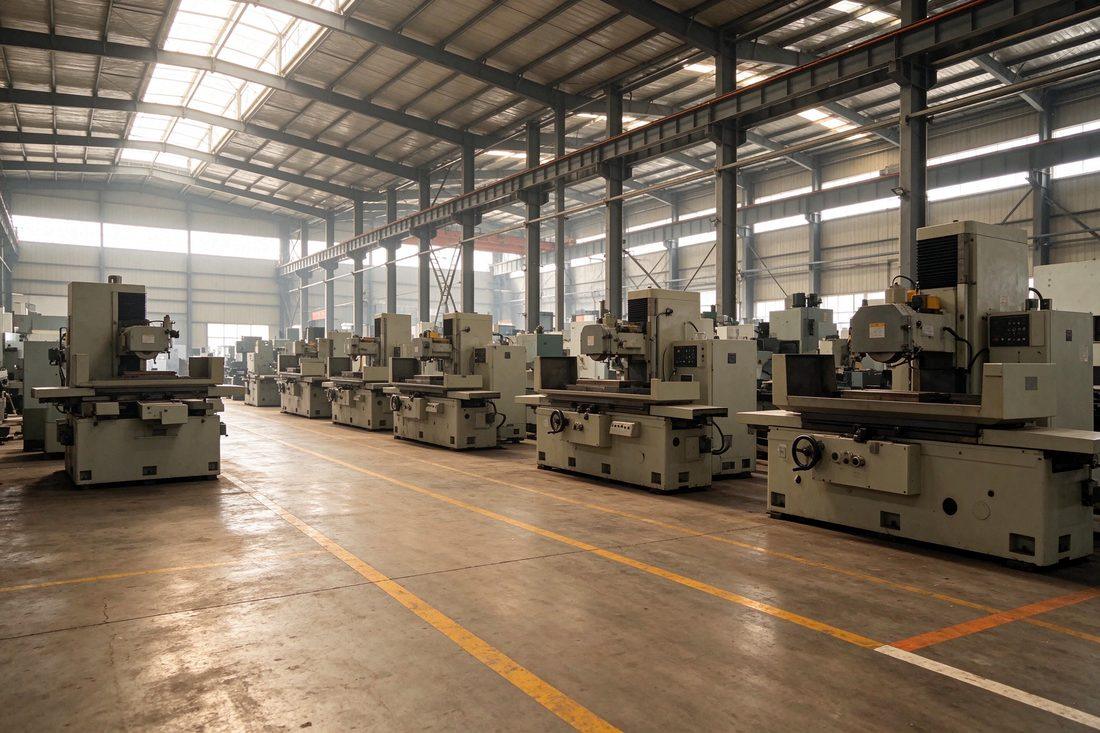
These are typical export price bands for new Chinese-built machines, FOB, without chuck and coolant where noted. Use them as a sanity check against any quote, new or used.
| Machine type | Table size | Spindle power | Typical price band (FOB) |
|---|---|---|---|
| Manual surface grinder | 450 × 150 mm | 1.5 kW | USD 4,500–7,500 |
| Manual, larger table | 600 × 300 mm | 2.2 kW | USD 7,000–11,000 |
| Hydraulic automatic | 500 × 250 mm | 2.2 kW | USD 9,000–14,000 |
| Hydraulic automatic, large | 800 × 400 mm | 4 kW | USD 16,000–24,000 |
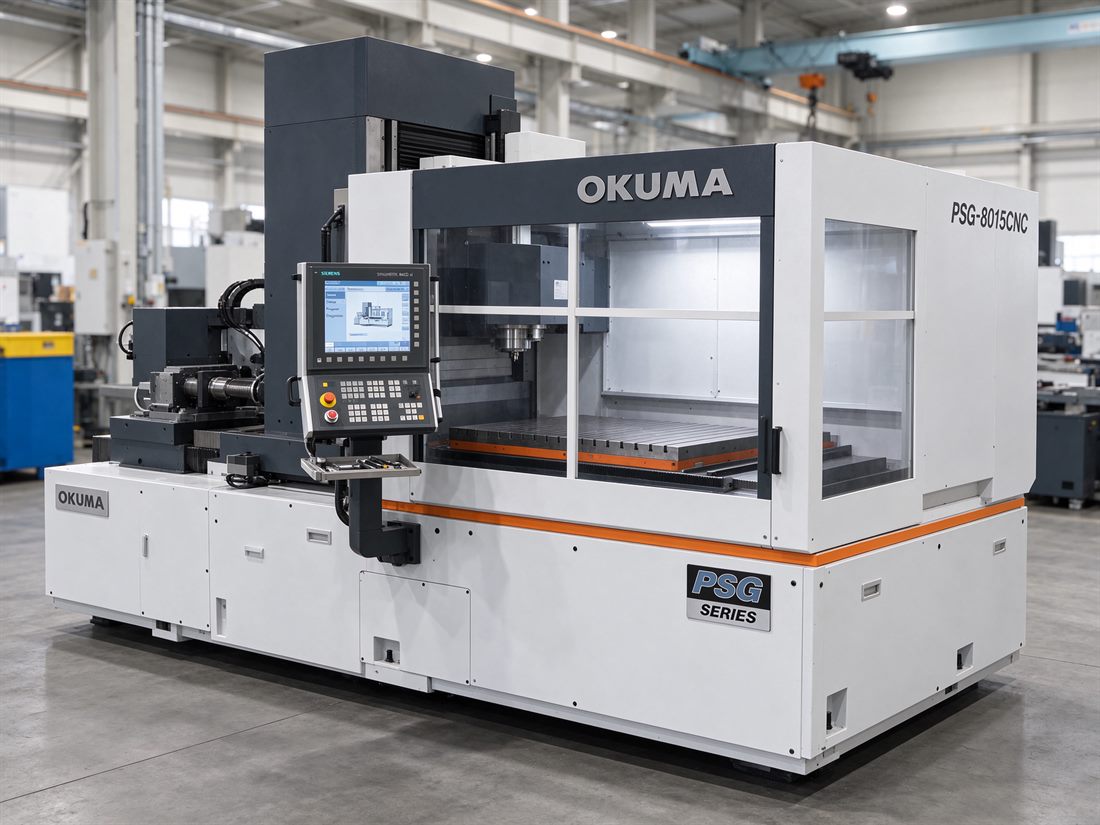
| PLC programmable | 800 × 200 mm | 4 kW | USD 18,000–26,000 |
| CNC, 0.002 mm class | 500 × 250 mm | 4 kW | USD 28,000–45,000 |
| Double column gantry | 1200 × 400 mm | 7.5 kW | USD 35,000–55,000 |
Used machines typically land at 40–60% of the new price when they are in good order. Above 65% of new, buy new: you get a warranty, a spare-parts channel, and a documented geometry report instead of a story about the previous owner.
Acceptance grinding before shipment: the same four numbers on this page are measured and recorded, machine by machine, before a new machine leaves the works.
Matching the machine to the parts you actually grind
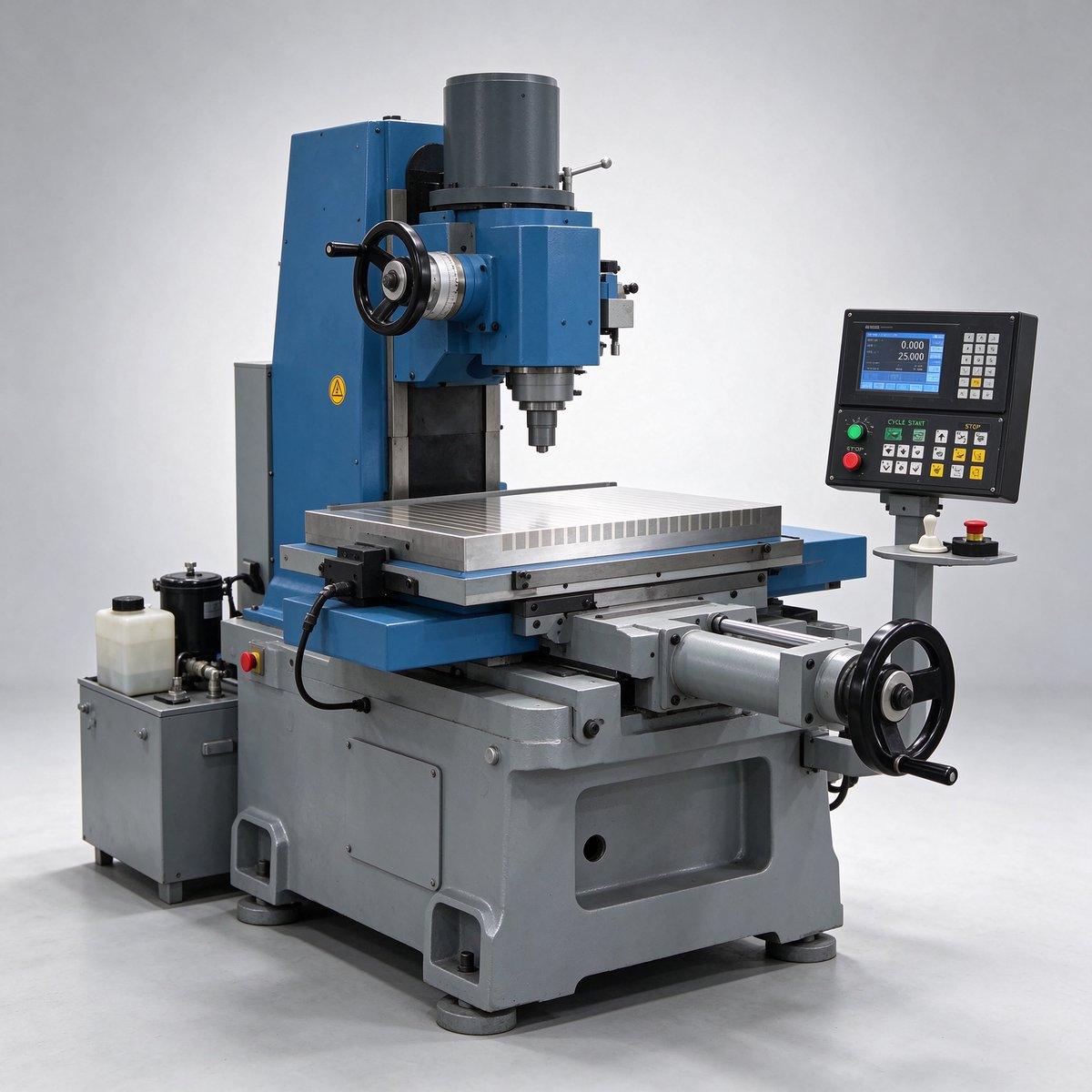
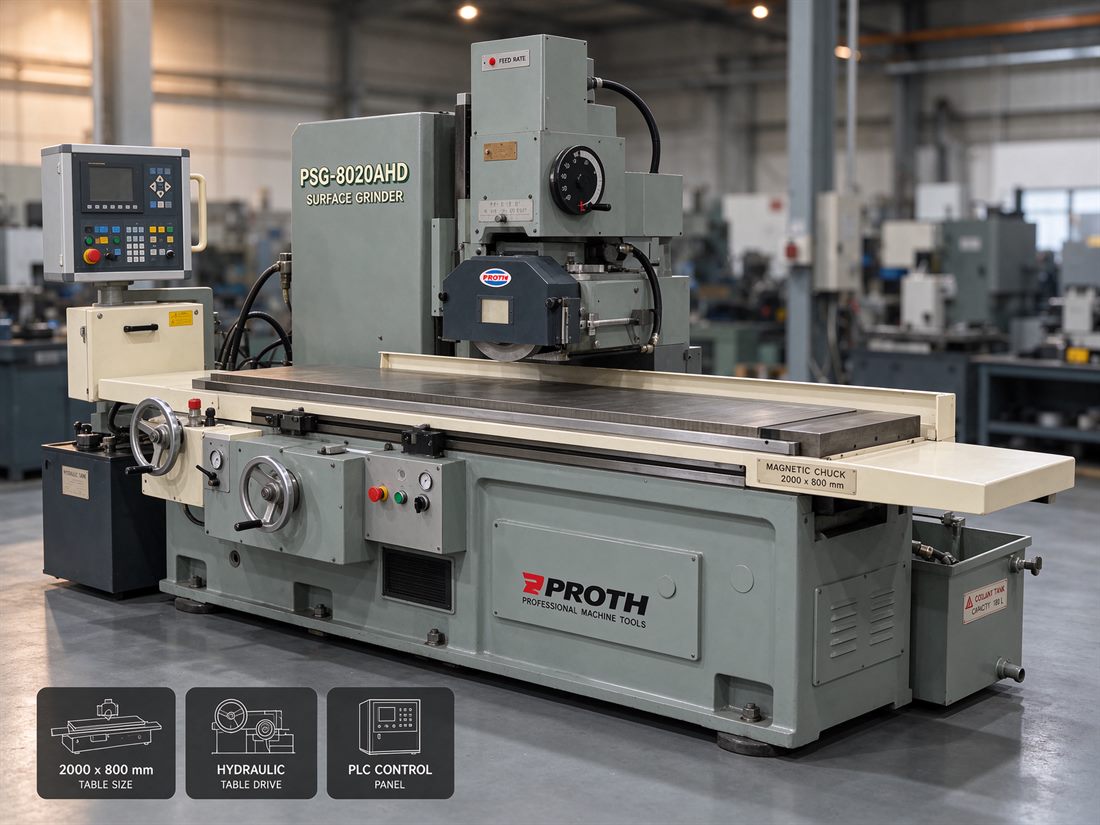
The most expensive mistake on this list is buying a machine that is one table size too small. A 450 × 150 mm table cannot grind a 500 mm long die block in one setup, and two setups on a surface grinder cost you the parallelism you were trying to buy. For die and mould work up to 600 mm, the PSG-250AH hydraulic surface grinder at 500 × 250 mm with hydraulic longitudinal and cross feed is the smallest machine that keeps a full die plate in one clamp. For 800 × 400 mm plates, the PSG-4080AH moves to a 4 kW spindle and a heavier column. For toolroom work where the operator sets every pass by hand, the PSG-618M manual surface grinder is the honest entry point.
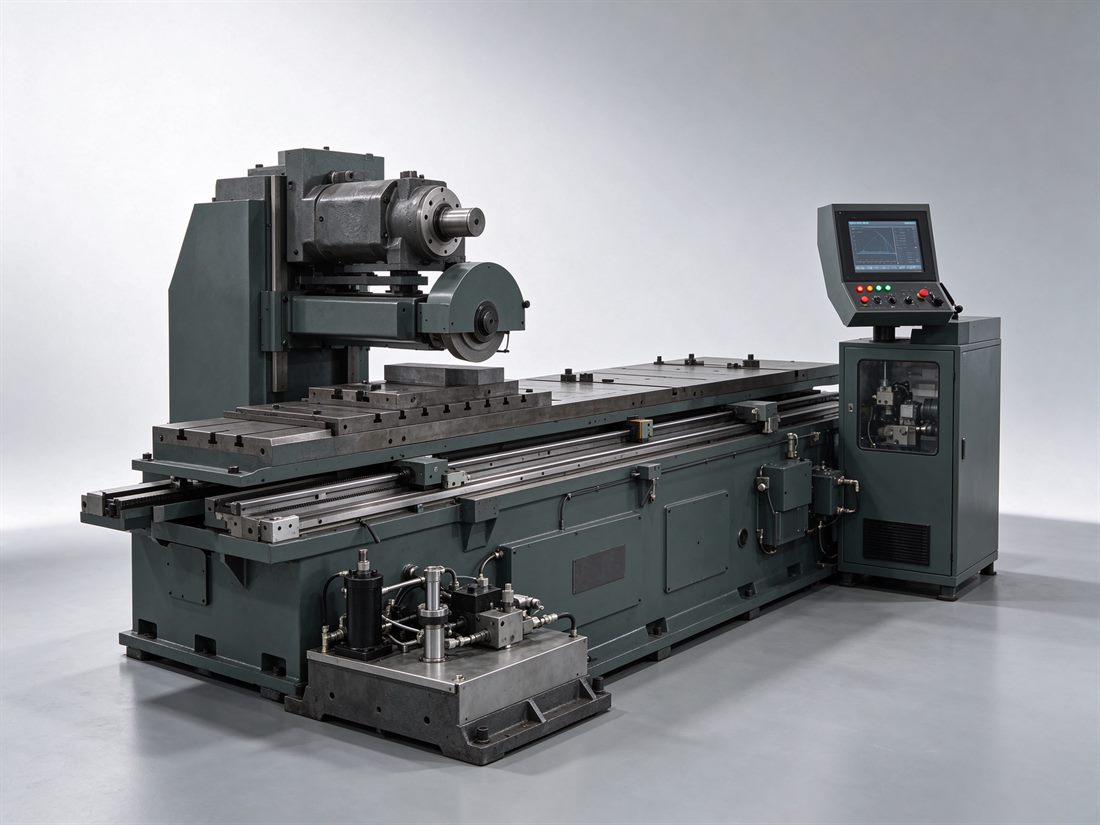
If your parts are long and narrow — shear blades, guide rails, press brake tooling — a double column gantry layout is the only geometry that keeps the wheel over the centre of the table across a 2 m stroke. Start with the PSG-12040GM gantry surface grinder and size up only when the part demands it.
FAQ
Is a used surface grinder for sale cheaper than a new one in the long run?
Only when the four tolerance numbers pass. A used machine that passes costs 40–60% of new and needs the same wheels and coolant. A used machine that fails one number usually costs more than new within eighteen months, because the repair is followed by the accessories you discover you are missing.
What is a reasonable price for a small surface grinder for sale?
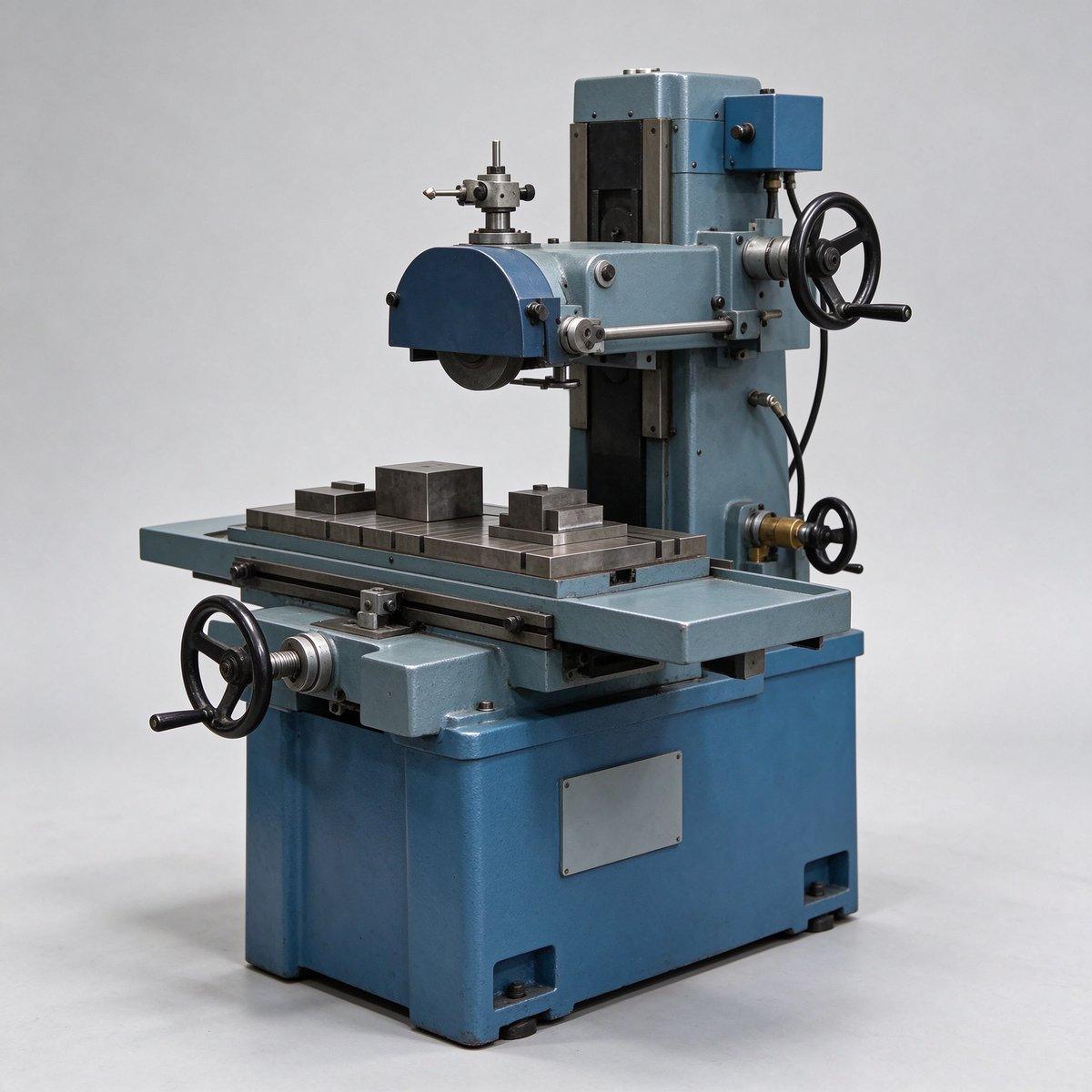
A 6 × 18 manual machine in working order is USD 4,500–7,500 new from China and USD 2,000–4,000 used. Below USD 2,000 you are usually buying a machine that needs a spindle or a set of ways.
How do I check a surface grinder I cannot inspect in person?
Ask for four photographs and one video: indicator on the spindle taper while it is rotated by hand, indicator sweeping the chuck with the table locked, the ways at full overhang, and a 30-second video of the table reversing at both speed extremes. Refuse any seller who will not produce the first two.
What accessories should be included in the price?
Wheel flanges and balancing arbor, one diamond dresser with holder, magnetic chuck and its controller, coolant tank with nozzle, wheel guard, leveling pads and the manual. Missing items add USD 600–1,200.
Bottom line
Buy the machine that measures well, not the machine that looks clean. If you are comparing a new import against a used local machine, send us the part drawing, the tolerance and the monthly volume — we will tell you which table size and which feed type actually covers the work, and what the delivered cost looks like including chuck, coolant and commissioning. Request a quote and we will answer with numbers, not adjectives.