Why Your Surface Grinder Burns the Work — and How to Fix It
Grinding burn causes: glazed wheel, dirty coolant, too much depth of cut, wrong wheel grade. Diagnose by colour, then fix it in the right order.
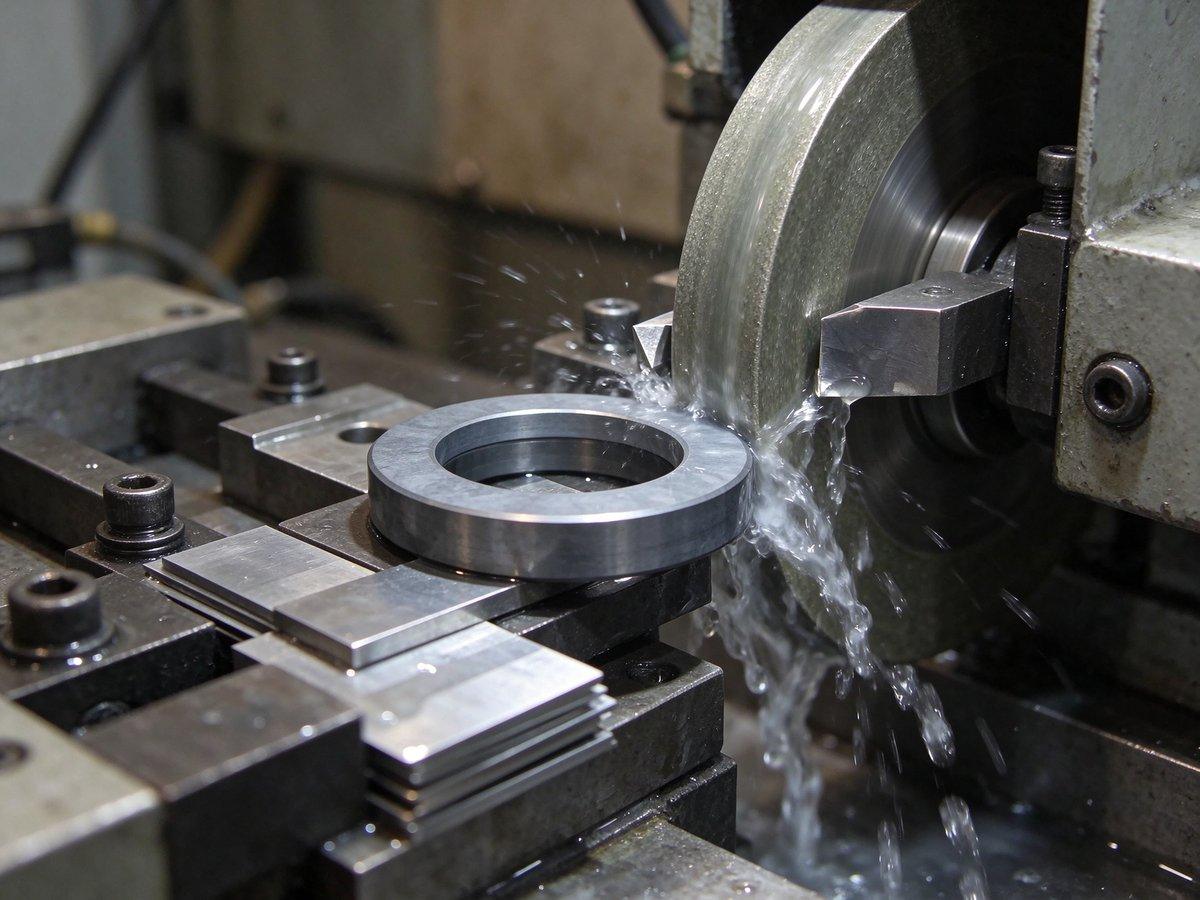
Read the colour
Burn shows as a straw or blue tint on steel, and as a dark smear on cast iron. On hardened steel it is often accompanied by micro-cracks that only appear after the part is in service — which is why burn must be treated as a defect, not a cosmetic issue.
The four causes, in order of likelihood
1. Glazed wheel. The wheel face is loaded and rubbing. Fix: dress 0.02 mm off with three passes and reduce depth per pass by 30%.
2. Dirty or weak coolant. Swarf in the fluid insulates the contact zone. Fix: skim the tank, replace the filter, and check concentration (5–8% for steel, higher for hard work). A magnetic separator pays for itself in one saved plate.
3. Too much depth of cut. 0.5 mm per pass on a 200 mm wheel is aggressive; on a 350 mm wheel it is normal. Match depth to wheel diameter and spindle power, not to the hurry.
4. Wheel too hard for the material. A K-grade wheel on soft low-carbon steel glazes immediately. Move one or two grades softer.
What not to do
- Do not press harder or slow the table to "grind through it" — that makes the burn worse.
- Do not add water to coolant to top up the tank; it changes concentration and promotes rust.
- Do not re-grind a burned part without removing the affected layer completely, or the crack travels deeper.
Prevention checklist
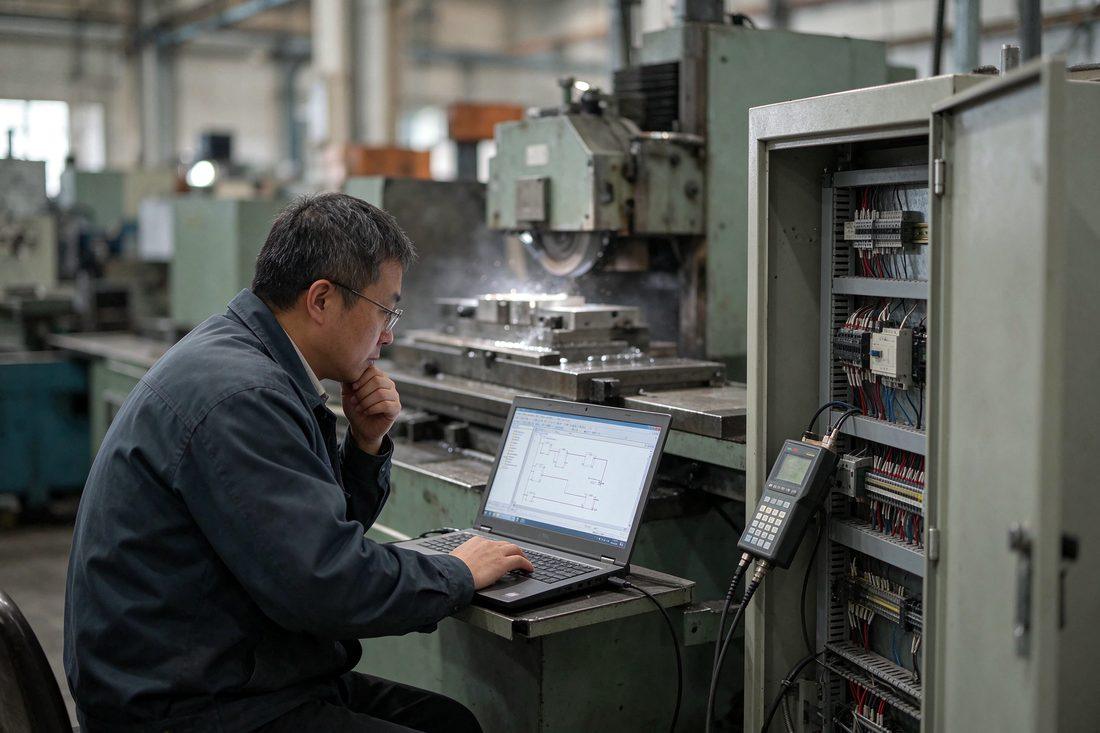
Dress on a fixed interval, keep coolant concentration in range, clean the tank weekly, and keep the nozzle aimed at the contact point rather than the table. On a CNC machine, monitor spindle load — a rising trend with the same program is the earliest warning of glazing.
Need a machine recommendation for this job? Send the drawing and tolerance to our application engineers — reply within 24 hours.