Grinding Hardened Steel: CBN or Aluminium Oxide?
Hardness of the work, batch size and coolant decide the abrasive — and CBN is not always the faster choice.
The short answer
For hardened steel above 45 HRC in batch work, CBN usually wins on cost per part. For one-off parts, mixed materials and shops with weak coolant, aluminium oxide is the safer choice. The deciding variables are hardness, batch size and how well you can control the coolant.
What each abrasive actually does
Aluminium oxide is a friable abrasive: grains fracture under load and expose fresh edges, which keeps the wheel cutting cool but also means the wheel wears continuously and needs frequent dressing. CBN is much harder and far less friable, so it holds form and stays sharp for a long time — but it needs a stiffer machine, because a CBN wheel transfers the load rather than absorbing it.
| Factor | Aluminium oxide | CBN |
|---|---|---|
| Work hardness | Up to about 45 HRC | 45 HRC and above |
| Wheel life | Short; dress often | Long; dress rarely |
| Cost per wheel | Low | 5–15× higher |
| Machine stiffness needed | Moderate | High |
| Best for | One-offs, mixed materials, soft steel | Batch production, form holding, hard steel |
When CBN pays
If a wheel change and dress costs 20 minutes and you do it twice a shift, CBN's longer life is worth roughly 40 minutes of machine time a day. On a machine running two shifts that pays for the wheel in a few weeks. Add the fact that CBN holds form, so parts stay in tolerance across a batch, and the case becomes hard to argue against.
Where CBN disappoints
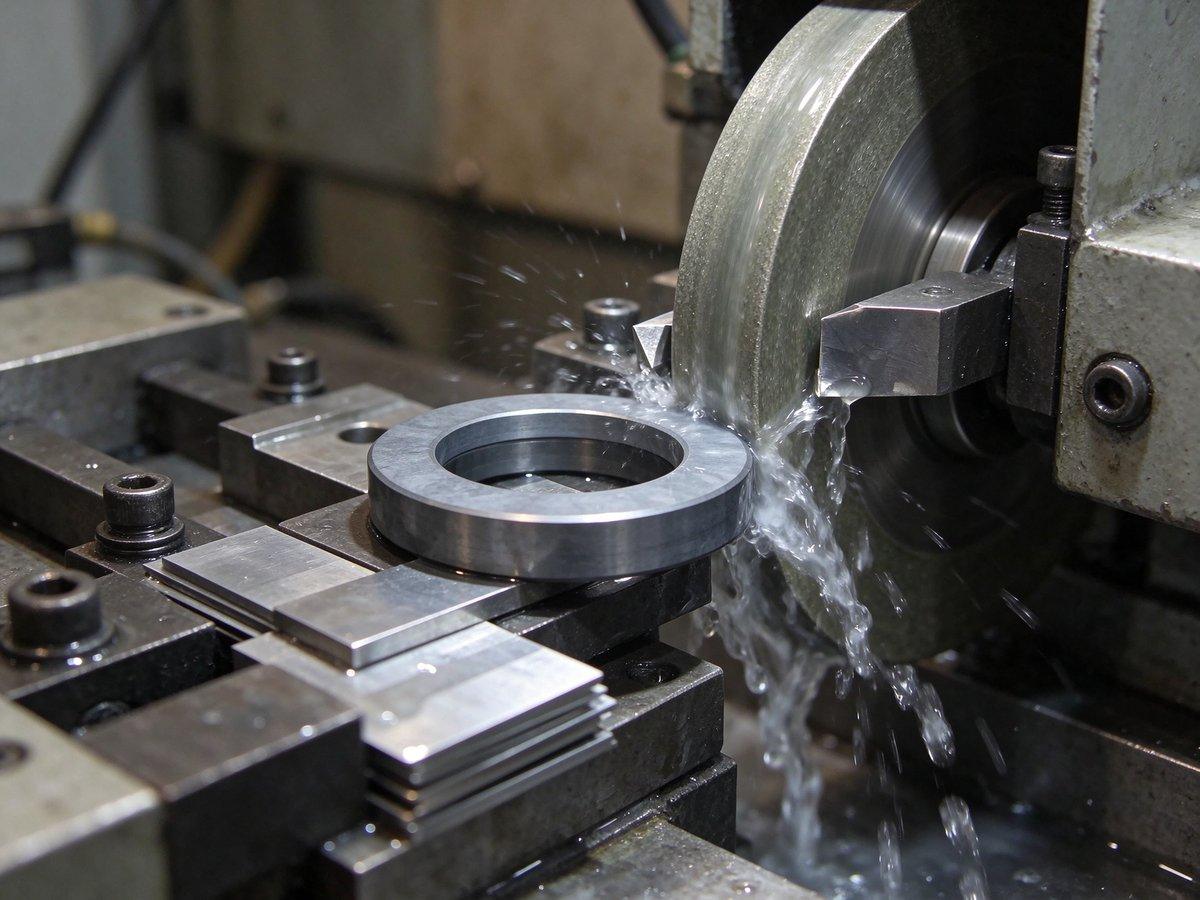
CBN fails quickly when the coolant does not reach the contact zone, because it cannot shed worn grains the way oxide does — it glazes instead. A shop with a weak pump, a poor nozzle or a machine with no coolant-through capability will get worse results and a shorter wheel life than it had with oxide. Fix the coolant before buying the wheel.
The middle ground people skip
Ceramic aluminium oxide (a seeded or microcrystalline grain) sits between the two: it holds form better than white oxide, costs a fraction of CBN, and tolerates ordinary coolant. For shops grinding 40–50 HRC dies in small batches, it is often the best value, and it is the grade we recommend before a CBN conversation starts.
Wheel grade selection is part of the process review we do with every machine order. The wheel selection chart maps grades to materials, and our engineers will review your coolant setup with it.