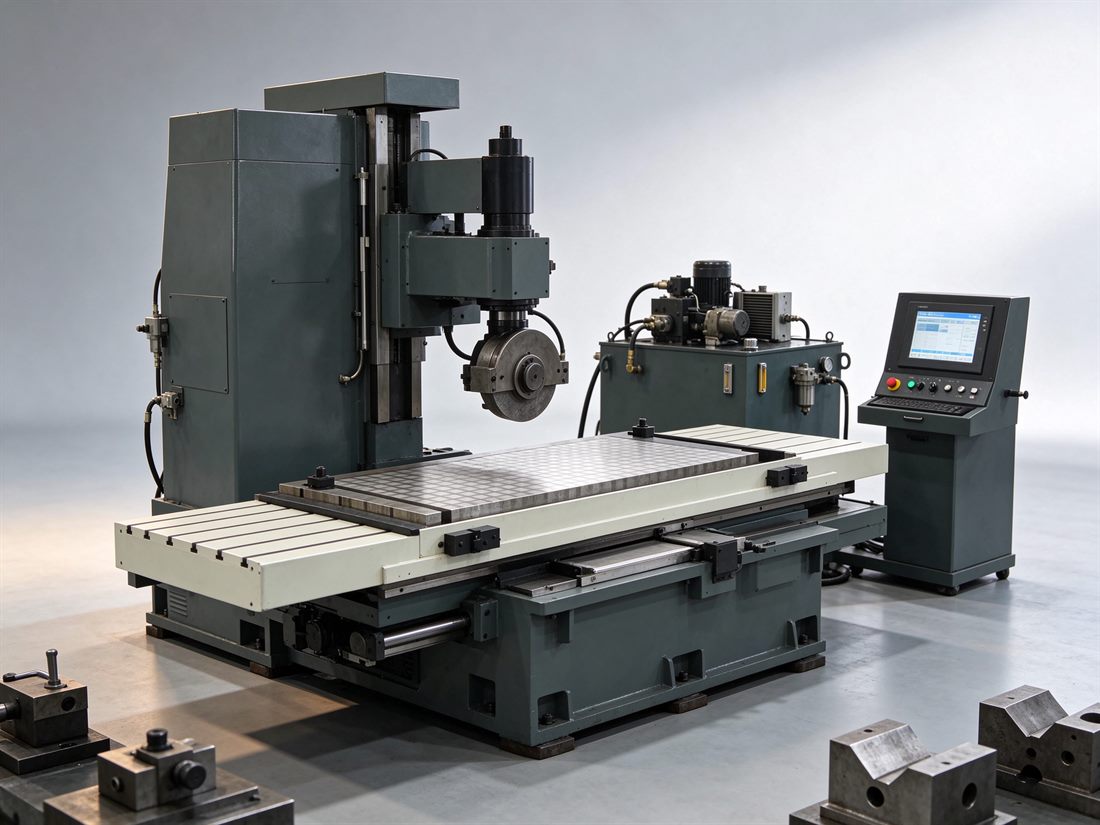
Grinding Aluminium on a Surface Grinder: What Works
How to grind aluminium without loading the wheel: wheel spec, coolant, depth and speed that actually work, plus why most failures are the wheel.
- Why aluminium is different from steel
- Wheel specification for aluminium
- Coolant: concentration matters more than flow
- Depth of cut and table speed
- Alloy by alloy
- Safety and the practical limits
- FAQ
- Can you grind aluminium on a surface grinder?
- Why does my wheel load when grinding aluminium?
- What coolant is best for grinding aluminium?
- Is it safe to grind aluminium on a surface grinder?
- Bottom line
Grinding aluminium works on a surface grinder if you use a coarse, open, soft wheel and a rich water-soluble coolant: 36–46 grit silicon carbide or a dedicated aluminium wheel, grade H–J, open structure, 8–12% coolant concentration with a pressure flood, 0.03–0.05 mm per pass and a table speed of 18–22 m/min. Get those five right and aluminium grinds cleanly; get the wheel wrong and it loads within twenty parts and tears the surface.
Why aluminium is different from steel
Aluminium is soft, gummy and has a low melting point compared with steel. Under a grinding wheel the chip does not shear cleanly — it smears and welds to the abrasive grains, filling the porosity. That is loading, and once the wheel is loaded it stops cutting and starts rubbing, which produces heat, more smearing, and a surface that looks torn rather than ground.
Two consequences follow. First, the wheel must be open enough to throw the chip clear rather than hold it. Second, the coolant must be rich enough to lubricate the chip so it does not weld to the grain in the first place.
Wheel specification for aluminium
| Property | Choose | Why |
|---|---|---|
| Abrasive | Silicon carbide (GC) or dedicated aluminium oxide | SiC is harder and sharper on non-ferrous work; it fractures cleanly rather than glazing |
| Grit | 36–46 | Coarse enough to carry a thick chip and leave porosity open |
| Grade | H–J (soft) | Self-sharpens before the chip can weld to a flat grain |
| Structure | Open, 10–12 or coarser | Pore space is where the chip goes; a dense wheel fills in minutes |
| Bond | Vitrified | Standard for precision; resin suits high speed but tends to smear |
| Width | As wide as practical | Fewer passes, less edge contact, less smearing |
A general-purpose WA60K wheel will grind aluminium once, load, and then burn the next part. That is the most common failure mode, and it is a wheel choice error, not an operator error.
Coolant: concentration matters more than flow
For aluminium, coolant concentration is the single biggest lever. At 5% a typical soluble oil giver poor lubricity and the chip welds to the grain; at 10% the same coolant carries the chip away cleanly. Check with a refractometer at the start of every shift — dilution from drag-out and from topping up with water is constant.
- Concentration: 8–12% for aluminium (5–8% is normal for steel).
- Delivery: a pressure flood aimed at the contact zone, not at the wheel rim. A low-head pump will not clear the contact.
- Filtration: a magnetic separator does nothing for aluminium; you need a settling tank plus a paper or centrifugal filter.
- Additives: a coolant with good boundary lubrication and no silicone; silicone causes fisheyes on any later anodising or painting.
The last point matters if the parts go on to anodising. Aluminium ground with a silicon-containing coolant can fail a subsequent finish, and the failure is invisible at grinding.
Depth of cut and table speed
Counter-intuitively, aluminium grinds better with a deeper pass than a lighter one. A 0.03–0.05 mm depth produces a chip thick enough to be thrown clear; a 0.005 mm pass produces a smear that welds into the wheel. Table speed should be high — 18–22 m/min — so the wheel does not dwell and heat the chip.
| Operation | Depth of cut | Table speed | Cross feed |
|---|---|---|---|
| Roughing plate | 0.05 mm | 20–22 m/min | 60–70% of wheel width |
| General grinding | 0.03–0.04 mm | 18–20 m/min | 50–60% |
| Finishing | 0.02 mm | 16–18 m/min | 40% |
| Thin plate or sheet | 0.01–0.02 mm | 14–16 m/min | 30–40%, watch for warp |
Stop and dress the moment the finish starts to tear or the sparks go dull. On aluminium, dressing every 20–30 parts is normal; waiting for the finish to fail means 20 parts already went out bad.
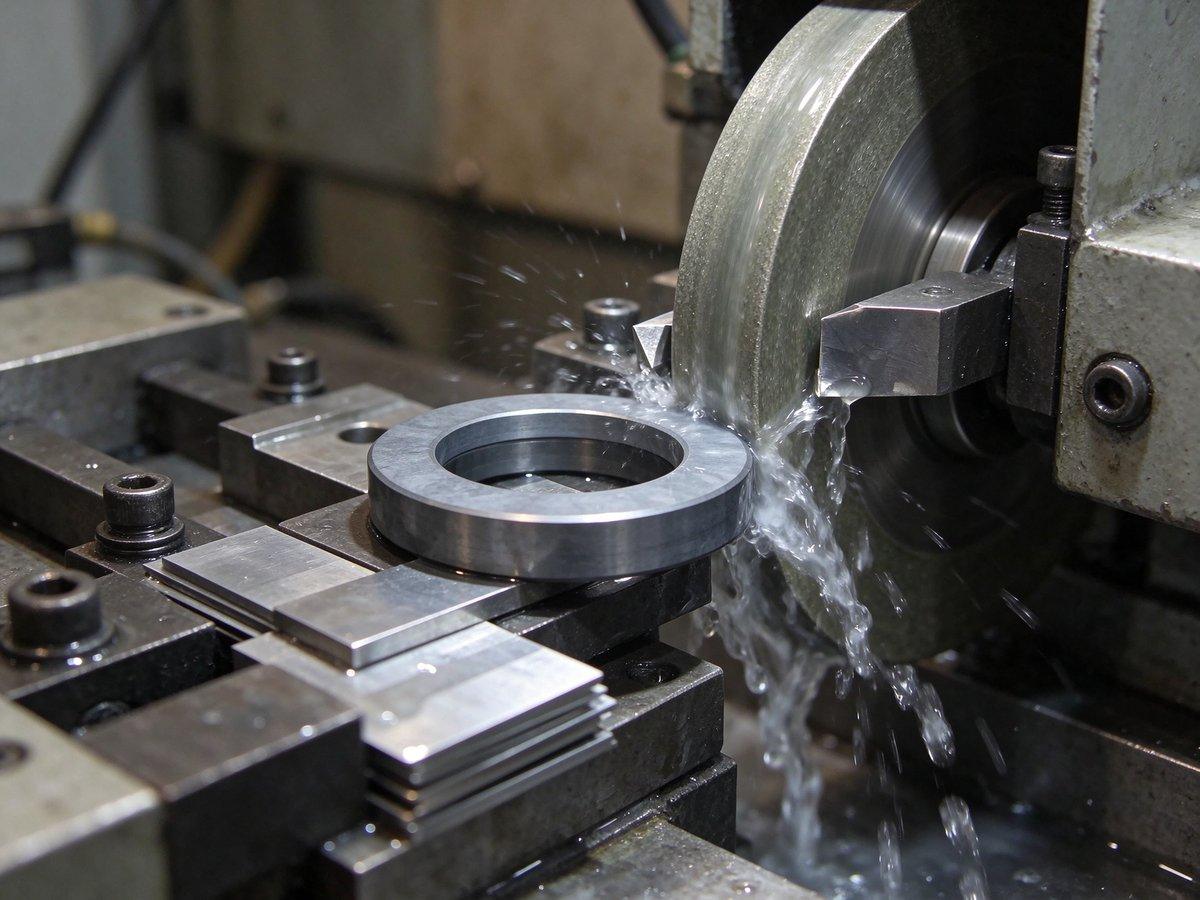
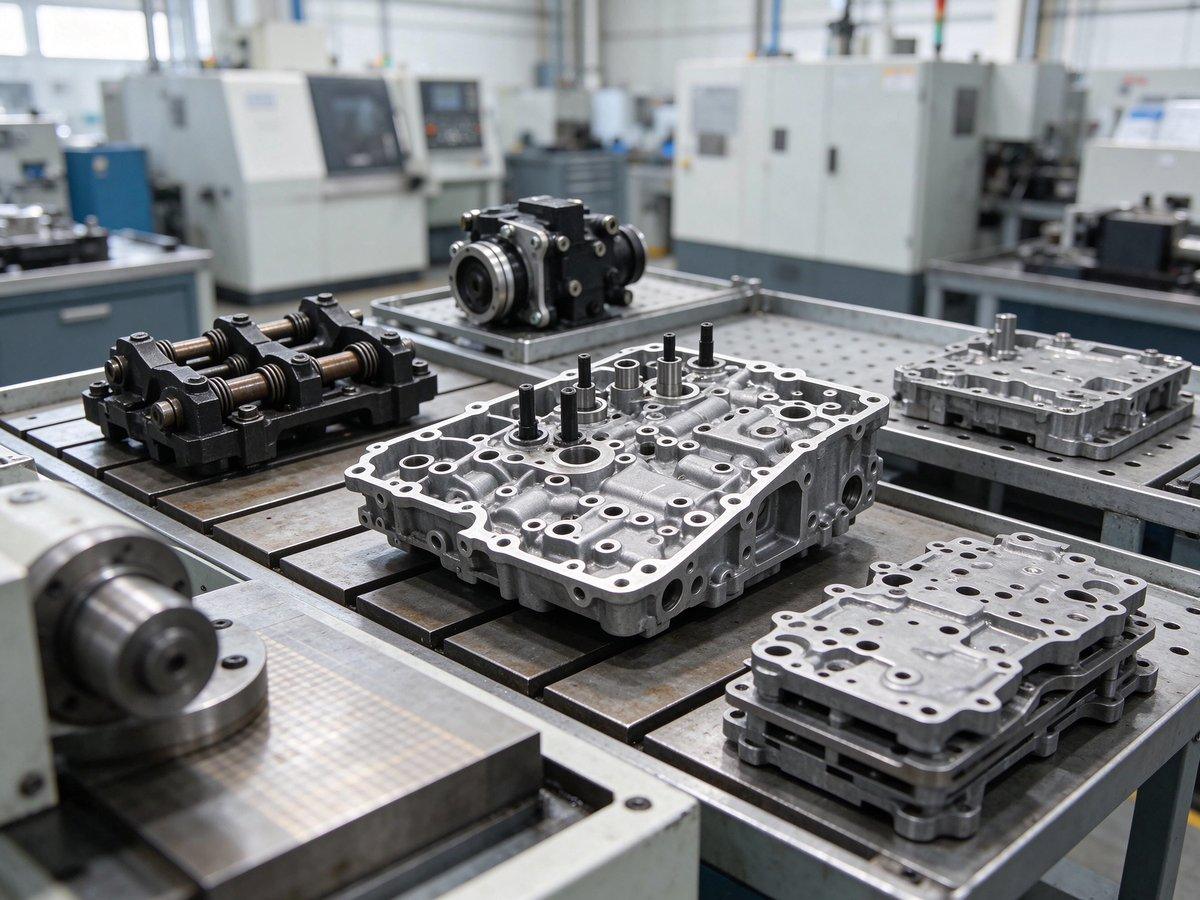
Ground aluminium faces on automotive components: the finish depends on coolant concentration and an open wheel more than on grit.
Alloy by alloy
| Alloy group | Behaviour | Adjustment |
|---|---|---|
| Pure and 1000-series | Very gummy, loads fast | Coarsest wheel, highest coolant concentration |
| 5000-series (Mg) | Loads and can smear badly | Open structure, dress every 15–20 parts |
| 6000-series (Mg-Si) | The most common structural alloy; grinds reasonably | Standard aluminium recipe as above |
| 7000-series (Zn) | Harder, better chip formation | Slightly finer grit is tolerable, 46–60 |
| Cast alloys with high Si | Abrasive to the wheel; wear rises 10–20% | Diamond or CBN becomes economic on volume |
High-silicon castings are the case where a diamond wheel earns its price: on 20% Si material, aluminium oxide wears so fast that wheel cost per part exceeds the diamond alternative.
Safety and the practical limits
Aluminium dust is combustible and fine grinding dust from any metal is a health hazard. A wheel guard with extraction, no dry grinding of large areas and no accumulation of dust in the tray are the three rules worth enforcing.
Very thin aluminium sheet — under 2 mm — is not surface grinder work: it warps from residual stress the moment material is removed from one side and it will not sit flat on a magnetic chuck at all. For thin aluminium, use a vacuum plate or double-sided grinding.
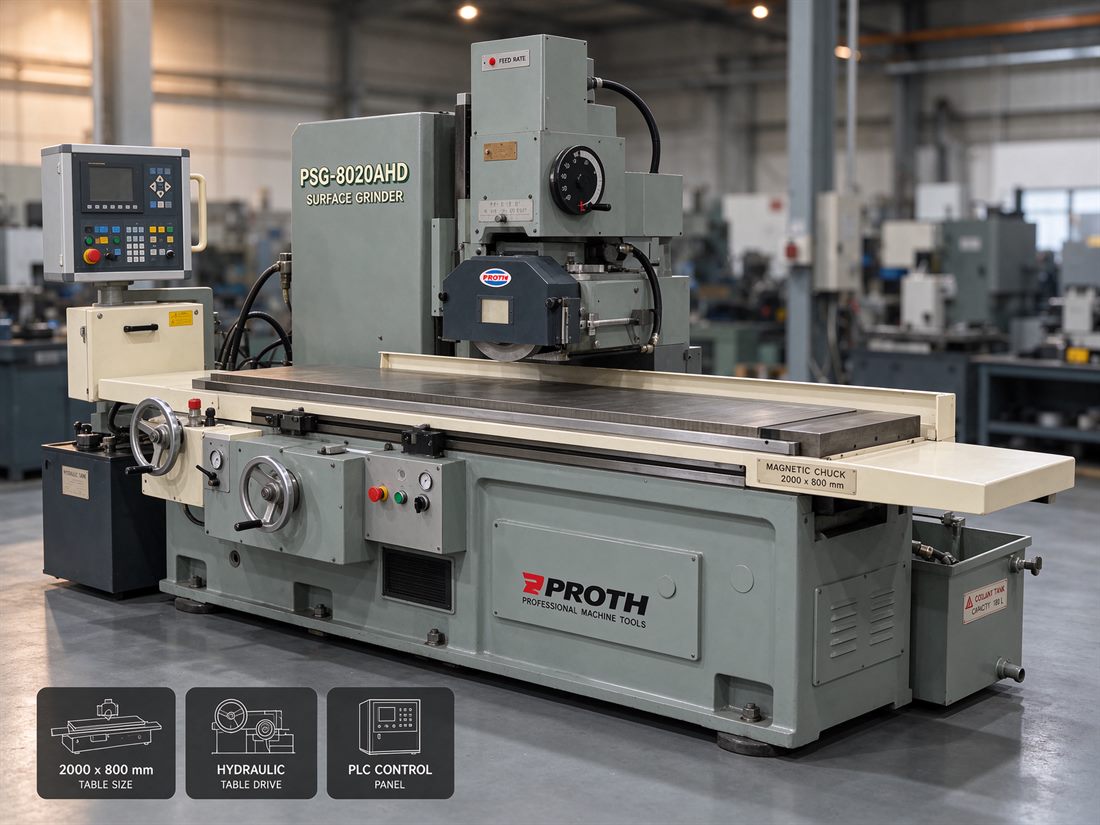
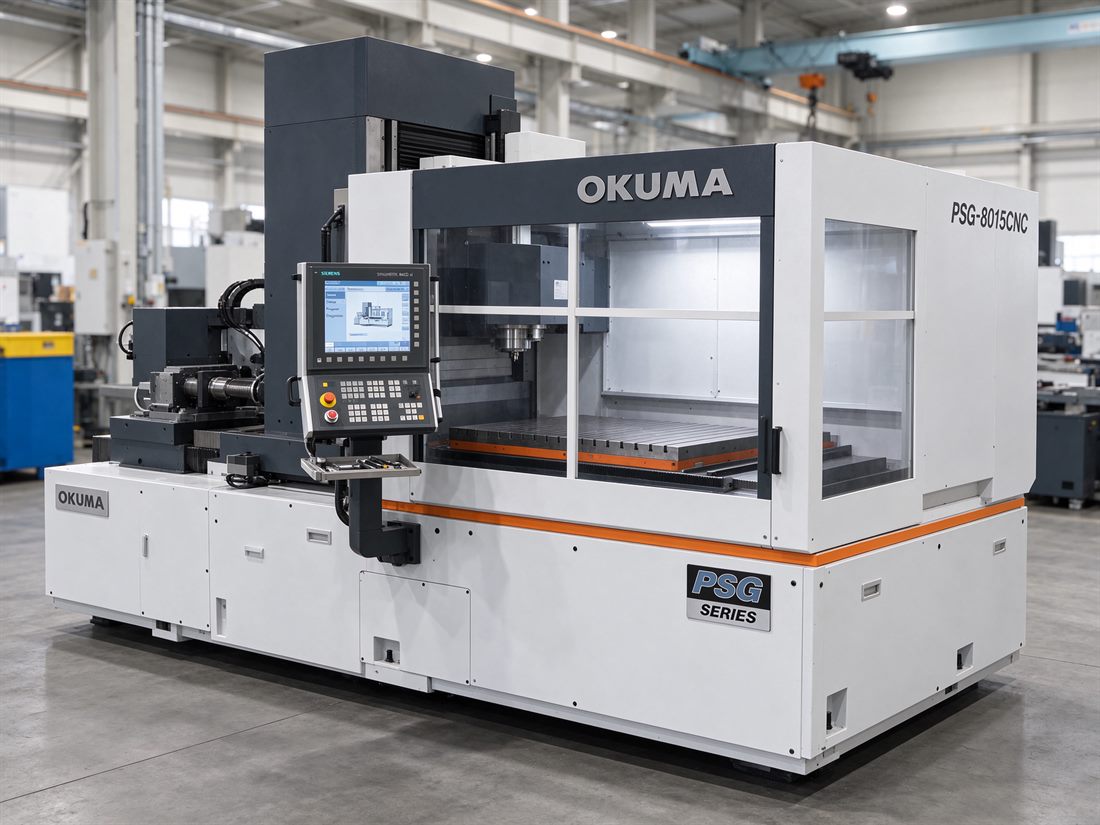
If aluminium is a large share of what you grind, say so when choosing a machine. A PSG-250AH with a coolant tank sized for the duty and a paper filter handles aluminium all day; the same machine with a 30 L tank and no filtration will need a coolant change every week. And if the shop already runs a PSG-618M for steel, expect to keep a dedicated aluminium wheel and a separate coolant charge rather than switching back and forth.
FAQ
Can you grind aluminium on a surface grinder?
Yes, with a coarse open soft wheel (36–46 grit, grade H–J), 8–12% coolant and 0.03–0.05 mm passes. A general steel wheel will load within twenty parts.
Why does my wheel load when grinding aluminium?
Either the wheel is too fine and dense, the coolant concentration is too low, or the depth of cut is too light so the chip smears instead of shearing.
What coolant is best for grinding aluminium?
A water-soluble coolant without silicone, at 8–12% concentration, delivered as a pressure flood at the contact zone, with paper or centrifugal filtration.
Is it safe to grind aluminium on a surface grinder?
Yes, with extraction and no dry accumulation of dust. Aluminium dust is combustible, so keep the tray and the extraction clean.
Bottom line
Aluminium is a wheel-and-coolant problem, not a machine problem. Tell us the alloy, the part size and how many you run, and we will specify the wheel, the concentration and whether a filtration upgrade is needed before the first part. Send the alloy and part details.