Coolant for Surface Grinding: Concentration, Flow and Filtration
Coolant concentration, flow rate, nozzle placement, filtration and change interval for precision surface grinding on steel, aluminium and carbide.
Coolant does three jobs
It removes heat, it flushes chips out of the contact zone, and it lubricates the wheel face. Most coolant problems are a failure of the second job — chips stay in the cut and the wheel loads.
Concentration
| Material | Concentration | Notes |
|---|---|---|
| Carbon and die steel | 5–8% | Below 4% causes rust and bacterial growth |
| Hardened steel, carbide | 7–10% | Higher film strength reduces burn |
| Aluminium | 6–8% | Use aluminium-specific coolant to prevent staining |
| Cast iron | 4–6% | Graphite loads the filter — skim often |
Flow and nozzle placement
Target 10–20 L/min on a 200 mm wheel and 25–40 L/min on a 350–400 mm wheel. Aim the nozzle at the point where the wheel enters the work — coolant delivered behind the cut does nothing for heat.
Filtration
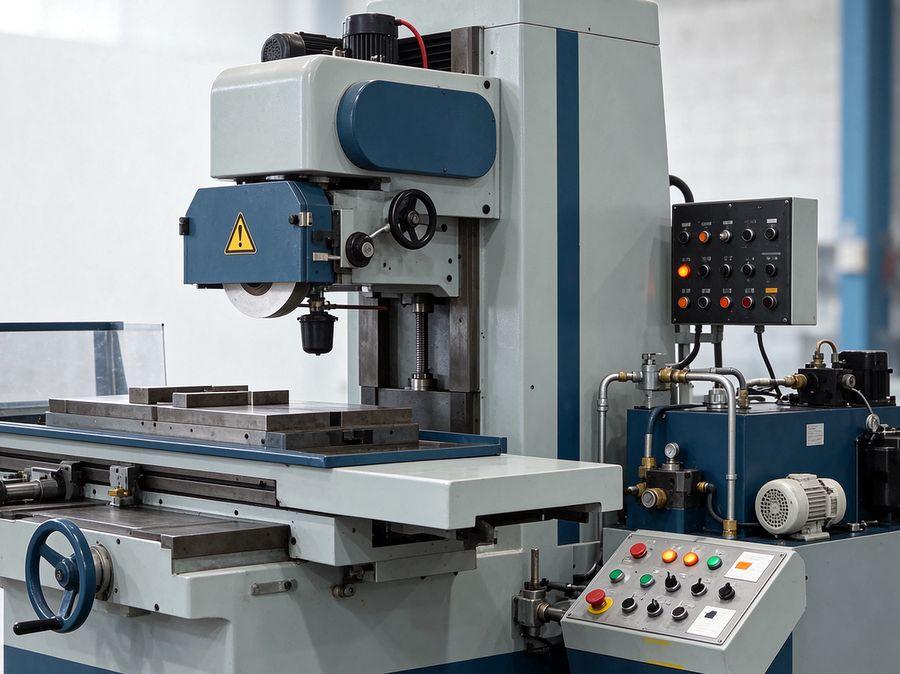
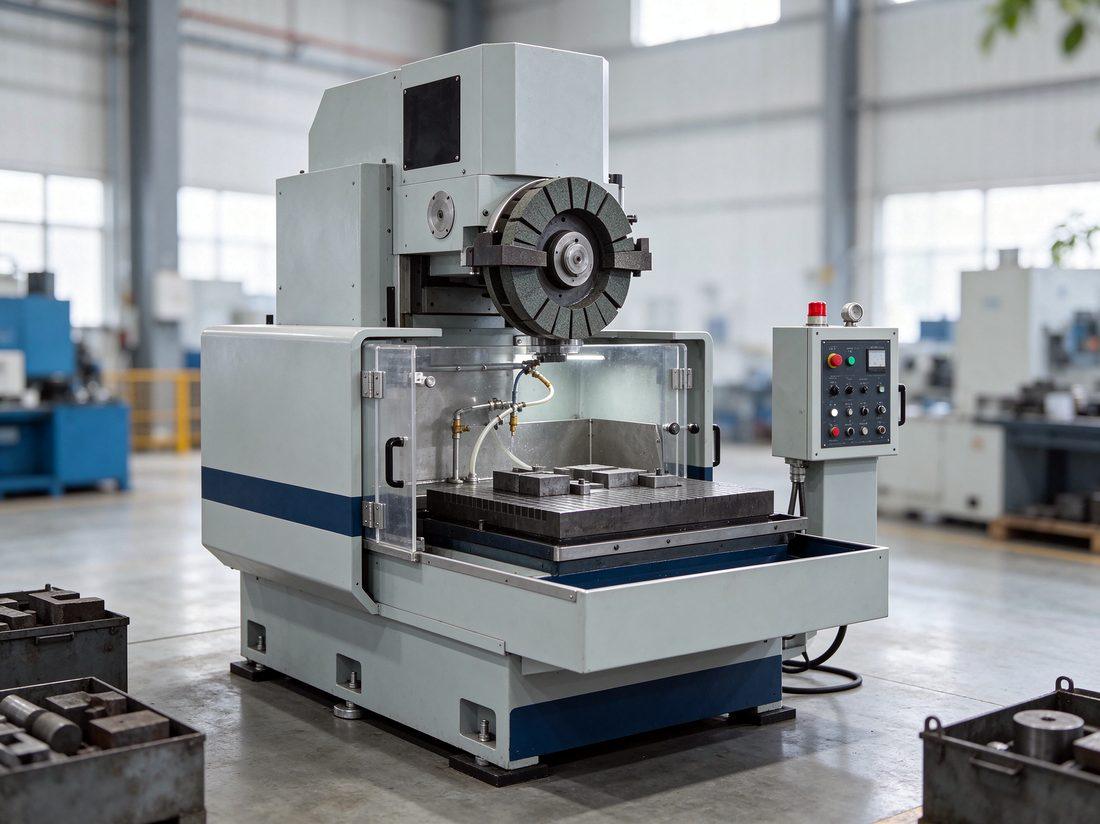
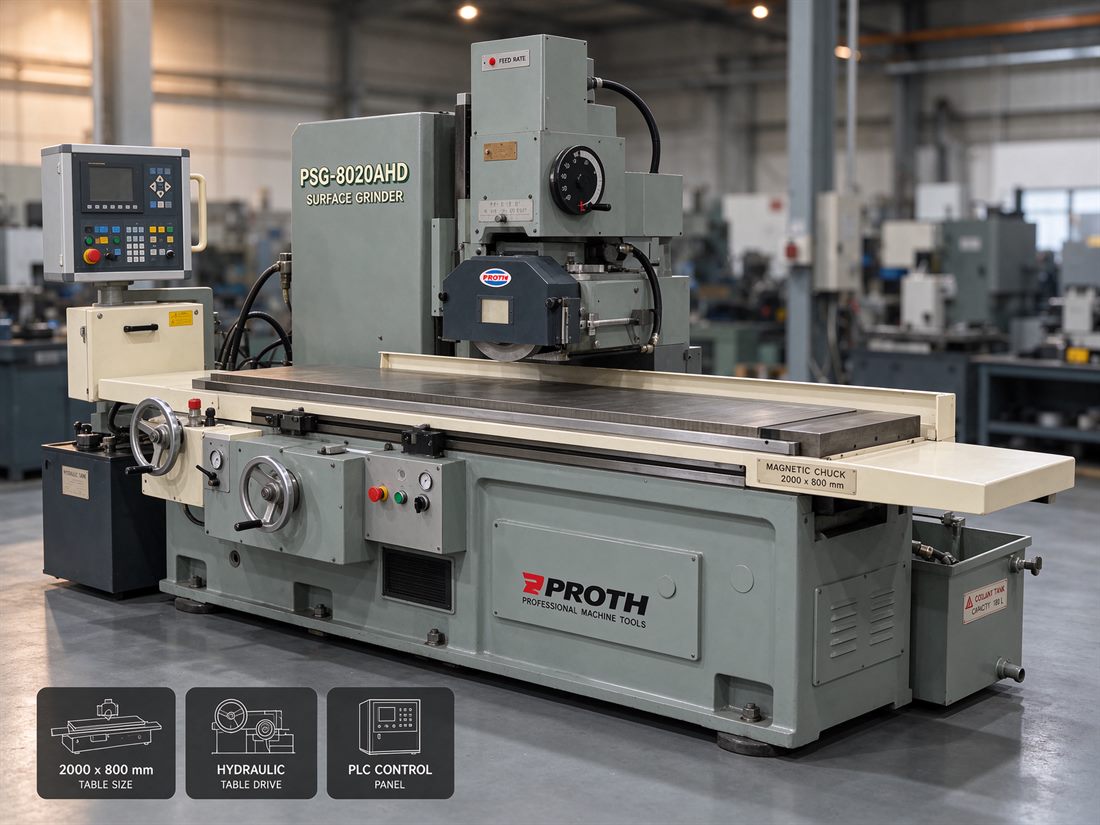
A magnetic separator removes ferrous swarf and is standard on PyeahGrind hydraulic machines. For aluminium and cast iron, add a paper-band or drum filter; floating swarf will otherwise travel round the tank forever. Clean the filter weekly, not monthly.
When to change the tank
Change every 6–8 weeks on production work, or sooner if the fluid smells, foams, or leaves a sticky residue on the ways. Clean the tank itself — not just the fluid — and refill with premixed coolant, never water first.
Dry grinding
Dry grinding is valid for small work with dust extraction. Without extraction it is a health and fire risk, especially on aluminium and cast iron. Specify dust extraction at the order stage; retrofitting it to an enclosed machine costs more.
Need a machine recommendation for this job? Send the drawing and tolerance to our application engineers — reply within 24 hours.