Surface Grinder Wheel Grit Chart: Grit, Finish, Removal
A working wheel grit chart for surface grinders: which grit gives which Ra and removal rate, and how to read a wheel marking like WA46KV.
- The grit chart you actually need
- Reading the full wheel marking
- Choosing grit from the finish callout, backwards
- How grit interacts with wheel speed and coolant
- Wheel life by grit, measured
- FAQ
- What grit wheel should I use for a surface grinder?
- Does a higher grit number mean a better finish?
- Can I use one wheel for roughing and finishing?
- Why does my 120 grit wheel burn the part?
- Bottom line
For most surface grinding, 46 grit is the roughing wheel and 60–80 grit is the general-purpose wheel; anything from 120 grit up is a finishing wheel. As a rule of thumb, achievable Ra in micrometres is roughly the grit number divided by 150 — 46 grit lands near Ra 0.8–1.6 µm, 60 grit near 0.4–0.8 µm, 120 grit near 0.2–0.4 µm, and 320 grit reaches Ra 0.1 µm on a rigid machine with a dressed wheel and spark-out passes. This chart is the practical version of that rule, with the removal rate each grit costs you.
The grit chart you actually need
Grit is only one of five letters and numbers in a wheel marking, but it is the one that decides your surface finish and your cycle time. The table below is what to reach for when the drawing names a finish and the shop needs a cycle time.
| Grit | Typical Ra (steel) | Depth of cut per pass | Relative removal rate | Where it belongs |
|---|---|---|---|---|
| 24–30 | Ra 1.6–3.2 µm | 0.05–0.10 mm | Very high | Rough stock removal, burnt or scale-covered plate |
| 46 | Ra 0.8–1.6 µm | 0.03–0.05 mm | High | General roughing, most toolroom work |
| 60 | Ra 0.4–0.8 µm | 0.02–0.03 mm | Medium | The default wheel for die plates and general precision |
| 80 | Ra 0.3–0.6 µm | 0.015–0.025 mm | Medium | One-pass finish on small parts, good balance of life and finish |
| 120 | Ra 0.2–0.4 µm | 0.01–0.015 mm | Low | Finishing pass after a 60 grit rough |
| 180–220 | Ra 0.15–0.3 µm | 0.005–0.01 mm | Low | Fine finishing, gauge and fixture work |
| 320–400 | Ra 0.1–0.2 µm | 0.003–0.005 mm | Very low | Mirror-adjacent finishes, requires dressing discipline |
| 500–600 | Ra 0.05–0.1 µm | 0.002 mm or less | Minimal | Superfinishing; slow, and easily ruined by one chip |
Two cautions on that chart. First, Ra scales with grit but only if the wheel is dressed sharp and balanced — a glazed 120 grit wheel leaves a worse finish than a freshly dressed 60. Second, the removal rate column is relative to the same machine and material; a 2.2 kW spindle cannot push a 24 grit wheel any harder than its power allows.
Reading the full wheel marking
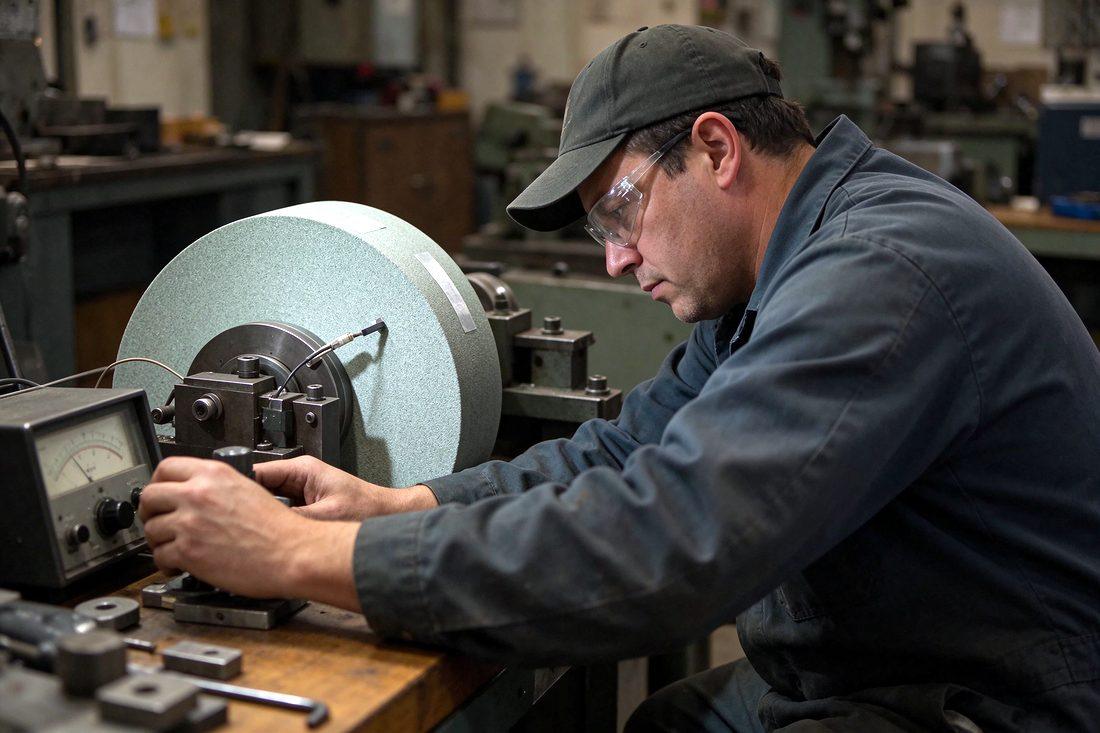
Grit is the number in the middle of a marking such as WA46KV. The letters around it matter just as much when a job behaves badly.
- WA — abrasive type. White aluminium oxide, the general-purpose choice for steel. PA is pink, slightly tougher, for harder steels. GC is green silicon carbide for carbide and cast iron. CBN and diamond are for hardened steel above 55 HRC and for carbide respectively.
- 46 — grit size, the number in the chart above.
- K — grade or hardness of the bond. A through J is softer, L to N medium, P and up hard. On a surface grinder, softer grades self-sharpen and suit interrupted or hardened work; harder grades hold form and suit finishing.
- V — bond type. Vitrified (V) is standard for precision grinding; resin (B) suits high-speed and cut-off work.
The practical consequence: if your wheel glazes within 20 minutes, you do not need a different grit, you need one grade softer (J instead of K). If your wheel loses its form and the part goes out of tolerance, you need one grade harder.
Choosing grit from the finish callout, backwards
Start at the drawing and stop when you reach a grit. A callout of Ra 0.8 µm is met by 46–60 grit with one spark-out pass; there is no reason to buy a 120 grit wheel and spend four times the cycle time for margin you do not need. A callout of Ra 0.4 µm needs 60 grit as the rough and 80–120 as the finish, or a single 80 grit wheel with two spark-out passes on a rigid machine.
Where the finish callout is looser than Ra 1.6 µm and the tolerance is 0.02 mm or wider, a 46 grit wheel used with 0.04 mm passes is the cheapest route. Shops that run a 120 grit wheel for everything pay for it twice: once in wheel cost, once in cycle time.
Before grit matters, balance does: an unbalanced wheel writes its own vibration into the finish, and no grit number can hide it.
How grit interacts with wheel speed and coolant
A finer grit removes less material per revolution, so it needs more revolutions — which means either lower table speed or more passes. The relationship most operators miss is between grit and wheel speed: running a 320 grit wheel at the same surface speed as a 46 grit wheel raises the heat per unit area because the chip is thinner and the contact is longer. On a fine-grit finishing pass, drop the depth of cut first, cross feed second, and leave the spindle speed alone.
Coolant becomes non-negotiable above 120 grit. A 320 grit wheel with poor filtration will load with the swarf it just produced, glaze, and burn the work in one pass. If you are moving to fine grit for the first time, budget for a magnetic separator and a paper filter before you buy the wheel — the coolant nozzle with magnetic separator is the cheapest part of that upgrade and the one that protects the finish.
Wheel life by grit, measured
| Grit | Typical life (steel, 0.02 mm DOC) | Dressing frequency | Cost per 100 parts (wheel only) |
|---|---|---|---|
| 46 | 400–700 parts | Every 100–150 parts | USD 6–12 |
| 60 | 300–600 parts | Every 80–120 parts | USD 8–16 |
| 80 | 250–450 parts | Every 60–100 parts | USD 10–20 |
| 120 | 150–300 parts | Every 40–60 parts | USD 14–28 |
| 220 | 80–150 parts | Every 25–40 parts | USD 20–40 |
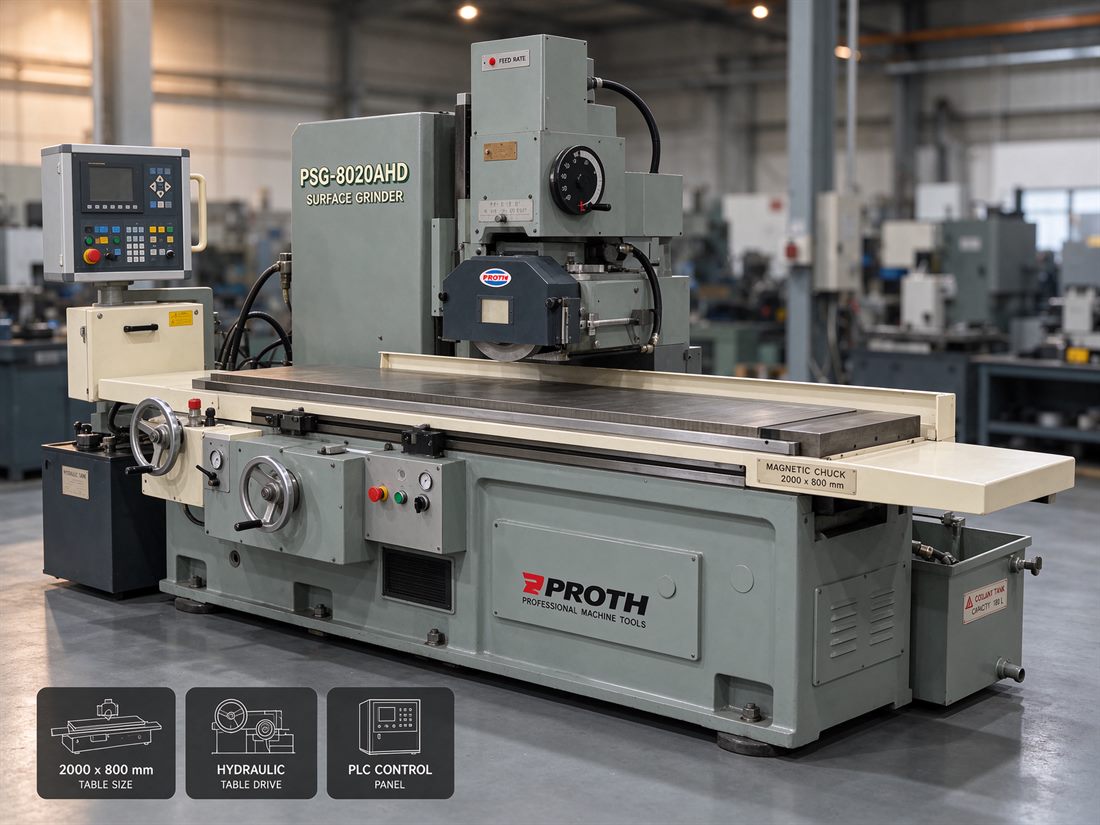
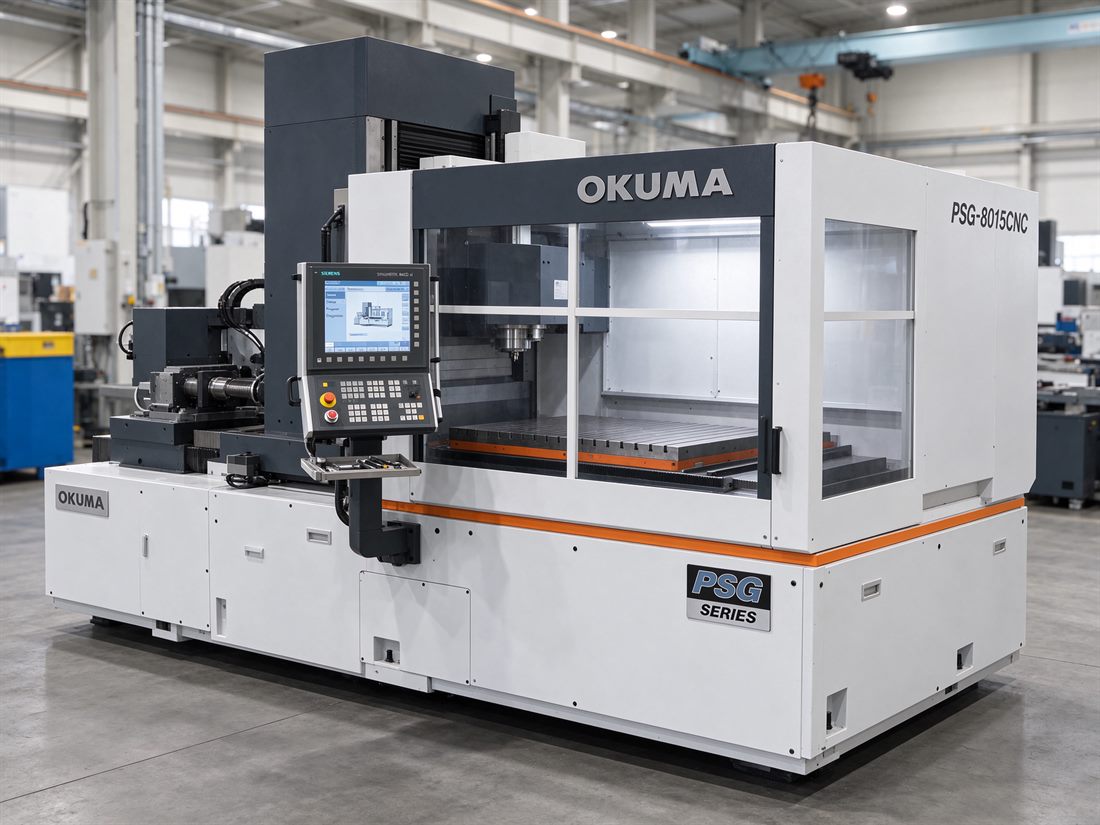
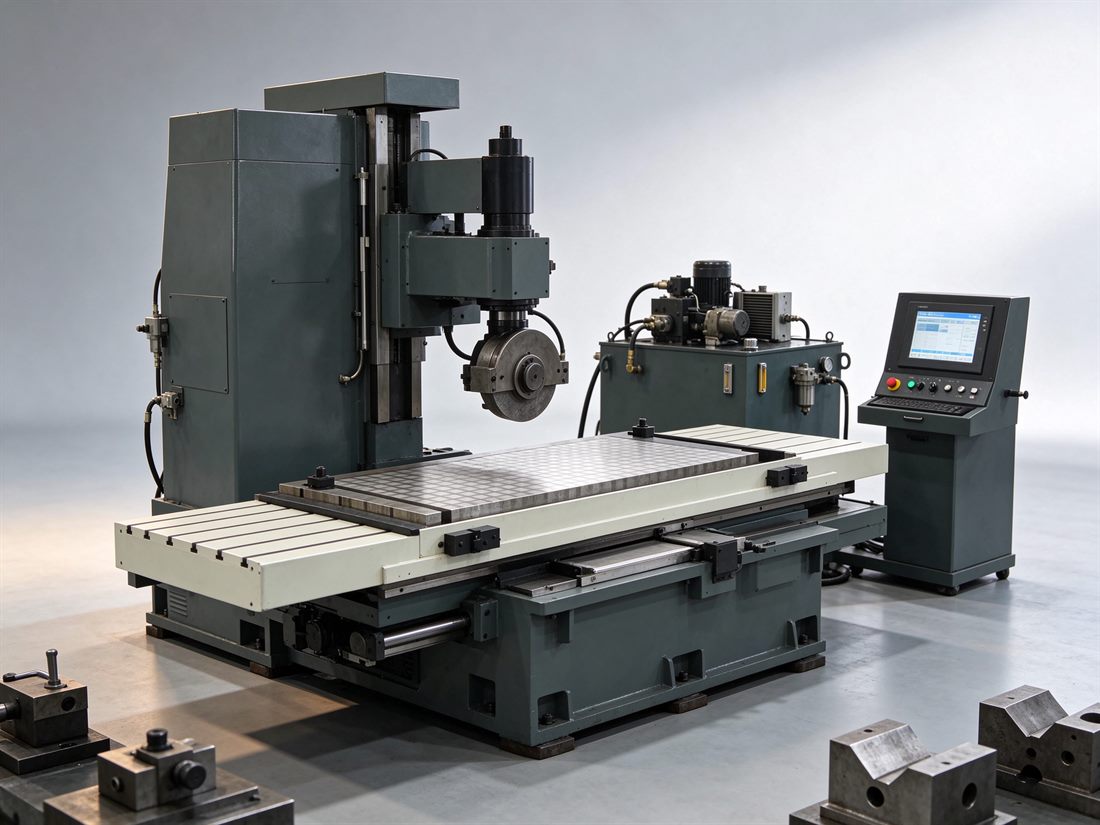
These are for a 200 mm × 20 mm vitrified wheel at 2.2–4 kW, with coolant, on mild or tool steel. Hardened steel above 55 HRC cuts life by roughly a third; CBN changes the whole calculation and lasts 10–30 times longer, at 4–8 times the wheel price. The machine side matters too: a 1.5 kW manual machine such as the PSG-618M manual surface grinder cannot hold 46 grit at 0.05 mm on hardened stock all shift, while a 4 kW hydraulic machine in the PSG-250AH class sustains that grit and depth without the operator fighting the downfeed.
FAQ
What grit wheel should I use for a surface grinder?
60 grit as the default. Use 46 for roughing stock off and 120 or finer for a finishing pass on a tight Ra callout.
Does a higher grit number mean a better finish?
Yes, if the wheel is dressed sharp, balanced and cooled. A glazed 320 grit wheel gives a worse finish than a freshly dressed 60.
Can I use one wheel for roughing and finishing?
Yes — 60 or 80 grit with a rough pass at 0.03 mm and two 0.005 mm spark-out passes covers most die and toolroom work. It is slower than two dedicated wheels but avoids a changeover.
Why does my 120 grit wheel burn the part?
Too much depth of cut for the grit, or a glazed wheel. Drop to 0.008–0.012 mm per pass, dress sharper, and check coolant flow at the contact zone.
Bottom line
Pick the coarsest grit that meets the finish callout, dress on a count, and keep the wheel balanced — that is most of the wheel decision. If you tell us the material, hardness, Ra callout and part size, we will name the grit, grade and bond, plus the machine power it needs. Ask for a wheel and machine recommendation.