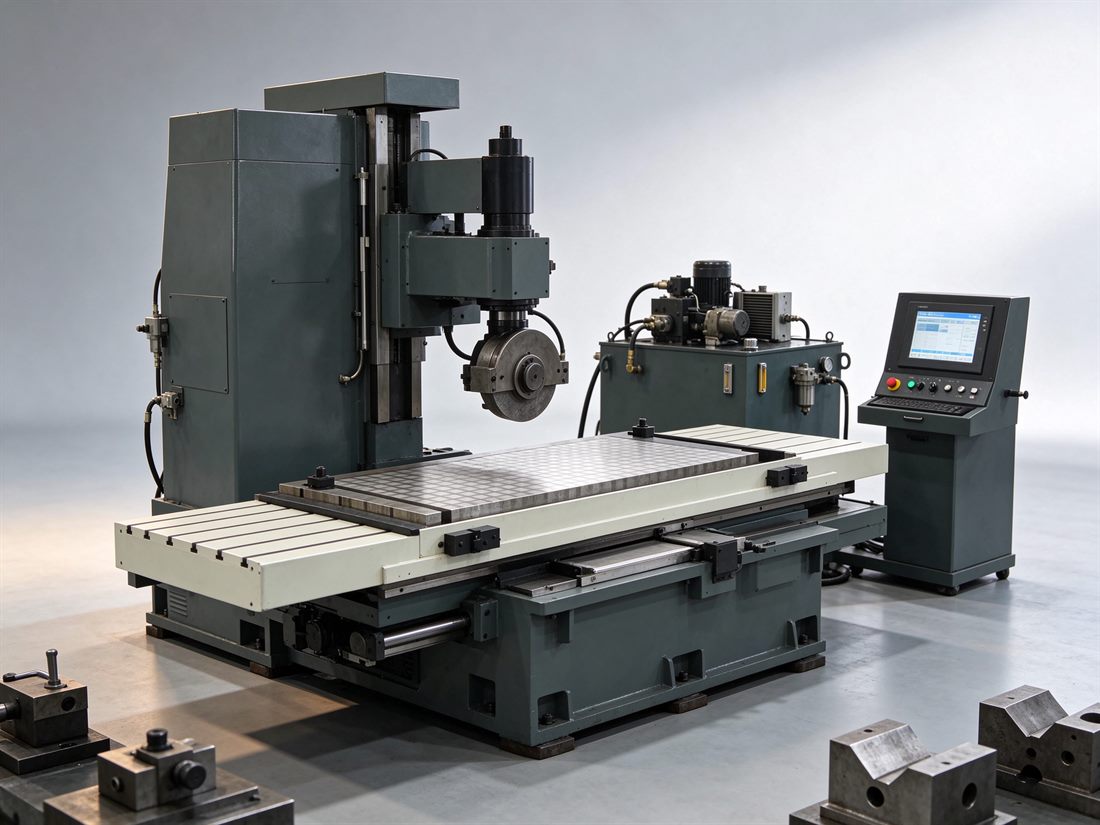
Magnetic Chuck Maintenance: Holding Force, Parallelism, Demagnetizing
How to keep a surface grinder magnetic chuck flat and holding: stoning, demagnetizing, checking holding force and avoiding residual magnetism on thin parts.
Why the chuck matters more than the control
A 0.005 mm machine cannot compensate for a 0.02 mm chip under the workpiece. The chuck face is the machine's real zero — if it is not flat and clean, everything downstream is guesswork.
Stoning the face
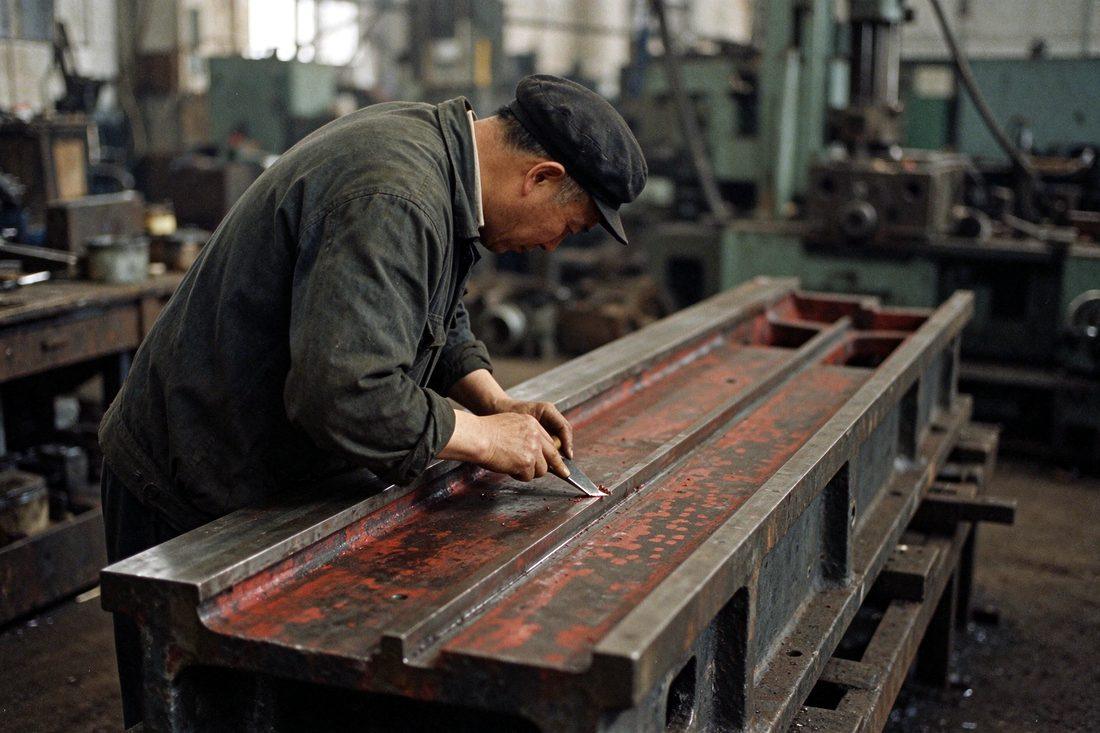
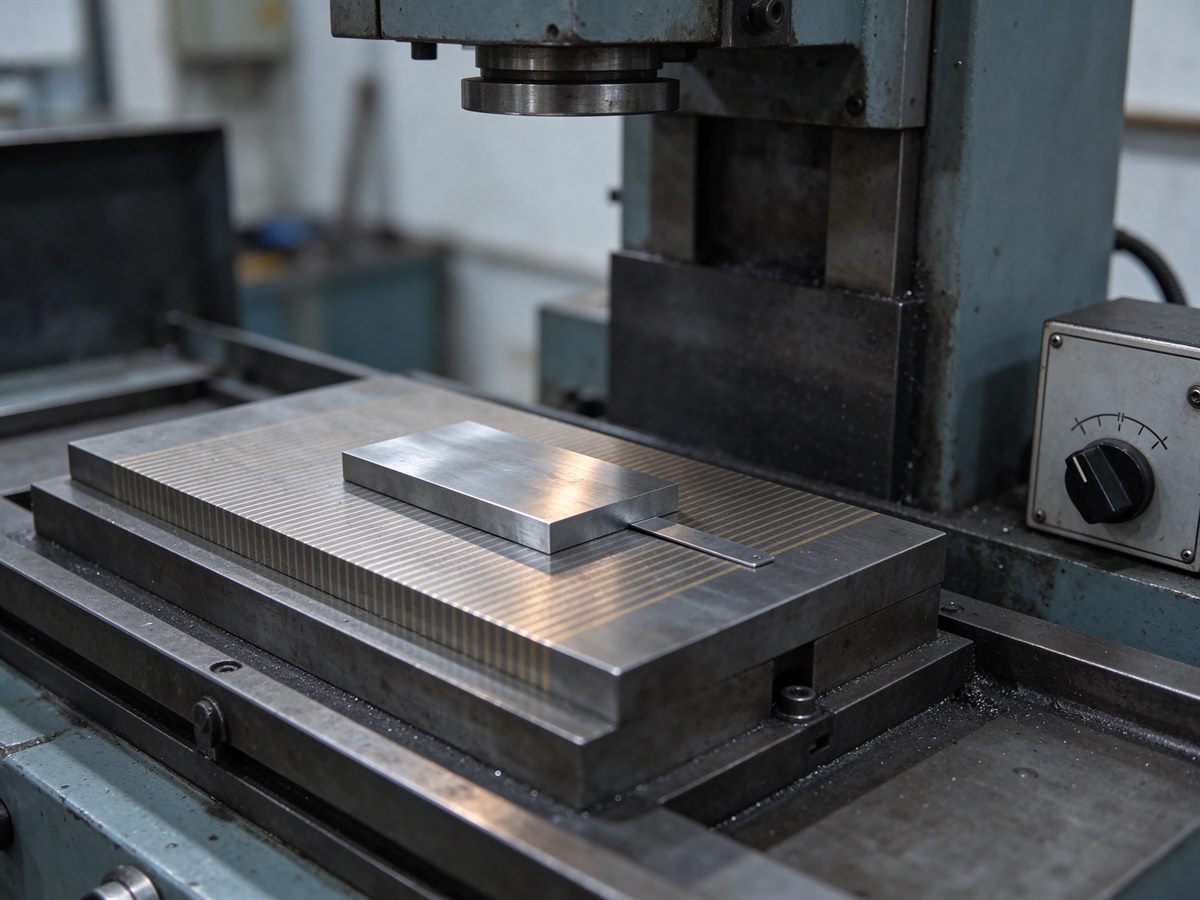
Once a week, stone the chuck face with a fine oilstone, wiping in one direction, then clean with a lint-free cloth and solvent. Never grind the chuck with the machine's own wheel unless you know the procedure — a badly ground chuck is worse than a stoned one.
Checking holding force
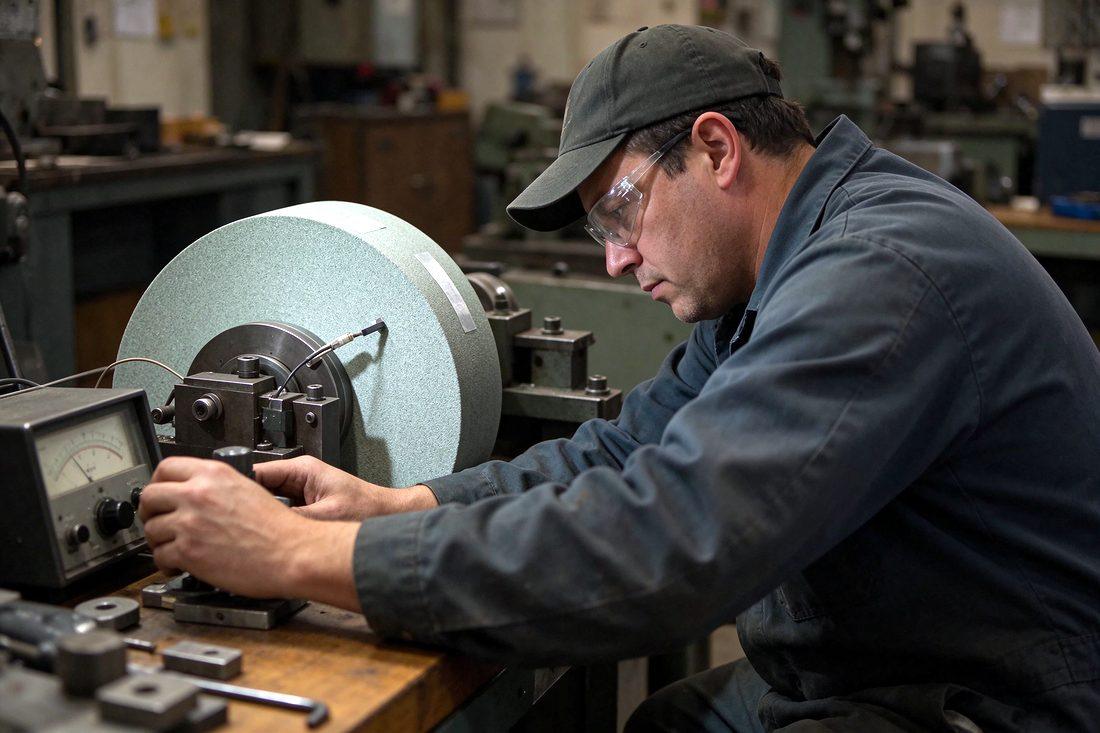
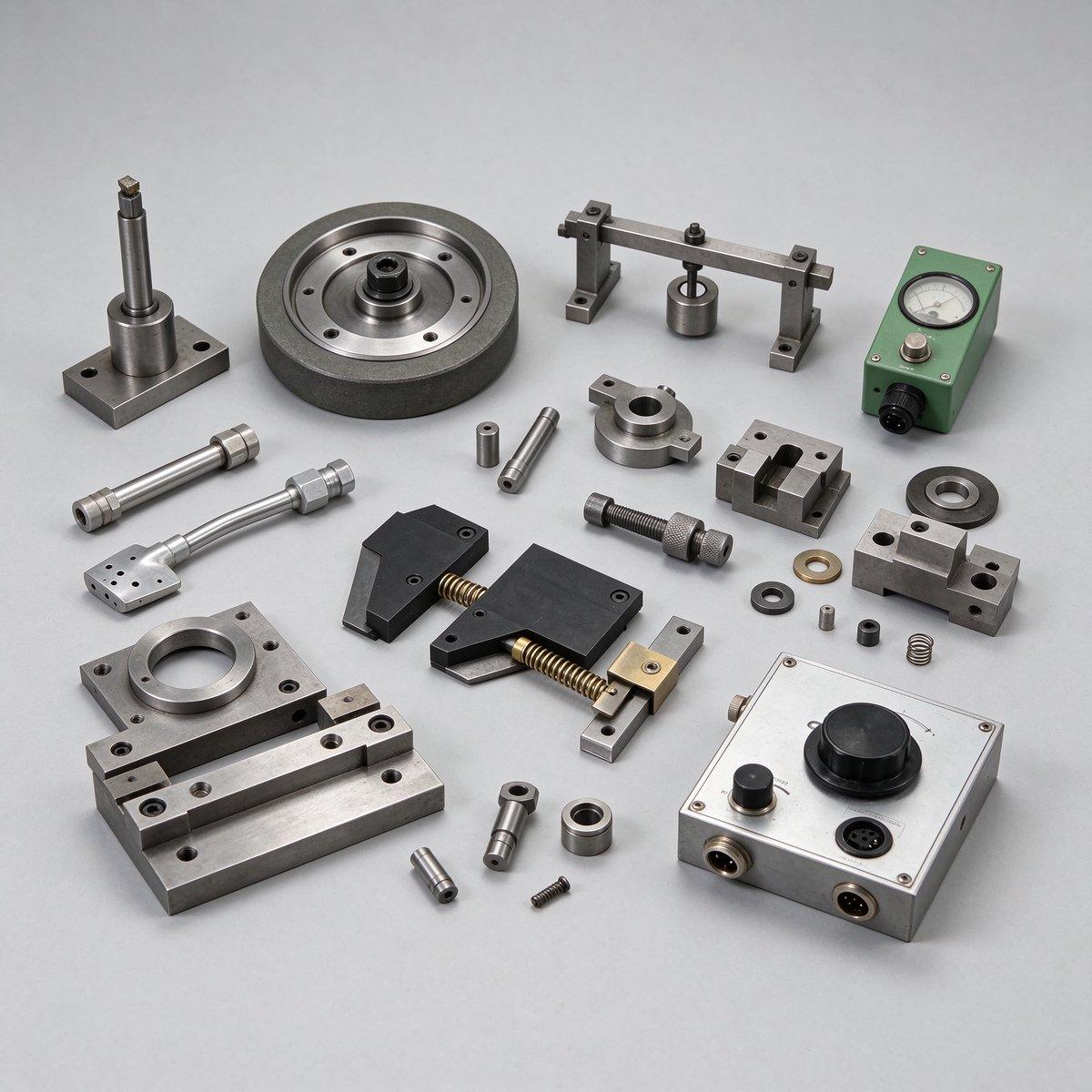
Use a pull-off gauge on a test block. If holding force has dropped noticeably, the controller output or the chuck coil is suspect. On electromagnetic chucks, check the controller's current output before blaming the chuck.
Residual magnetism and thin parts
Thin plates stay magnetized after the current is removed, which makes them read as warped and attracts chips to the ground face. Use a controller with a demagnetizing cycle: it decays the field gradually rather than switching off.
Clamping distortion
A 1 mm plate pulled flat by a strong chuck springs back when released. For thin work, reduce holding force to 20–40% and use a stepped fixture block so the part is supported, not just held.
Parallelism check
Indicate the chuck face at four corners with a 0.001 mm indicator on a granite base. A taper above 0.01 mm across the chuck means the chuck needs re-grinding or the table ways are worn — the chuck is usually the cheaper explanation to test first.
Need a machine recommendation for this job? Send the drawing and tolerance to our application engineers — reply within 24 hours.