
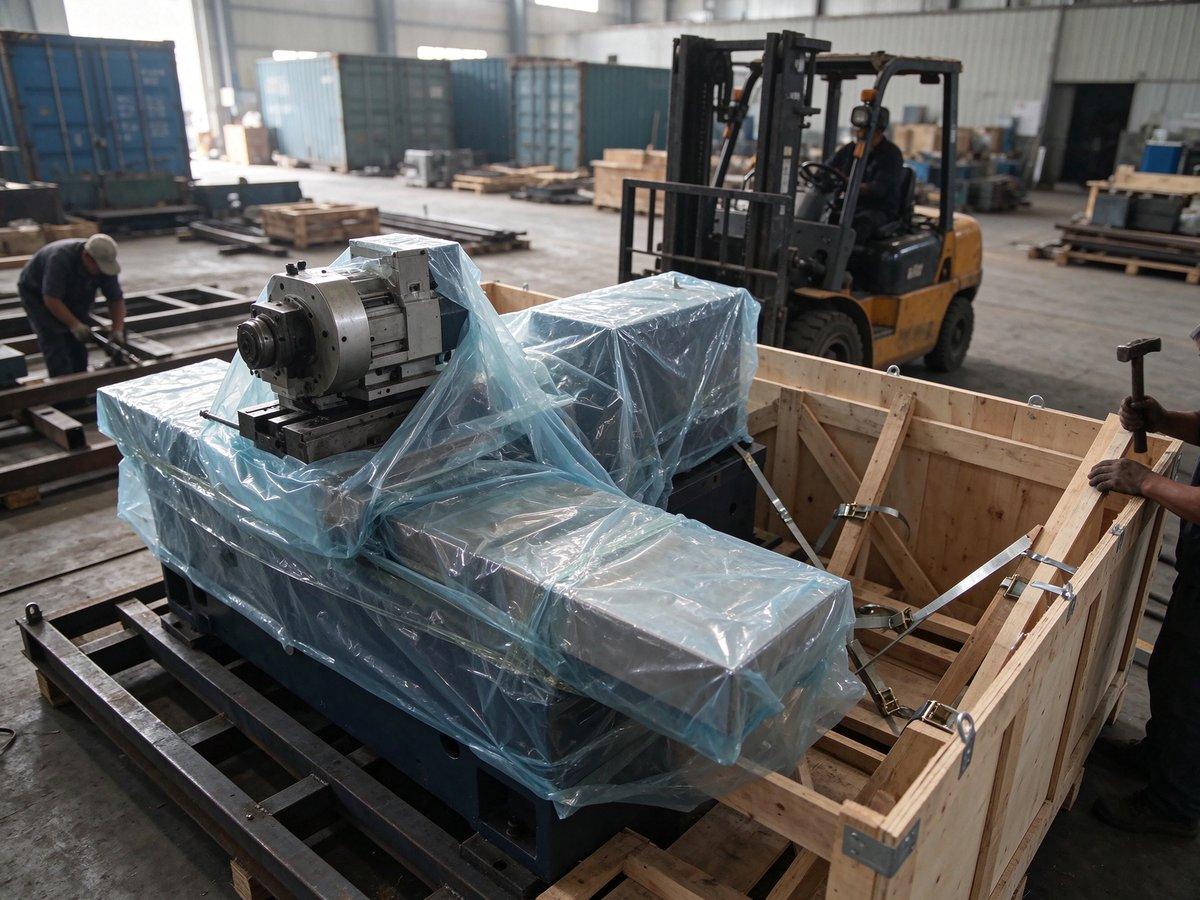
Shipping a Surface Grinder: Crating, Container and Installation Checklist
What to check before a surface grinder leaves the factory: packing, container type, documents, found...
Read more →Buying & Shipping · topic notes
Crating, container loading, documentation and acceptance checks for an imported grinder. 2 guides, 1 case study filed under this topic.
A machine tool shipment is four separate jobs: preparation at the works, export clearance, the ocean leg, and import clearance at the destination. Each has its own documents, and a gap in any one of them holds the machine at a port while it accrues storage. The buyer's checklist should start from the destination requirements, then work backwards.
Preparation: the table is locked, the wheelhead blocked, the spindle supported, loose parts boxed inside the crate, and the case fumigated and ISPM-15 marked for wooden packaging. Export clearance: commercial invoice, packing list, certificate of origin, and a bill of lading from the forwarder. Import clearance: the HS classification confirmed with a local broker before the order, plus whatever the destination requires for machine tools — CE declaration in the EU, conformity documents in the Gulf and Southeast Asia, and electrical approval in some markets.
Two failures account for most problems. The first is a foundation or doorway that the machine cannot pass: a gantry is shipped in sections and assembled on site, and a shop that planned for one crate discovers it needed a crane and a day of assembly. The second is voltage and frequency: a machine built for 380 V / 50 Hz does not run on 440 V / 60 Hz without a documented change, and the change has to be specified at the order stage, not at commissioning.
Ask for the geometry inspection report and photographs of the crated machine before the container is sealed. That is the last point at which a missing accessory can be fixed cheaply.
Shipping a machine is a packing question before it is a freight question: seaworthy crating decides whether the geometry arrives intact.
Before confirming, ask for three things in writing: the configuration list, the packing specification and the inspection record that ships with the machine.
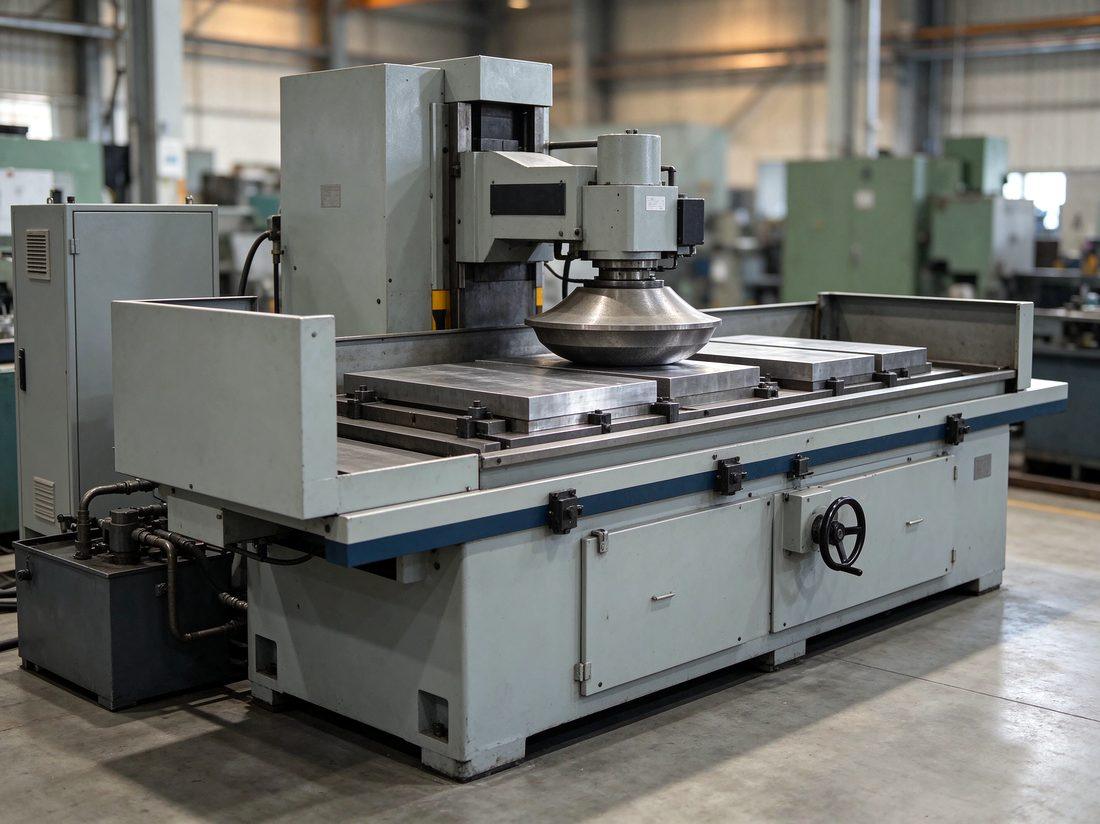
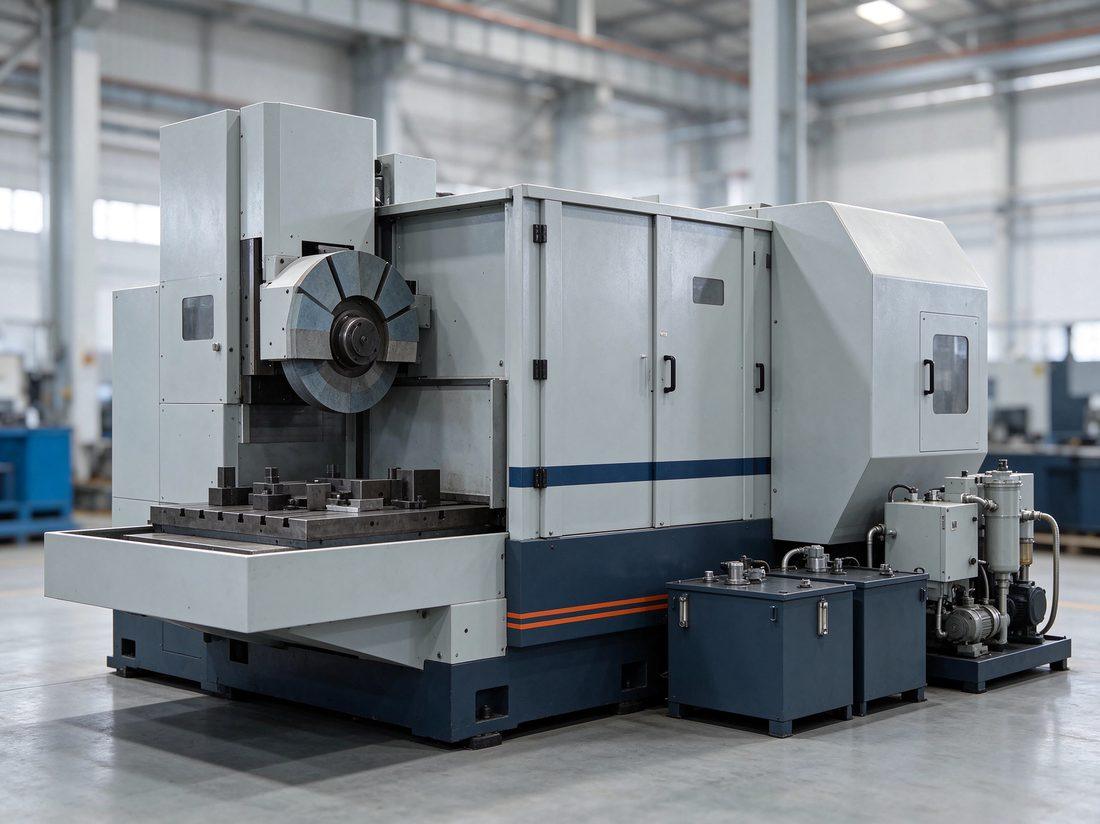
Topics in this vocabulary point to a machine line rather than to a single offer, so the answer stays useful when the model range changes. For shipping & export the closest line is vertical spindle surface grinders; the selection guide and the accuracy notes cover the neighbouring questions.
Machines filed under this topic, plus the closest models from the line it belongs to.

What to check before a surface grinder leaves the factory: packing, container type, documents, found...
Read more →
What a machine shipment contains, which documents the buyer needs, and how long each stage actually ...
Read more →
A Mexican press shop installed a PSG-40100GM to grind 4 m bolster plates that previously arrived pre...
Read more →Standard hydraulic and manual machines run four to six weeks from deposit; PLC and CNC machines six to ten weeks; gantry beds are quoted per bed length.
Yes, both from Shanghai or Ningbo. The CIF figure adds insurance and ocean freight to the named port, and both are quoted on the same configuration.
