Cavity depth control on a PLC grinder at a Thai mould shop
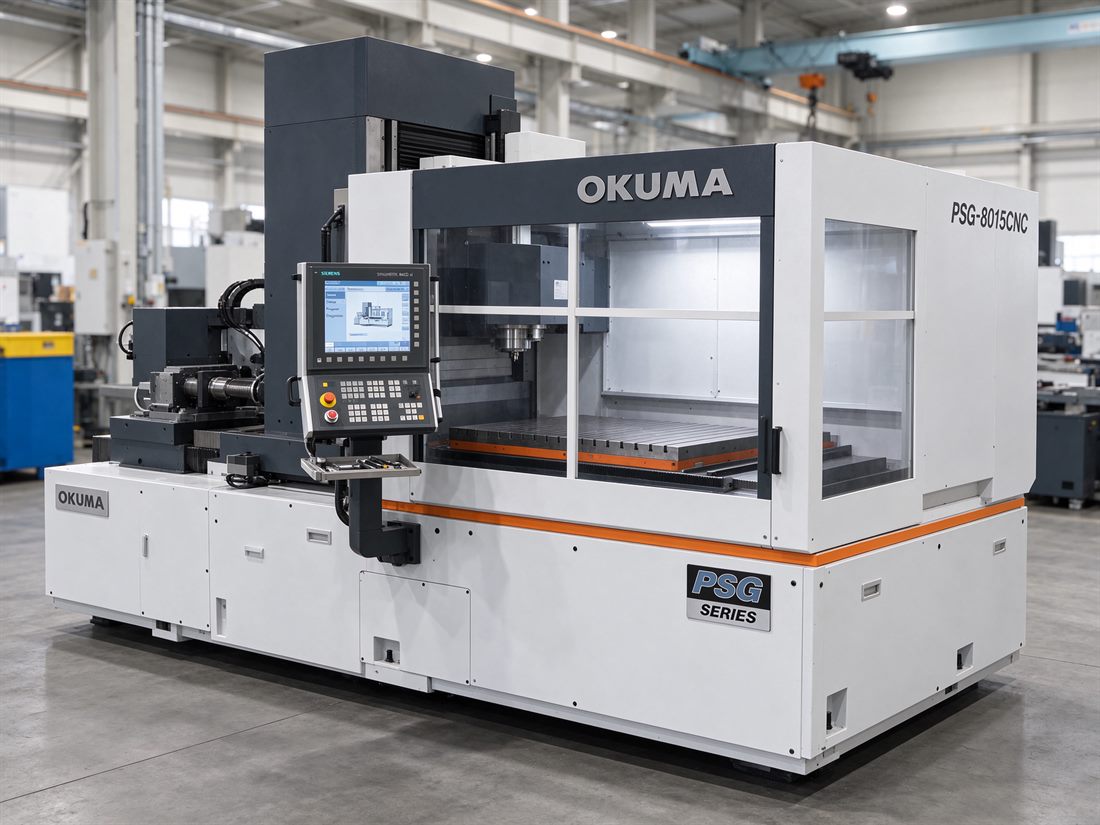
A Chonburi mould maker was shimming inserts to hit cavity depth. A PSG-8020WMS held the depth in the cycle instead, and shim stock left the building.
Case at a Glance
The situation
A mould maker in Chonburi runs eight two-cavity moulds for automotive interior parts. Cavity depth is specified at 12.00 mm +0.02/-0.00, and their finishing method was a manual surface grinder followed by hand polishing of the floor. The operator ground to 11.95 mm deliberately, then shimmed the insert up by 0.02–0.05 mm at assembly to reach nominal. Shims worked, but they also introduced a second problem: with a shim under the insert, the parting-line height moved, and every assembly needed its own correction pass.
What we specified
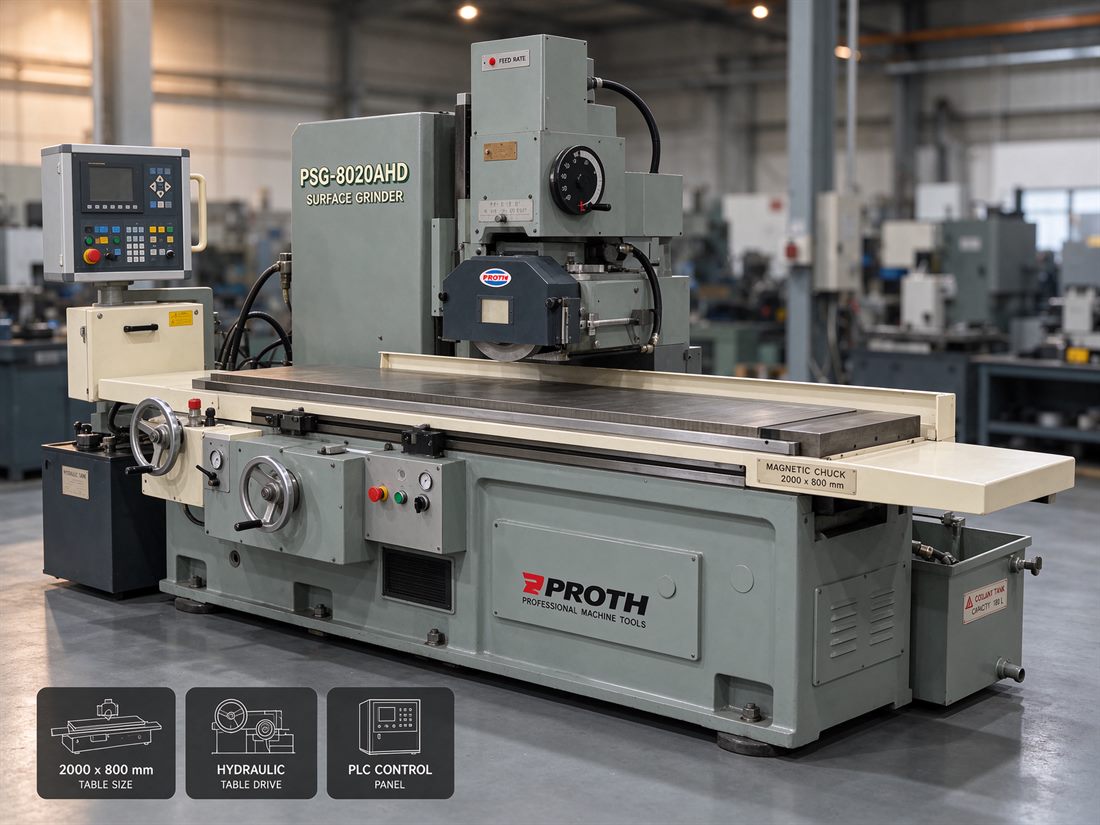
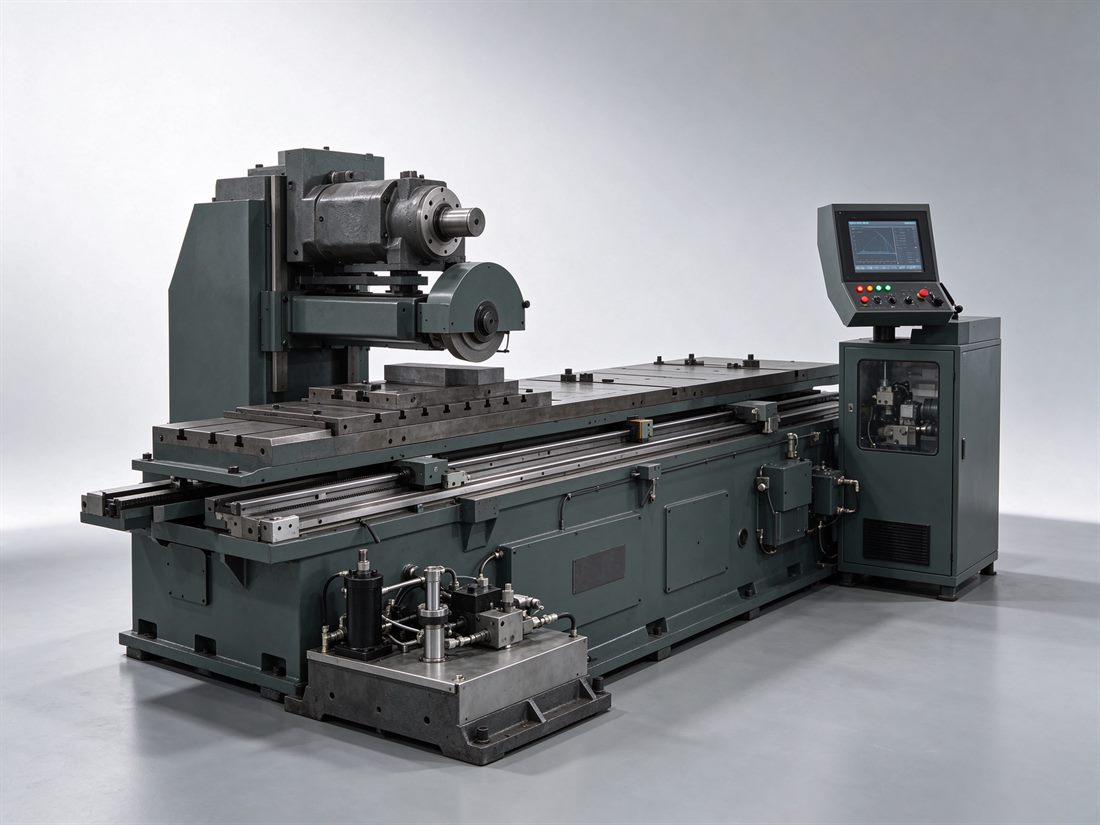
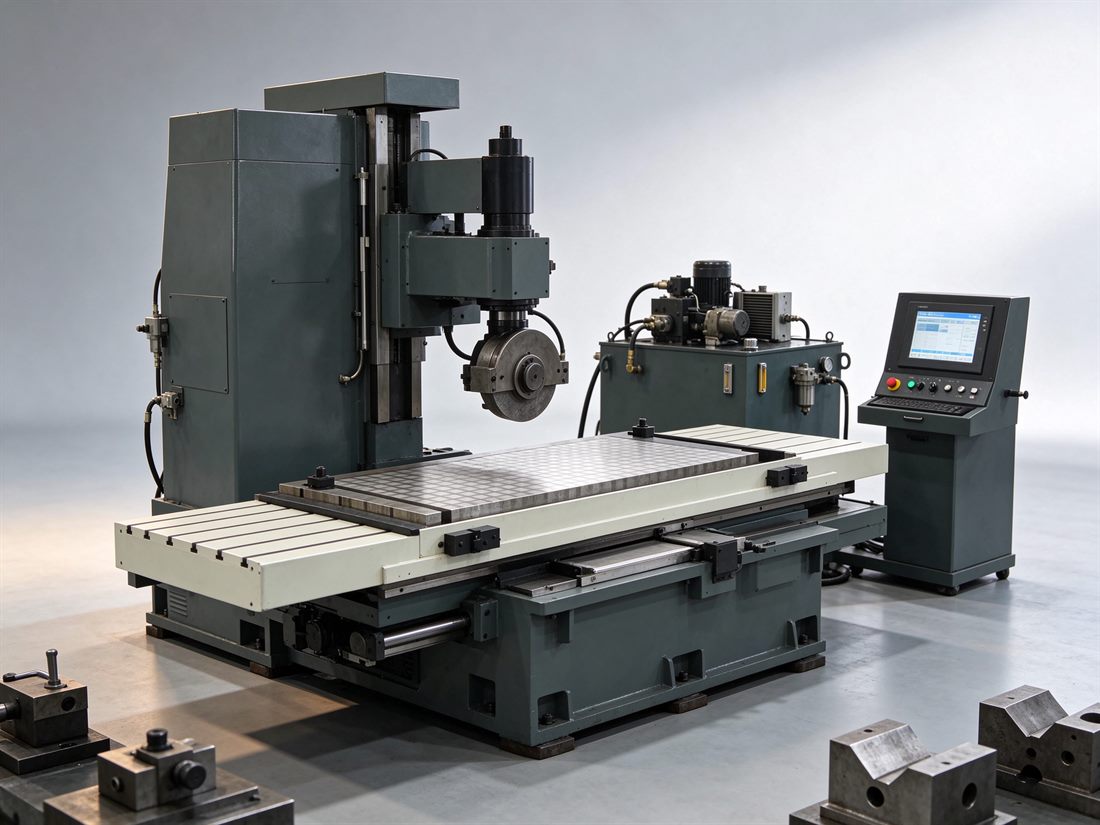
A PSG-8020WMS PLC grinder with a 2000 × 600 mm table so two inserts of a cavity pair could be clamped side by side, and a dress-and-grind cycle that holds the last two passes at 0.005 mm with a spark-out pass counted by the control rather than judged by the operator. We also asked the shop to add a warm-up cycle: twenty minutes of table movement before the first part, because an 11 kW spindle on a 7.8 t machine grows about 0.02 mm in column height between a cold morning and a warm afternoon.
Result
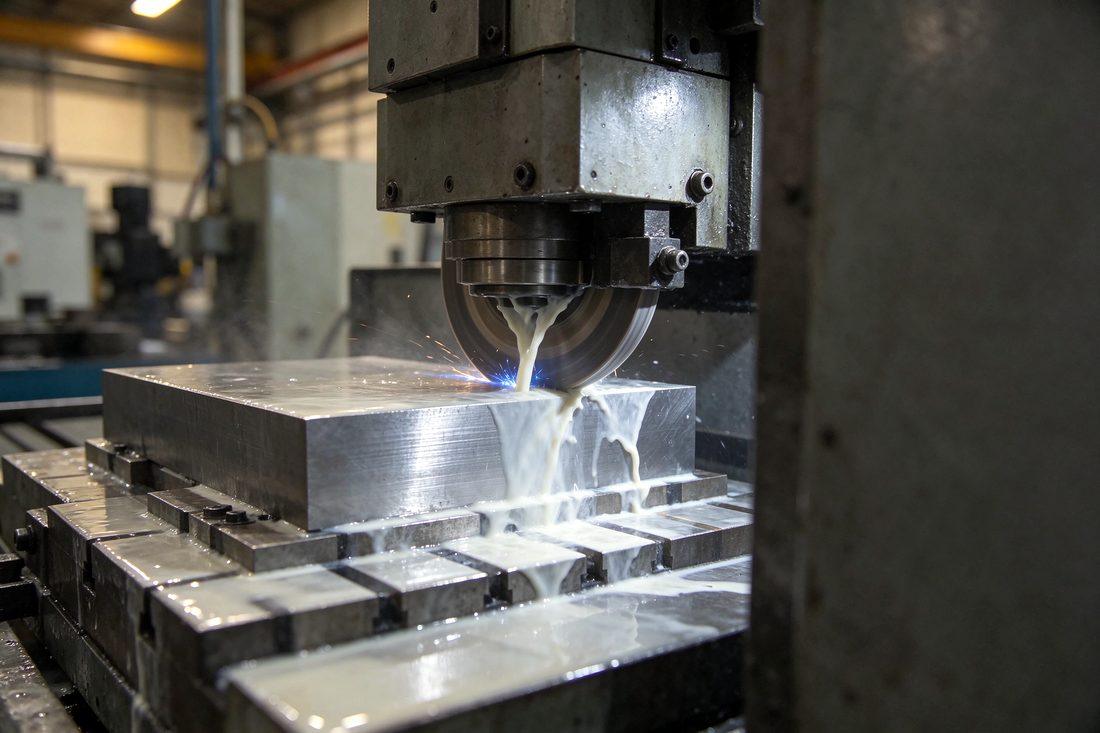
Depth now lands between 11.99 and 12.01 mm straight off the machine, measured on a granite plate with a height gauge. Shim stock is no longer used in assembly, and the second-order correction at the parting line disappeared with it. The measurable gain is time: the shop went from 95 minutes of grinding to 40 minutes per cavity pair, plus the warm-up, and the polishing pass dropped from twenty minutes to five because the floor no longer needed to be brought down by hand.
What changed in how they buy machines
The foreman's summary was that he had been buying accuracy as a machine property and it is actually a process property. The machine holds 0.002 mm positioning; what delivers 0.02 mm on the part is the counted spark-out, the thermal routine and the flatness of the chuck. Any future purchase at that shop now starts from the process, not the spec sheet.